Master Yap Hong Ngee: “Eternal Love” Oil Painting Exhibition
Ascend the escalator onto the 4th floor of GMBB creative community mall, a vast array of rose oil paintings adorn the long exhibition hall. Taking centre stage is a small artwork which consists of roses in the three primary colours and adequate blank-leaving within a gold leaf frame, entitled “Eternal Love” as written on a card placed at the bottom-right. Renowned local artist Yap Hong Ngee adopted it as the theme of his solo exhibition, spreading the power of love.

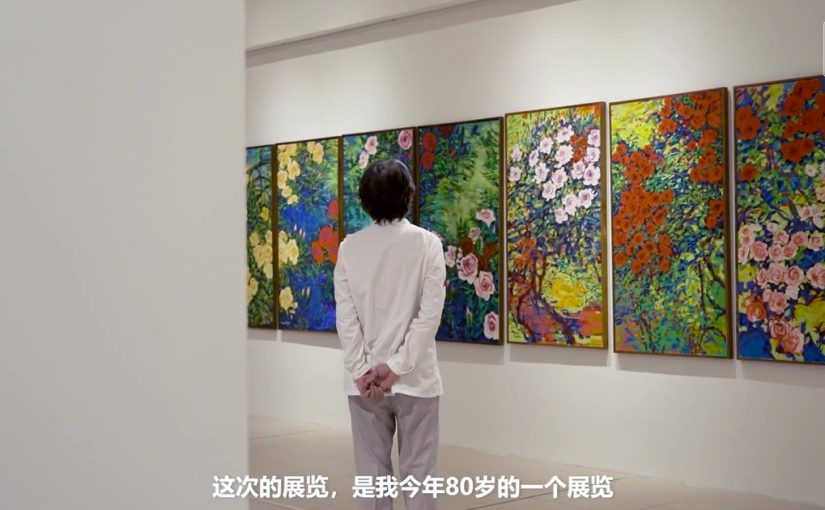
About 150 pieces of rose oil paintings bedeck contiguous exhibition spaces within the entire floor. Laid out in the style of an art gallery, the artworks are arranged in surprising ways, including forming polyptychs. A myriad of roses bloom in every corner, symbolizing all sorts of love, with white standing for purity, pink for affection, red for passion, yellow for warmth, blue for mystery. Walking around the gallery while holding a loved one’s hand is as if taking a walk in a romantic rose garden. Upon stopping to admire artworks, lean in to gently whisper “I love you.”

About 30 years ago, Master Yap started painting roses for Valentine’s day event at a Japanese department store. Even though the partnership ended years ago, he keep on producing rose oil paintings. Despite being known for Chinese ink painting of sparrows, Master Yap chose Western oil painting as the medium to paint roses which are prominent in Western countries for better interpretation. His rose paintings are by no means realistic, but rather an impression painted in the style of Chinese ink painting after close observation and fully understanding the nature of roses.

Master Yap’s painting process is quite straightforward, squeezing oil paint directly onto the canvas without sketching or using a palette, creating a vivid blooming rose in one stroke. The patterns range from swirls to ripples, unconstrained yet retaining the nuances of a rose, recognizable by the beholder. Apart from that, the artwork titles prompt viewers to contemplate their meanings, relating to their own past experience and resonate with the artist’s ideas.

As the proverb goes: “The rose’s in her hand, the flavor in mine.” A seemingly ordinary action leaves a warm impression on both parties. Perhaps due to Master Yap strongly valuing interpersonal relationships, he incorporates his life experience into his paintings, the sincerity touches the hearts of viewers, bringing people closer together. During art exhibitions, Master Yap would meet complete strangers who were brought to tears by his paintings and shared their life stories with him, thus becoming fast friends.

Master Yap is turning 80 years old, yet he is full of enthusiasm, obtaining great enjoyment in painting. In future, he intends to continue holding exhibitions, hopefully getting the chance to tour different cities and states. For one thing, he wish to let friends know that he is still actively painting. For another thing, he wish to make new friends via artworks and exchange ideas. Master Yap does not place emphasis on selling his paintings or receiving praise, and does not mind whether his artworks are being liked or disliked. To him, true happiness is the feelings of love and support, which enabled him to persist in painting.

有你 UNI Production
Producer : Daniel Lim
Cinematographer : Amelia Lim / Michael Lerk
Drone : Daniel Lim
Video Editor : Amelia Lim
Copywriter : Pua Hui Wen

COPYRIGHTS 2023 ECHINOIDEA SDN BHD

☕ Buy Us Coffee

Richard Ng: Orchid Breeder

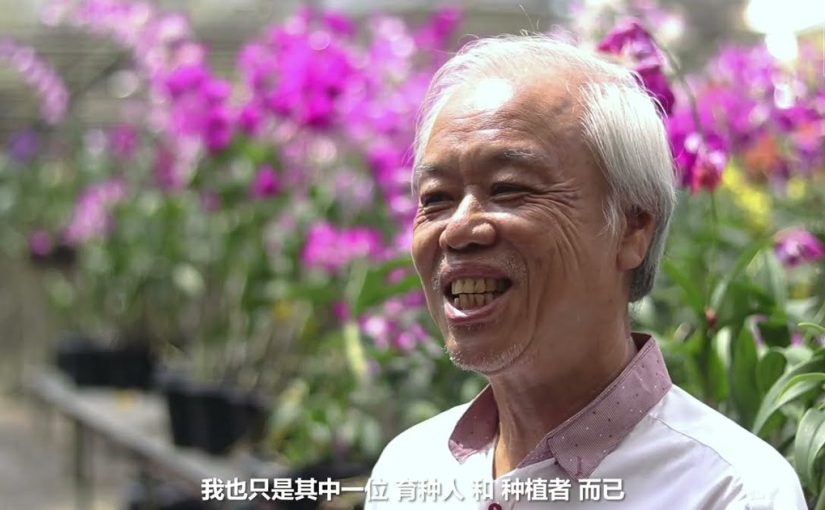
As the greenhouse door slides open, orchids of varying hues sway gently in the cool air-conditioned breeze. The founder of Seremban Orkid Nursery in Mambau, Mr Richard Ng, strolls among the neat rows of flowers. “Its leaves uphold righteousness, its flowers bloom unpretentiously.” Drawn in by the refinement of “the gentleman of flowers”, Richard dedicated 27 industrious years to orchids, starting from growing orchids as a hobby to undertaking research in breeding techniques.
Orchids belong to the plant family Orchidaceae, home to over 20,000 species which can be crudely classified into native and hybrid. Native orchids grow naturally in the wild, taking on diverse forms due to different climate types; hybrid orchids are created by crossing genus or species, usually cultivated in vitro. Orchids look attractive, Phalaenopsis being a popular choice for home decoration due to its flowers resembling a butterfly in flight. Certain orchids have medicinal properties, for instance Dendrobium Officinale is known to regulate metabolism, one of the ten most valuable traditional chinese medicine herbs.
In Richard’s nursery, thousands of orchid species are being mass propagated within five greenhouses dedicated to germination and two evaporative cooling greenhouses, catering to orchid enthusiasts. Through his daily toil, Richard gained much experience and knowledge, building a strong foundation for breeding improved species. It is very difficult for orchid seeds to germinate naturally, whereas they proliferate under sterile conditions in a culture medium. However, breeding to produce exotic colours or interspecific hybridization may have up to 90% chance of inviability.
Orchid breeding involves selection of parents for cross-pollination, with the pollen donor as the father and the seed bearer as the mother. The pollen is extracted from the stamen and transferred into the stigma, then the mother plant is labelled with the pollination date and accurate genetic information. After fertilization, a seed pod will form and mature in five to six months. Orchid seed germination takes place in a sterile environment where the tiny, dust-like seeds are obtained from the pod and dispersed into flasks containing a culture medium. As the seedlings reach a certain size, they are deflasked and potted, yet requiring at least another year’s care until the first bloom.
Ater the first flowering, new hybrid orchids can be registered to an international registration authority such as the Royal Horticultural Society (RHS) or American Orchid Society (AOS). To date, Richard has successfully breeded over 3,800 new orchid species, including one named after himself, Dendrobium Richard Ng, Seremban O.N. He is also active in orchid conservation, efficiently propagating native and endangered species.
Growing orchids is both relaxing and satisfying. Every day, Richard Ng observes the growth status of orchids in the nursery, and water, fertilize, or trim flower spikes according to their needs. His son assists him in sales affairs, expanding the business globally through online marketplace. Richard, who is in his seventies, smiles like a blooming flower as he watches over his beloved orchids.

有你 UNI Production
Producer : Daniel Lim
Cinematographer : Amelia Lim / Evon Pang / Michael Lerk
Drone : Daniel Lim
Video Editor : Michael Lerk
Copywriter : Pua Hui Wen

COPYRIGHTS 2022 ECHINOIDEA SDN BHD

☕ Buy Us Coffee

Flag Maker: Khoo Koh Leong

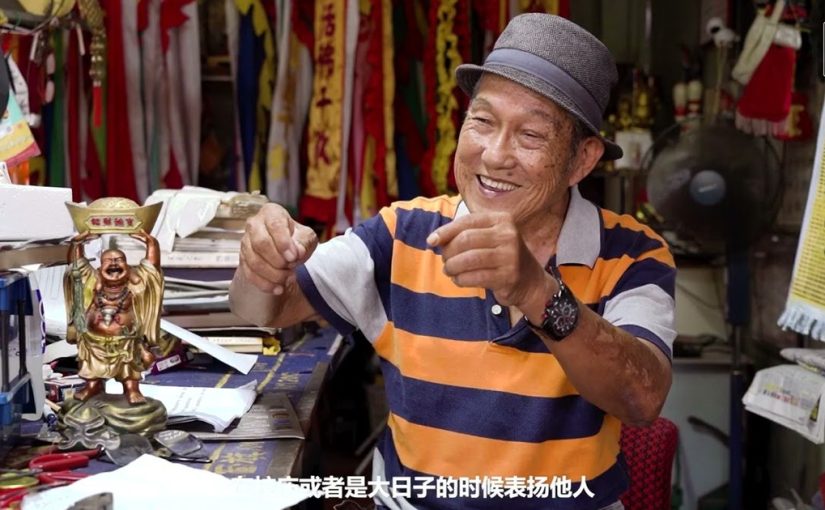
Nested within a sky-blue wooden house in Tampin New Village in Negeri Sembilan, with festive couplets adorning the doors and windows, and a wooden plaque hanging above the entrance, is Koh Leong Handicraft Workshop. Upon entry, most of the hall is taken up by a massive workbench with various tools scattered around. The room on the left holds a rectangular table over ten feet in length, hanging near the wall are all sorts of colorful cloth; the room on the right acts as a sewing room, semi-completed pieces hang aside. Uncle Khoo Koh Leong measures cloth with a wooden ruler, draws an outline with chalk, and then trims the edges. He single-handedly produced elegiac banners, appreciation pennants, and prayer flags for almost half a century.

Elegiac banners, appreciation pennants, and prayer flags all belong to the same branch of craft, however each serves a different purpose. Elegiac banners are hung in memorial halls and hearse carriages, as well as representing hometown guilds or schools to offer condolences to the bereaved family. Appreciation pennants acknowledge individual contribution towards society, commonly featuring yellow text on a red background fringed with tassel. Prayer flags are used for adornment during deity birthdays, an offering from worshippers as gratitude for blessings bestowed, showcasing divine powers, the colors vary with each deity. 

In the 1950’s, elegiac banners were handwritten on white paper, with an elegy dedicated to the deceased person and the name of the sender or association written in black ink, usually burned after the funeral service. Back then, infrastructure in Tampin were not quite developed, Uncle Khoo who was a taxi driver used to help fellow villagers in handling elegiac banner purchases from cities such as Seremban or Melaka. In the long run, Uncle Khoo began to take an interest, therefore he started his side job as a self-taught craft maker.

As living standards improved in the 60’s and 70’s, fabric elegiac banners with common obituary phrases such as “Rest in Eternal Peace” or “In Loving Memory” flourished due to convenience and reusability, as they can be retrieved by the represented association after the funeral service. A casket store owner who was friends with Uncle Khoo once enlisted his help to produce elegiac banners and couplets for memorial hall decoration, thus establishing Uncle Khoo’s reputation as well as opening up opportunities. Uncle Khoo also took on new challenges such as producing appreciation pennants and prayer flags, his highly satisfactory handiwork was sought after by customers near and far, from Tampin to the states of Negri Sembilan, Melaka, Selangor, Pahang, and even overseas from Singapore and Indonesia.

For custom flag orders, the purpose, color, and size must be confirmed as Uncle Khoo needs to source materials and cut according to the approximate outline. Upon agreeing on the appropriate text, he measures their respective sizes and copies the words onto paper. The declining traditional practice of embroidery is not feasible for Uncle Khoo, therefore he imprints the words onto the fabric, cuts and pastes them onto the flag, then waits for the glue to dry before sewing. Due to the complicated structure of Chinese words, the sewing process requires attention to details, hence each flag takes two to three days instead of overnight to complete.

Lately, Uncle Khoo switched from using calligraphy to printed words on flags, yet he persists in handcrafting. Each stitch conveys the close relationship between association members or the fervour of worshippers towards deities, sustaining traditional Chinese culture. At the same time, Uncle Khoo still practises Hundred Fortune calligraphy, as well as writing Chinese New Year couplets to gift to friends and family during festivals.

Recent technological innovations brought about computerized flag designs which can be printed onto fabric, with the option of installing LED lights. As times change, Uncle Khoo enjoys flag-making as a hobby, without worrying about the lack of a successor. In his free time, he shoots short funny clips together with family and friends, gaining almost 30K followers on TikTok. Live in the moment, and keep calm in the face of uncertainty.

Text: Daniel Lim & Pua Hui Wen

有你 UNI Production
Producer : Daniel Lim
Cinematographer : Amelia Lim / Evon Pang / Michael Lerk
Drone : Daniel Lim
Video Editor : Amelia Lim
Copywriter : Pua Hui Wen
Music : 《Summer》

COPYRIGHTS 2022 ECHINOIDEA SDN BHD

☕ Buy Us Coffee