“Maestro of Paper Shadows ” — Toh Ai Hwa

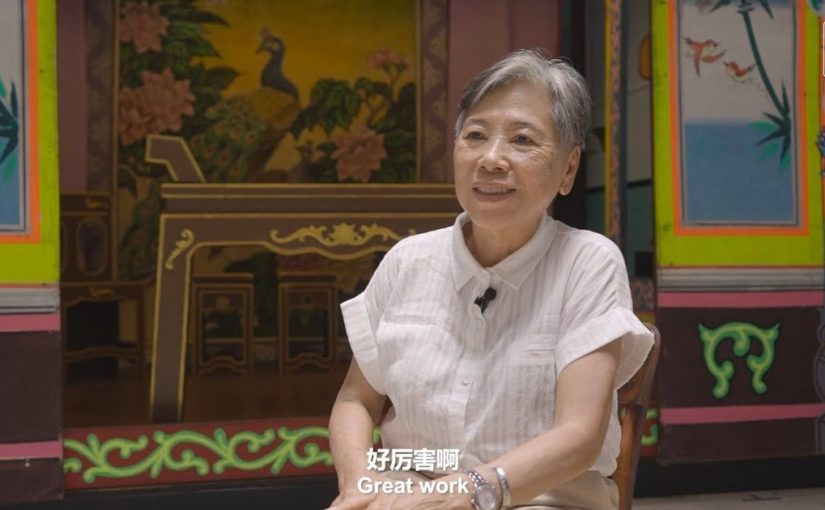
Teochew iron-rod puppetry originated from Chinese shadow puppetry, where puppeteers animate paper cut-out figures on a translucent screen with the aid of an illuminated background. To adapt for daytime performances, the puppets were refashioned: using tightly packed bundles of hay to form the torso, moulded clay for the head, paper and wood for the limbs, dressed in costumes, with iron rods attached to the back and limbs. The translucent screen was replaced by a glass screen. The stage structure was then changed to mimic the Teochew opera stage, complete with bamboo curtains and miniature props, and the puppeteers remain behind the curtains while manipulating the puppets to perform onstage. Those working in this line of industry are usually referred to as “Maestro of Paper Shadows”. Madam Toh Ai Hwa (a.k.a. “Zha Bor Jie”), now in her 70s, is well-known in the Teochew Puppet Opera industry in Malaysia. The special stage performance entitled “Maestro of Paper Shadows” is organized by her daughter to mark Toh Ai Hwa’s 61 years of dedication in her career.

Toh Ai Hwa is born into a family of Teochew opera performers. Her maternal grandfather, Yeoh Beng Kim, migrated to Malaya in the 19th century with his Teochew opera troupe “Lao Sai Yong Hong”; her maternal grandmother, Lee Gek Hong, was an accomplished actress playing Lady roles in the 1920s; her mother, Yeoh Cheng Im, was an accomplished actress playing Young Man roles in the 1940s; her third elder brother, Toh Ah Hock, is famous for playing Old Man roles. Traditional perceptions of opera performers were negative and disdainful. Yeoh Cheng Im did not want her children to suffer the same fate, therefore her husband brought up Toh Ai Hwa outside of the troupe, but the Teochew opera genes run deep.

By chance, Toh Ai Hwa joined “Lao Rong Xiu Chun” Teochew puppet troupe at 12 years old. Due to the puppets being too heavy for her to handle, she poured her heart into learning the musical instruments instead, and became the lead percussionist and chief conductor at the tender age of 15, which is a rare feat especially for females at the time. Besides playing percussion instruments, Toh Ai Hwa also did double duty to recite and sing the lines of various roles. As she was familiarized with Teochew opera since her childhood, she recited and sang brilliantly, having been blessed with a warm and rich voice. Being illiterate, she was unable to read manuscripts, yet she managed to memorize the lines of all the roles as well as the drum parts of nearly a hundred different Teochew operas.

In 1989, Toh Ai Hwa took over the Teochew puppet troupe as the manager retired, and rebranded as “Kim Giak Low Choon”. Her unwavering strength and determination, with assistance from her husband and four children, improved the business of the troupe, and secured plenty of performance bookings. Later on, Toh Ai Hwa’s daughter-in-law and grandchildren also joined the troupe, committed to uphold the family legacy for the fifth generation. As the rhymed spoken parts in “Emperor Ming of Tang cleanse the theatre” goes: The high platform is elaborately decorated, the number of opera performers are countless, each sentence is written by imperial scholars, singing about the vicissitudes of life – may the art pass down through the ages.

Teochew iron-rod puppetry is usually performed during traditional rituals or to honour deities. In a time when entertainment was scarce, it was also widely enjoyed by the general public. The seventh month of the lunar calendar is the busiest month for the puppet troupe, in conjunction with the Zhongyuan festival, community groups and temples would host streetside puppetry performances to pay respects to spirits. As times change, so did social perception, puppetry is no longer a performance carried out in temples but rather a form of performing arts. The puppet troupe gained opportunities to perform and share their experiences abroad. Although Toh Ai Hwa mostly stayed behind the scenes, she played an important role in passing on the legacy of Teochew opera and puppetry, and she was awarded the title of “Penang Intangible Cultural Heritage Inheritor” in 2008 and received the “George Town Knowledge Contribution and Heritage Award” from the George Town World Heritage Incorporated in 2020.

有你 UNI Production
Producer : Daniel Lim
Cinematographer : Amelia Lim / Michael Lerk
Drone : Daniel Lim
Video Editor : Michael Lerk
Copywriter : Pua Hui Wen

COPYRIGHTS 2025 ECHINOIDEA SDN BHD

☕ Buy Us Coffee

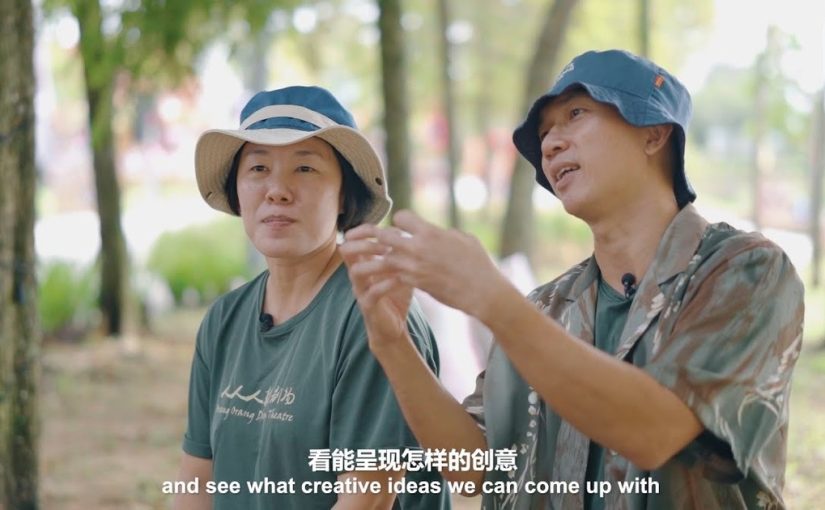
Orang Orang Drum Theatre

The drum’s origins can be traced back thousands of years to ancient civilizations across the globe, in a wide variety of shapes and sizes. Drums were used in military communications and warfare, religious rituals, as well as dance and music performances. A drum produces simple sounds: “dum dum” by hitting the drumhead and “da da” by hitting the rim. Even with varying tempos, rhythms, and force, it does not suffice to express emotional changes. Orang Orang Drum Theatre takes drumming to another level by combining drums with vocals, movement, theatrical aspects and ethnic musical instruments, as well as traditional folk songs, into their works. The integration of theatrical expression and music’s ability to convey emotions nonverbally turns drummers from percussion accompaniment into performers enacting stories onstage.

Splitting the Chinese character “众” (crowd) into three “人” (people) side by side symbolizes everyone is equal, and it can also be interpreted as “There is always someone that one can learn from among a trio”. Orang Orang Drum Theatre was founded in 2013 by Boyz Chew and Zyee Liew, with the core belief that performing arts is people-oriented, thus striving to break down barriers between performing arts and the audience. The essence of performing arts lies in fostering connections, expressing and eliciting thoughts and feelings at the same time, and cannot exist without involving people. Their ultimate goal is to make performing arts accessible to all, to create resonance between people, and to create shared memories.

Boyz and Zyee realised that performing arts encompass a wide range of forms and styles, despite their started out from 24 Festive Drums instead of receiving formal performing arts education. By keeping their minds open, apart from being proficient in drumming, they explore different possibilities of narratives and expression methods, and collaborate with artists from various fields. Whenever they perform abroad, they sought out local folklores, musical instruments, and folk songs, collecting inspiration to fuel creativity. They are also deeply observant, finding creative themes in the mundane everyday life, then they tell stories, portray characters, and convey ideas by the symbolic use of props, costumes, and gestures.

The productions of Orang Orang Drum Theatre appeal to a broad audience, be it an international stage performance or casually engage with residents of rural villages. The major difference between the two is that in a relatively enclosed space, one can be distraction-free and focus on the performance; on the streets, one needs to cope with all sorts of situations in order to perform. They also organise community percussion workshops using plastic buckets and sticks, leading everyone into a world of non-verbal communication with only beats and rhythms, where they can sway instinctively and relax their bodies and minds.

24 Festive Drums, which is derived from traditional drums, combined with various theatrical elements, led to the creation of “Drum Theatre”, where multiple dimensions of creativity come together with an overarching theme and multi-sensory expression. Performing arts and culture are vital sources of nourishment for our souls, enriching the quality of our lives. Orang Orang Drum Theatre dedicate their hard work to pass on the multi-cultural performing arts of Malaysia.

有你 UNI Production
Producer : Daniel Lim
Cinematographer : Amelia Lim / Michael Lerk
Drone : Daniel Lim
Video Editor : Amelia Lim
文案 Copywriter : Pua Hui Wen

COPYRIGHTS 2024 ECHINOIDEA SDN BHD

☕ Buy Us Coffee

Ripples: Yap Hong Ngee at 80 – Looking Ahead

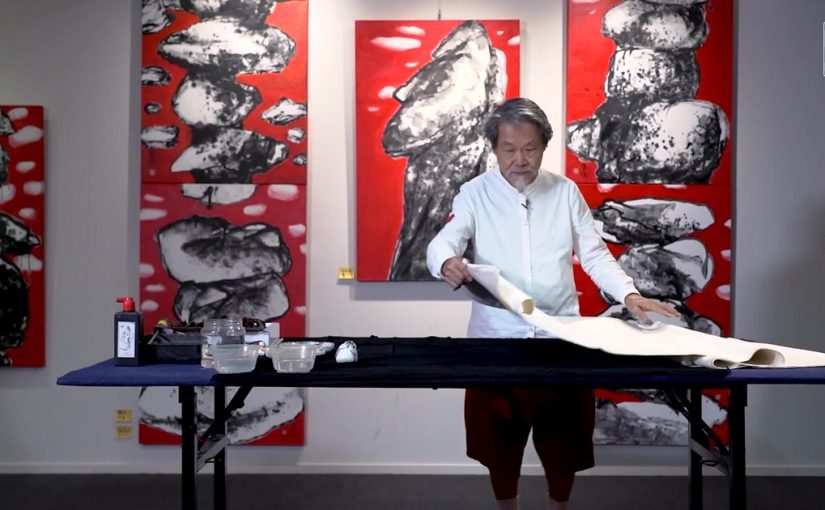
A touch of red at the end of the golden-green spiral sparked curiosity in the sparrow and it hopped over to take a closer look. Mr Yap Hong Ngee’s Chinese ink paintings are bright and funny, reflecting his inner child. In conjunction with his 80th birthday, “Ripples: Yap Hong Ngee at 80 – Looking Ahead” was held at the Oriental Art & Cultural Center in Kuala Lumpur from 4th to 12th November 2023, where 138 paintings were put on exhibition, both old friends and new ones were welcomed to meet and exchange views.

Three years ago, the epidemic hit and disrupted our peaceful lives. Mr Yap likened it to a huge stone thrown into the lake of the heart, causing ripples in the form of concentric circles. When he stayed at home in compliance with the movement control order and was bored, he expressed his feelings through his paintbrush, which resulted in a series of works. Later, when he planned this exhibition, he used ripples as the theme to connect three recurring elements in the paintings: stones, sparrows, and flowers.

Mr Yap draws inspiration from trivial things in life, blends personal experience into the paper, and imbues them with deep meaning. Stones symbolize solidity and permanence; sparrows are lively and chirping; flowers and plants symbolize the changing seasons, fragile and fleeting life. The painting that seems to be completed in three or two strokes within moments showcases the artist’s skills accumulated after years of experience. The subjects of the paintings are easy to understand, and the inscriptions are made up of straightforward or inherently funny words, which not only attract the attention of the audience, but also trigger them to think and explore.

Looking at a painting from different perspectives will give you different views. Although Mr Yap has been famous for many years, he has always remained humble and believes that his works do not need to be perfect, just as his conduct in life should be moderate. He does not seek to fill up the picture when he paints, as he believes that there is the possibility of development if there is space, leaving blank spaces for the audience to fill in. In Mr Yap’s opinion, if a painting can attract people to stop and take a second look, reflect on it and make their own assumptions, it is a great piece of work that touches people’s hearts and resonates.

Despite being elderly, Mr Yap still looks forward to the future with a positive attitude. In conjunction with his 80th birthday, this exhibition serves to invite people from all walks of life to celebrate his continuous efforts in art and painting. He set a personal goal to hold at least one art exhibition every year to motivate himself to stay active Having been painting for more than sixty years, Mr Yap has never intended to retire. Even if he can no longer hold a paintbrush, he will find another way to express and present his artwork. Perhaps this is why his paintings always reveal a tenacious vitality and contain strong emotions.

Ripples encircle stones, sparrows and flowers. One after another, color and ink paintings gather the ordinary bits and pieces of life to create meaning. Paintings notwithstanding, Mr Yap Hong Ngee’s excellent advice is “be yourself”. Experience and cherish every moment in order to lead a fulfilling and happy life.

有你 UNI Production
Producer : Daniel Lim
Cinematographer : Amelia Lim / Michael Lerk
Drone : Daniel Lim
Video Editor : Amelia Lim
Copywriter : Pua Hui Wen

COPYRIGHTS 2023 ECHINOIDEA SDN BHD

☕ Buy Us Coffee