The old streets of Chuah

On the main road which connects Bukit Pelanduk to Tanah Merah Site C, cars and motorcycles go to and fro, the road which is about 15 kilometres in length joined several surrounding Chinese villages, and linking many Malay villages as well as an Indian village, being the traffic lifeline of residents in the vicinity, and the main transportation route for stockbreeding, farms and plantations nearby, especially this area used to be the largest swine farm in the country: Chuah.

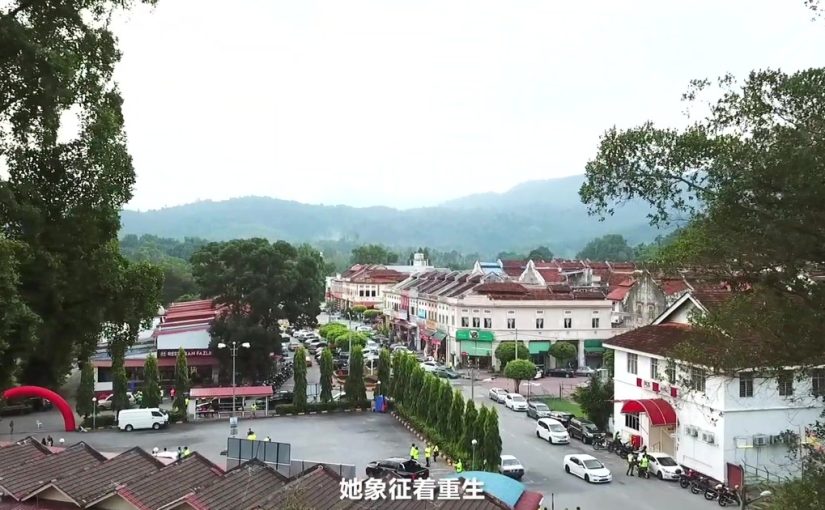
Chuah belongs to Jimah town of Port Dickson, Negeri Sembilan, consisting of several Chinese villages which used to be major swine farms: Bukit Pelanduk, Sungai Nipah, Chuah, Tanah Merah Site A and Site C. At the peak of swine farming, there were up to millions of pigs, as well as numerous big and small swine huts and feed mills. When swine farming was flourishing, there was good market demand and great prices, the villagers led a comfortable life. However, a merciless disaster 20 years ago rewrote everything. What remained of the town which used to be busy are two rows of 70-year-old wooden shophouses, no more crowds, only a handful of shops and few customers. The brilliant past of the Chuah region may have faded, however it is unable to shield the vitality of forefathers who worked hard to make a living.

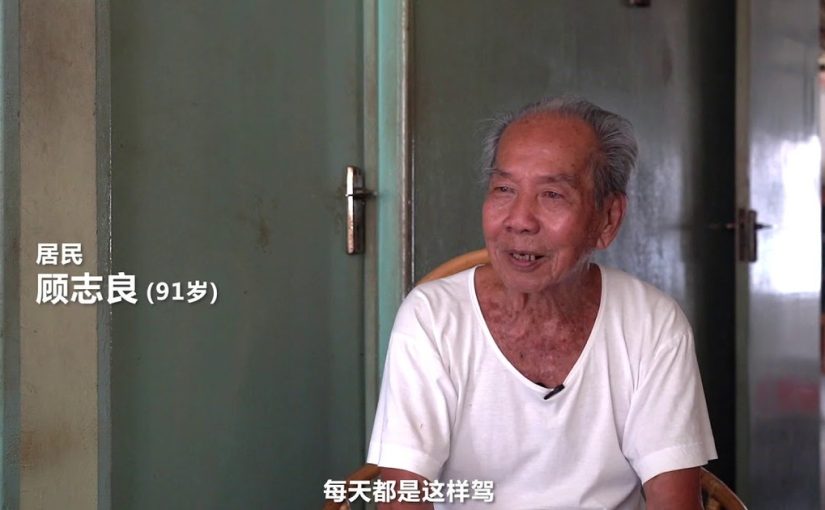
Among them is former school principal Mr See Chung Hee (transliteration), who is 91 years old. In 1949, Mr See (transliteration) sailed southwards to Malaysia from Fú Zhōu, landing in Sungai Pelek, and settled with his family in Bukit Pelanduk. The admirable Mr See (transliteration) has served as vice principal at both SJK (C) Yik Chiao (15 years) and SJK (C) Port Dickson (5 years), working as an educator for over 26 years. In the earlier days, the poor soil condition of Chuah region was unsuitable for farming, only drought tolerant cassava and sweet potatoes could be planted. The diligent FúZhōunese and locals utilise all the resources they could find, using mangrove tree branches and attap leaves to build simple swine huts, and feeding the pigs with cassava leaves leftover from the harvest, raising pigs as an additional source of income.

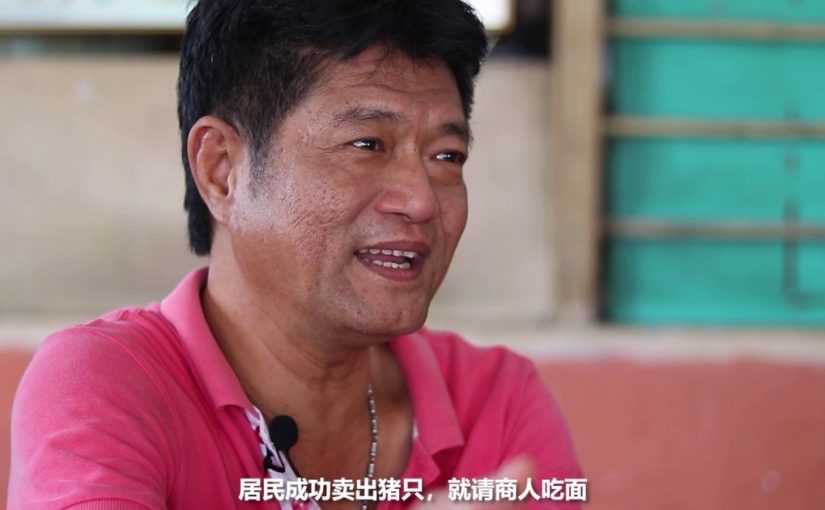
Stockbreeding has a high industrial output value, as well as extending to other industry chains, therefore swine farming in Chuah region grows rapidly, swine huts and feed mills spring up all over the place, each household raises pigs, from a minimum of dozens up to thousands. Back then, breeders lacked hygiene awareness and proper sewage systems, causing the air in the region to be polluted with livestock excrement and feed, as well as the environmental problem of severe river pollution. At the same time, swine farming promoted economic activity in the region of Chuah, the shops and tea rooms are crowded, the town is full of bustle. Swine farmers would settle their affairs in the morning, gathering for chit-chat in the tea rooms at noon, with luxurious cars parked outside the shops, people have ample life essentials, living comfortably.

Circumstances change as times pass, the remaining wooden buildings on the old streets of Chuah overseen three generations, bearing witness to dramatic changes.

Text: Daniel Lim & Pua Hui Wen

有你 UNI Production
Producer : Mok Yii Chek
Coordinator : Daniel Lim
Cinematographer : Amelia Lim / Evon Pang
Drone : Daniel Lim
Video Editor : Michael Lerk
Production Assistant : Michael Lerk
Music : The Leaves Fall from Felt Music

COPYRIGHTS 2019 ECHINOIDEA SDN BHD

☕ Buy us coffee

The Story of Kuala Kubu Bharu Village

“Gu Mao” is the direct translation into the Hakka dialect from the Malay language “Kuala Kubu”, meaning “fortress upon the river”. Located between the rivers Sungai Kubu and Sungai Rening, after the Selangor civil war ended in the mid 19th century (1867-1874), the fortress used to defend against attack from the opposing forces (Tengku Kudin and Yap Ah Loy) remain standing, thus the namesake. 

Due to the strategic geographical location and rich tin cassiterite resources, Kuala Kubu Lama was the pearl in Selangor river. Water transportation along Sungai Selangor and Sungai Kubu played a vital role in the local economy development, as it was the main channel of transporting goods, especially mined tin. The abundance of tin in Kuala Kubu Lama attracted the interests of various mining tycoons to initiate mining activity, e.g. Yap Ah Loy, Loke Yew etc. and the vast majority of Chinese mine workers were Hakkanese who came over from Huizhou, still making up 70 percent of the present village inhabitants. 

The small town of Kuala Kubu Lama leaped into prosperity as Selangor’s second largest town, rivalling Kuala Lumpur in its golden era of tin mining, and was the British colonial administration centre in Ulu Langat. However, the wealthy land faced flood hazards over the years. The ancient dam upstream of Kubu collapsed in 1883, where the flood water destroyed the whole town of Kuala Kubu Lama, generally referred to as “White Crocodile” legend, which is still talked about nowadays. The former town of Kubu (Kuala Kubu Lama) eradicated by the flood is now named Ampang Pecah, meaning broken dam. 

On a side note, the unauthorised changing of Sungai Kubu’s watercourse owing to mass mining and lawless excavation activity damaged the river structure and the riverbed became increasingly shallow, thus causing Kuala Kubu Lama to suffer from flash floods. In 1926, a heavy downpour once again submerged the streets of Kubu, victims of the great misfortune had to emigrate. Hence, the British colonial government relocated the town to a highland three kilometres away north of Kubu – Kuala Kubu Bharu. 

After the new village of Kuala Kubu Bharu was built during the national emergency in 1948, the local residents refer to the two separate areas as ‘the town’ and ‘the village’. In the 1990’s, the new village was renamed to Kampung Assam Kumbang, attributing it to the roselle flowers. 

The historical trace of a town consists of advancement and regression, old and new, destruction and establishment, diminishment and rebirth, not to mention progressing a new history. There is no harm to pay a visit, to listen to the evolution and transformation of the town as time lapses, to experience the depth of history, as well as humanity tales.

Text: Daniel Lim & Pua Hui Wen

有你 UNI Production
Producer : Mok Yii Chek
Coordinator : Daniel Lim
Cinematographer : Amelia Lim / Evon Pang
Drone : Daniel Lim
Video Editor : Evon Pang
Production Assistant : Michael Lerk
Music : 37.2度雜貨店 Three Seven Two Shop

COPYRIGHTS 2019 ECHINOIDEA SDN BHD

☕ Buy us coffee

Kuala Kubu Bharu – Garden City

Upon first stepping foot in the streets of Kuala Kubu Bharu, looking around, sighting the two rows of shophouses sitting in the town’s main street, directly observing and feeling this rustic yet adorable place likened to a colour palette. Most of the beige cement walls were peeling off, intertwined between them are vibrant doors, window frames, and pillars. As an outsider passing through, the stories acquired here could act as a filler for past historical textbooks. 

The town of Kuala Kubu Lama, which went through the ordeals of collapsed dam, disastrous floods, to currently wholly submerged, is the precedence of Kuala Kubu Bharu. She used to occupy the most strategic geographic edge, being the traffic hub of three states — besides easy access to Kuala Lumpur, northwards to Perak, and eastwards to Pahang, a compulsory passage to the renowned summer resort, Fraser’s Hill. Between the years 1923 to 1926, when the town of Kuala Kubu Lama faced flood torrents, the British colonial government intended to build the first “Garden City” in Malaysia, which will be properly planned and surrounded by greenery — Kuala Kubu Bharu.

The complete infrastructure of Kuala Kubu Bharu includes a police station, a cinema, a post office, a fire station, there is even an administration centre on the slope. Perhaps due to the frequent flood hazards earlier on, the city planner Charles Reade arranged major buildings such as the hospital, schools, clubs, and churches to be constructed on a zone higher than the river, as a precaution against the unexpected. In 1931, as heavy floods struck once again, Kuala Kubu Lama became permanently wiped out from the map. Hence Kuala Kubu Bharu, the castle upon the river, bears substantial history since its birth  It symbolises rebirth and hopes of the Kuala Kubu Lama inhabitants who moved over. Originally located at Kuala Kubu Lama and subjected to the calamity, Khing Ming primary school shifted to Kuala Kubu Bharu as well. 

At the present, the small town of Kuala Kubu Bharu dwells 60 kilometres away from the city, at the foot of Fraser’s Hill, an undisturbed safe haven. Adjacent to both hills and waterway, apart from Bukit Kutu and Sungai Chiling waterfalls visited by hiking hobbyists, there is also the magnificent Sungai Selangor river dam, with motorcyclists appreciating the much longed-for scenic views along the way. Returning to the town center, you may find widespread streets, orderly architecture constructions, and converged infrastructure.

Kuala Kubu Bharu, with its serene environment, well maintained colonial buildings stood the test of time and proved their historical trails, composing a tale about diminishment and rebirth since the moment of renaissance.

Text: Shu Yi & Pua Hui Wen

有你 UNI Production
Producer : Mok Yii Chek
Coordinator : Daniel Lim
Cinematographer : Amelia Lim / Evon Pang
Drone : Daniel Lim
Video Editor : Evon Pang
Production Assistant : Michael Lerk
Music : 37.2度雜貨店 Three Seven Two Shop

COPYRIGHTS 2019 ECHINOIDEA SDN BHD

☕ Buy us coffee