The Story of Bagan Parit Baru

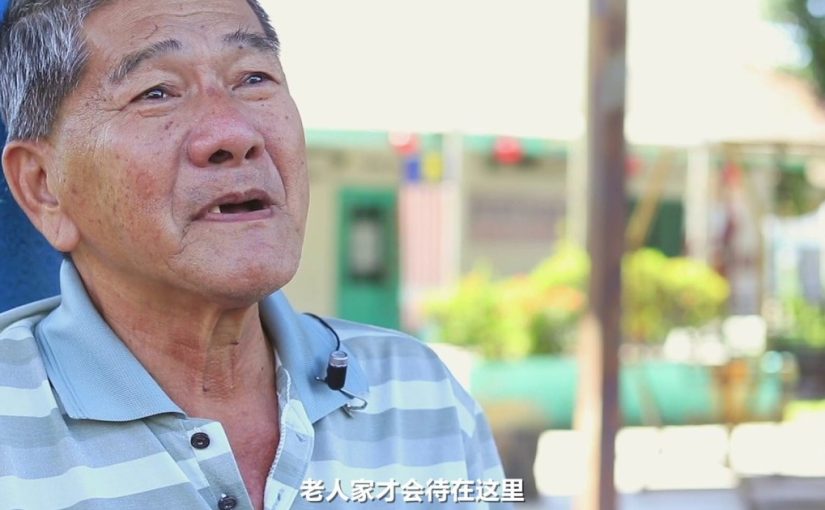
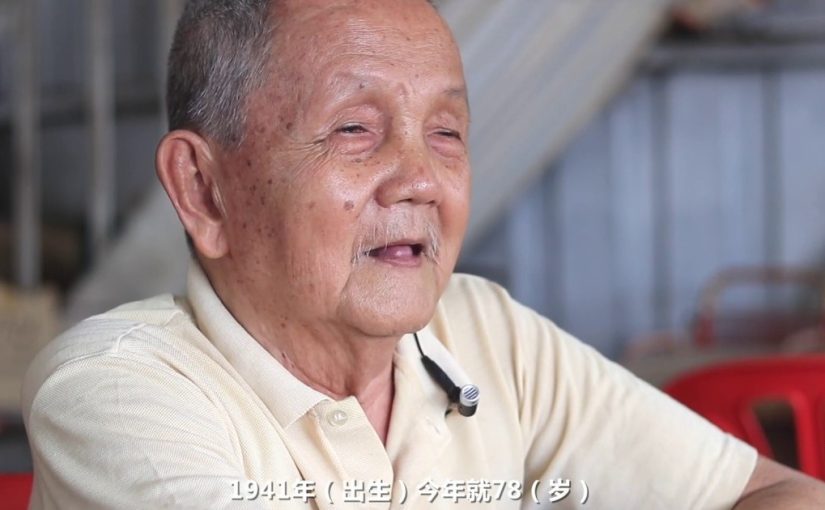
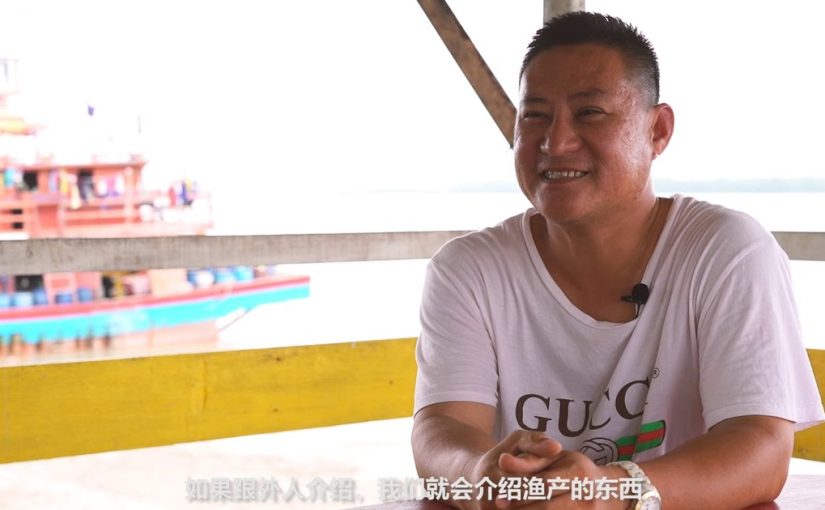
Bagan Parit Baru is a small fishing village with only 60 households, with a population of around 300 people. The fishing village is located at the northmost point of Selangor at the northwest border, separated by Sungai Bernam from Hutan Melintang fishing village in Perak. The majority of villagers make a living by fishing, therefore the houses are mostly built along the seashore. Most of the village inhabitants originated from TeoChew, 90% of them having the surname Kee, hence also known as the Kee village. 

According to dictation from elders, if calculating since the establishment of SJK (C) Poay Chneh, the opening of Bagan Parit Baru port has been almost 90 years. At the beginning there was only one house in the village, gradually the numbers increased. Therefore the villagers used to refer to the village as “single cottages” (in TeoChew dialect), instead of “Parit Baru”. There is not much infrastructure and facilities in the fishing village, only two temples and one grocery store, nevertheless the authentic seafood restaurant attracts a multitude of tourists who come all the way just for the food. 

At times when the tidal waves are especially strong, the front of the houses will be flooded, thus being the best entertainment for kids, jumping fearlessly into the water to play. The simple and quiet fishing village offers a comfortable lifestyle, however it faces the same problem of population outflow as other rural villages. The booming scene of about a hundred households in the olden days were no longer, now that people left and their houses dismantled, leaving behind wooden stakes, as the ocean breeze swept over the remains of the boom.

Text: Daniel Lim & Pua Hui Wen

有你 UNI Production
Producer : Mok Yii Chek
Coordinator : Daniel Lim
Cinematographer : Amelia Lim / Evon Pang
Drone : Daniel Lim
Video Editor : Amelia Lim
Production Assistant : Michael Lerk
Music : Out My Window 120 from Elias Music

COPYRIGHTS 2019 ECHINOIDEA SDN BHD

☕ Buy us coffee

The Story of Kampung Baru Sungai Chua

Chinese New Villages (Kampung Baru) are centralized settlements set up by the British colonial government during the 12 years of national emergency. In order to effectively stop peasants from providing food, medicine, and news to the Malayan communists, Brigg’s Plan was carried out in 1950 to forcibly centralize dispersed inhabitants from living in the forest and the borders of tin mines into a settlement under a strict supervision where each movement of the villagers were closely monitored by the army and police. Moreover, food supplies were distributed in rations. These concentration points eventually became new villages in which mainly Chinese dwell. Kampung Baru Sungai Chua is one of the 480 new villages established under this scheme. 

Kampung Baru Sungai Chua is located within 2 kilometres from Kajang town, rich tin mines were discovered prior to the village establishment, causing large crowds of Chinese miners to flock in around 1870 for mining activities, thus shaping the earliest community in the vicinity. Apart from mining, rubber plantation is also an important economic commodity of Sungai Chua, its output surpassing tin due to rapid development in the early 20th century.

From the early stage of prosperous tin mines, to succeeding in planting the first rubber plantation in Malaya, meanwhile encountering the perfect timing of skyrocketing rubber demand in the global market. Transforming from tin mining to rubber estates, such acceptance and continuation of economy facilitate the crucial factor in the steady development of Sungai Chua and Kajang city. Now that the construction of Kajang Silk highway splits Kampung Baru Sungai Chua into two halves, in addition to the MRT terminal being built in Kajang, there is hope for new spirits to be injected into this century-old town.

Text: Daniel Lim & Pua Hui Wen

有你 UNI Production
Producer : Mok Yii Chek
Coordinator : Daniel Lim
Cinematographer : Amelia Lim / Evon Pang
Video Editor : Evon Pang
Production Assistant : Michael Lerk
Music : Old Souls from Felt Music

COPYRIGHTS 2019 ECHINOIDEA SDN BHD

☕ Buy us coffee

The Story of Kampung Baru Kalumpang

Walking upon the streets of Kampung Baru Kalumpang, it is absolutely empty of cars, just a crowd of children riding their bicycles, elders meet up for chit-chat at the teahouse, the atmosphere is filled with a sense of simplicity and ease. Currently housing a population of around 3000 people, the small town of Kampung Baru Kalumpang has the longest historical standing within Hulu Selangor district, its cultivation tracing back to more than a hundred years ago. In the past, during the late 19th century, the rich tin mine deposits of Kalumpang attracted the influx of large crowds of Chinese immigrant workers. Later on, with the rubber boom, rubber plantations expanded rapidly into another important economic activity in Kalumpang. 

Federal Route 1 separated the old streets of Kalumpang from the village, therefore after the construction of the highway, the old town of Kalumpang became diminished and gradually fell into a slump. Nowadays, the historical old streets have become a ghost town, with a handful of shophouses remaining in operation and occupied. Among them is Kedai Kopi Cheong Fong, which is famous for their handmade pau, currently operated by the third generation, persisting in producing handmade delicacies fresh daily, practising the valuable skills inherited from his father.

Apart from that, the only temple in the vicinity, the ancient Kalumpang temple which is located near the old town, was completed in 1905. The temple is still flourishing with devotees, and holds a divine procession festival once in every three years. A legend circulates around the ancient temple, of which to date people still take delight in talking about, that Dr Sun Yat Sen once spent a night at the academy behind the ancient temple. 

With picturesque scenery and a laid back lifestyle, the small border town of Kalumpang is unable to escape from the scenario of youth outflow and population ageing. It is comforting that during recent years, more activities regarding humanities, culture, and creativity are organized, and receiving positive feedback from the public, injecting fresh vitality and development into the town. Not long ago, SJK (C) Kalumpang welcomed the ranks of Orang Orang Drum Theatre and their presentation “The Myth of The Sunrise” with enthusiastic response. Thus, a professional theatrical performance is brought into a rural village, broadening the villagers’ horizons and enhancing the “soft power” of the village. 

Text: Daniel Lim & Pua Hui Wen

有你 UNI Production
Producer : Mok Yii Chek
Coordinator : Daniel Lim
Cinematographer : Amelia Lim / Evon Pang
Video Editor : Evon Pang
Production Assistant : Michael Lerk
Music : Battersea Bridge from Felt Music

COPYRIGHTS 2019 ECHINOIDEA SDN BHD

☕ Buy us coffee