Tian Fu Gong Temple in Kuala Selangor

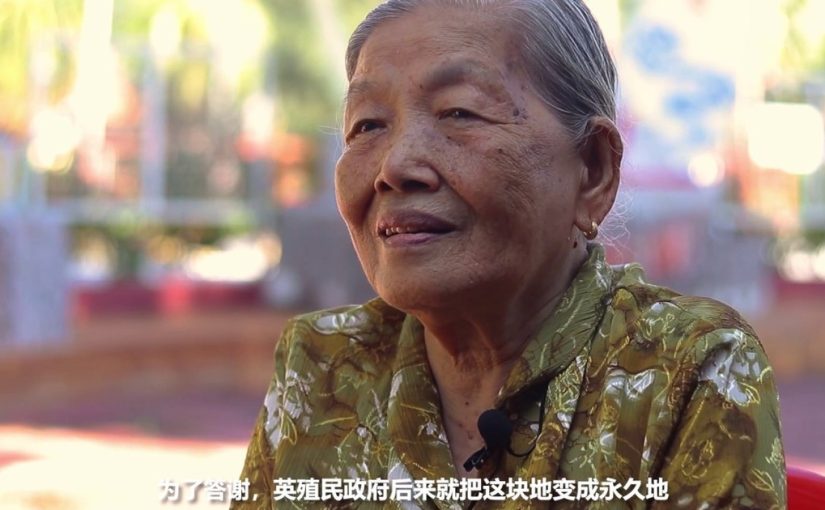
Kuala Selangor, founding place of the Selangor Sultanate, used to be the British colonial government’s administration centre in the late 19th century, and a district officer (DO) was appointed to assist the Sultan in handling state affairs. The DO once got into a railway accident, luckily a black-faced person pulled him out of the train to escape unscathed. Afterwards, he passed by a small temple at the foot of Bukit Melawati and noticed that his saviour was the deity worshipped. As a token of appreciation towards this deity, after discussion with the temple committee, the DO personally granted a freehold land for the temple, exempt from taxes, announced via press statement on 19th March 1897. The temple committee then managed Tian Fu Gong’s construction, completed in 1898 at its current address.

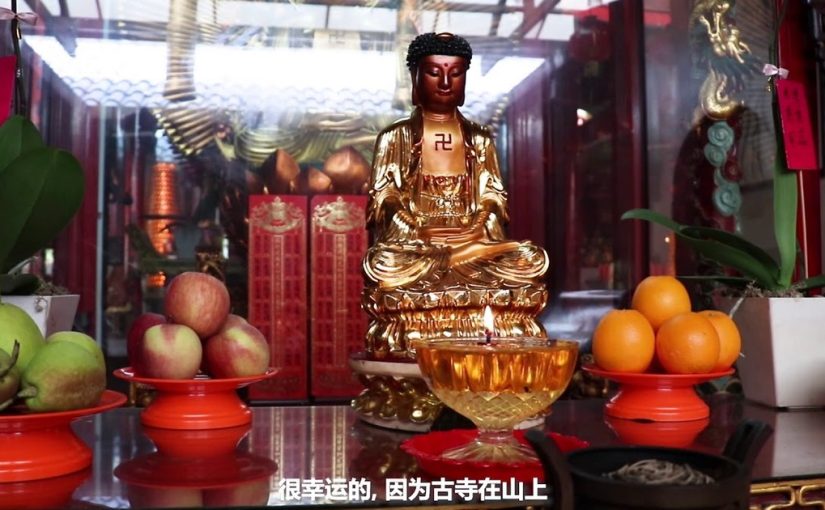
The British colonial government brought in swarms of Chinese labourers from Hokkien to mine iron in Kuala Selangor, hence their beliefs spread. The three main deities worshipped in Tian Fu Gong are MāZǔ, Lord GuǎngZé, and Zhāng Gōng Shèng Jūn, tracing back to Hokkien folk beliefs. Zhāng Gōng Shèng Jūn, who is also known as ‘Huat Choo Gong’ or ‘Tua Hock Gong’, has a black face, messy hair, and holds a sword in protection. The ‘Tua Hock Gong’ statue in Tian Fu Gong was brought from Hokkien to Kuala Selangor by senior Mr Tee Bee Siew; whereas the sworn brothers of Zhāng Gōng Shèng Jūn, ‘Dji Hock Gong’ Siau Gong and ‘Sa Hock Gong’ Ang Gong, were worshipped at Batang Berjuntai and Sekinchan respectively. 

In the early 20th century, educational resources were scarce, the Tian Fu Gong committee organised classes at the vacant temple grounds, where local intellectuals taught nearby children Three Character Classics and the Analects of Confucius. As the number of students increased, the temple compound became inadequate. With tremendous support from the local neighbourhood, SJK (C) Aik Thee moved out of Tian Fu Gong into its current address, which lies 800 metres away, housing 300 pupils. Acclaimed Malaysian patriarch Tan Sri Yeoh Tiong Lay used to study at SJK (C) Aik Thee during his childhood, his wife Puan Sri Tan Kai Yong once held a teaching post there too. Food stalls filled the freed up temple grounds, however along with a few rebuilds, in 2018 the grounds were renovated into a Chinese Zodiac Garden. 

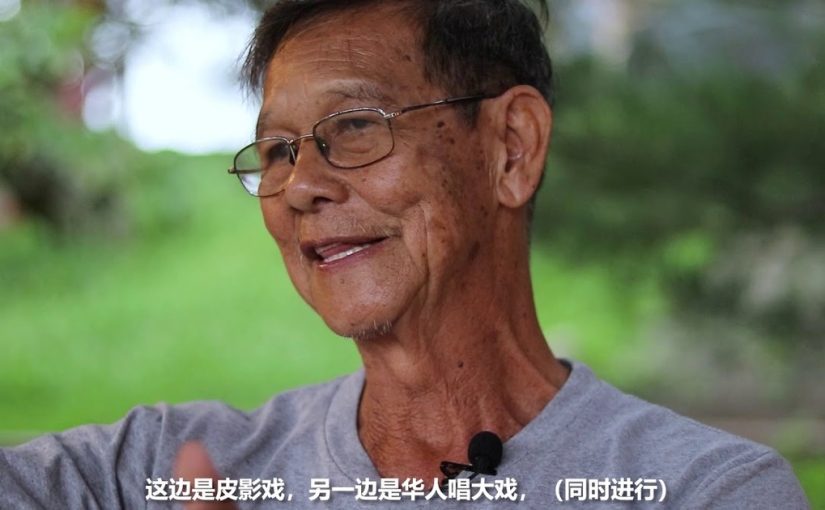
The current temple committee president Uncle Tee Lai Thian’s family has intricate bonds with Tian Fu Gong, having held posts in the temple committee since his great-grandfather’s generation. Back in the 50’s, his father was president. After his father passed away in 1987, his uncle succeeded the position, until he took over in 2005. Tian Fu Gong organises three annual festivals, namely MāZǔ’s birthday in the third month of the lunar calendar, Huat Choo Gong’s birthday in the seventh month of the lunar calendar, as well as contributions to the elderly and needy during Chinese New Year, initiated since the temple’s 100th anniversary celebration in 1990. Huat Choo Gong’s birthday is the grandest celebration, with 100 brilliantly coloured joss sticks standing in front of the temple, the stage outside the temple showing lively opera over 6 consecutive days, and the parade during the actual day attracting thousands of people. 

Besides celebrations, Tian Fu Gong also offers regular services for devotees, such as medium services on the 1st and 15th each lunar month. The current medium, Mr Ng Kit Siong, is 80 years old, fulfilling his duty at Tian Fu Gong for over 30 years. He is very kind and willing to help devotees during non-service days or even at night. Be it praying for safety, curing diseases, choosing auspicious date and time, or consecrating deity statues, Huat Choo Gong is responsive and effective, drawing devotees from near and far to visit. Nonagenarian Ong Sa Mui continually prays at Tian Fu Gong for over 50 years, even when her legs are weak and requiring aid from her son, she mutters sincere prayers while lighting incense. Being blessed by the deity, some devotees volunteer at the temple in return. Aunty Foo Kim Hiok volunteers regularly at the temples of Huat Choo Gong and his sworn brothers, riding the bus from Sekinchan to Kuala Selangor, notwithstanding the toil and exertion for over 20 years. 

Tian Fu Gong is famous in the coastal area, with the prominent Huat Choo Gong who saves people from harm. Before the 20th century, Kuala Selangor was the only commercial port in mid-Malaysia, popular with locals and overseas businessmen, Tian Fu Gong is located beside the busy street, witnessing prosperity together. To date, the prosperous street died down into two rows of shabby shophouses, whereas Tian Fu Gong still flourishes with an abundance of devotees.

Text: Daniel Lim & Pua Hui Wen

有你 UNI Production
Producer : Mok Yii Chek
Coordinator : Daniel Lim
Cinematographer : Amelia Lim / Evon Pang
Drone : Daniel Lim
Video Editor : Michael Lerk
Production Assistant : Michael Lerk
Music : Dyathon – Rose from YouTube

COPYRIGHTS 2020 ECHINOIDEA SDN BHD

☕ Buy Us Coffee

Datuk Gong in Simpang Renggam

During desolate years, Chinese forefathers sailed over and settled down in Malaysia, shedding blood and sweat in cultivating their own success, safety and wellness are of immediate concern to them while working abroad. Be it in rural countrysides or on streets and alleys, business districts, residential areas, or industrial sites, a small red shrine could be observed outdoors, the flowing incense smoke an offering to the guardian god of common folk —— Datuk Gong.

In the dense Chinese cultural history, there is a deeply-rooted belief in regional Land Gods. Upon settling in Malaysian lands, co-existing with compatriots from other races, praying together to be safe and sound, hence fusing the perception of regional Land God with pre-Islamic Malay Datuk Keramat spirit belief, resulting in a local God well-known across the country. The common representation of Datuk Gong is an elderly person wearing traditional Malay clothing, otherwise having numerous natural presence such as massive termite nests, towering ancient trees, or sacred stones. Datuk Gong accepts offerings from all races but not consuming pork, usually contributions are made according to Datuk Gong’s preference, including curry, turmeric rice, cigar etc.

Peninsula Plantation located in Simpang Renggam, formerly known as South Malaya Pineapple Plantation, is the largest pineapple plantation in Malaysia. The plantation was developed in 1954 on a large scale, covering an area of over 6,000 acres, with up to 400,000 pineapple trees planted. Back then there were hundreds of staff working in the plantation, including both local residents and labourers from neighbouring areas, made up of the three major races. This Datuk Gong shrine is located inside the plantation, its original site was a pile of stones near its current site, no matter supervisors, lorry drivers, or staff who plant and harvest pineapples, all of them will pay their respects on the way to and off work.

During the earlier days, there was no mosque near Peninsula Plantation, therefore it did not seem odd that compatriots from other races also prayed to Datuk Gong. In 1965, after the durian trees planted beside the rocks were struck by lightning, staff from the three major races joined efforts to build a temple as a place of shelter for Datuk Gong, which is today’s Ling Sian temple. The plaque recording contributions made fades gradually, however the ink is still legible, a witness to the multicultural Malaysian community living together in harmony.

On 18th November, the annual celebration of Datuk Gong’s birthday, the plantation staff will worship with curry rice prepared by Malays. Back then it was extremely busy during the festive celebration, besides Chinese opera shows, there are also wayang kulit and movie showcases to cater for compatriots from other races, both held together at the empty space in front of the temple. People of three major races gather for the auspicious event, enjoying in harmony. Now it is different, Malays strictly adhere to Islamic practices, whereas Datuk Gong is continually worshipped by the local Chinese devotees, who set up a committee. Apart from upholding the reverence of Ling Sian Temple, they also organize a series of activities such as the annual Datuk Gong birthday celebration, contribution to the needy and eldery, as well as Chinese New Year Spring Lantern Festival Dinner.

The Datuk Gong inside the plantation of Simpang Renggam pours out blessings to the locals in their work and lives, becoming their belief and spiritual sustenance. From a small shrine to the construction of Ling Sian Temple, step by step, the historical imprints show that the worshipping of Datuk Gong is not considered as religious, but a sense of respect for Mother Nature and the land we live on. Only by maintaining a heart filled with awe, there will be a smooth and safe life journey.

Text: Daniel Lim & Pua Hui Wen

有你 UNI Production
Producer : Mok Yii Chek
Coordinator : Daniel Lim
Cinematographer : Amelia Lim / Evon Pang
Drone : Daniel Lim
Video Editor : Michael Lerk
Production Assistant : Michael Lerk
Music : Dyathon – With You from YouTube

COPYRIGHTS 2019 ECHINOIDEA SDN BHD

☕ Buy Us Coffee

Ancient Guanyin Temple in Kuala Kubu Bharu

Viewing from over the top, lush green grass and hills stretch and arch, a narrow riverside passage links from the main road to a tranquil place, which is the Ancient Guanyin Temple. Situated just a few kilometres outside of Kuala Kubu Bharu, the Ancient Guanyin Temple has been based here for over a century, went through transitions, and even once left to erode by weather. Presently, the temple is surrounded by lavish trees, on its right side is a pond and a footpath, a peaceful environment with antique buildings. 

Ancient Guanyin Temple of Kuala Kubu Bharu (formerly known as Yueshan Guanyin Temple) was built in the autumn of 1904. As the founder of Kek Lok Si Temple in Penang, when the venerable benevolence Beow Lean and his follower benevolence Sian Kheng, were making preparations to build the Kek Lok Si temple, Kuala Kubu Lama became a resting point during their frequent travels between Penang and Kuala Lumpur. As the opportunity arises, benevolence Sian Kheng decided to obtain a spot here to build a branch of Kek Lok Si. Due to the temple’s location in higher terrain surrounded by hills, it was named Yueshan Guanyin Temple, derived from the two words making up the word of Yue: Qiu, and Shan, meaning tall mountains. On a side note, Penang’s Kek Lok Si is located on a hill shaped like a flying crane, hence after building the temple it was named “Huock San”, both correlating to each other. 

Since the Ancient Guanyin Temple opened its doors a century ago, it has undergone various changes and suffered several alterations. In 1926 when Kuala Kubu Lama was flooded, almost the entire town was engulfed. Luckily the ancient temple was built on a high slope, and remained safe alongside another mosque. They were not affected by the calamity, thus the villagers sought shelter in the temple. Afterwards, the Japanese occupation brought upon bloodshed, the villagers temporarily lived at the temple to avoid the massacre. Post-war, political turmoil caused the British colonial government to declare a national state of emergency, the ancient temple and its surrounding areas were marked as restricted areas to prevent local inhabitants from reaching out to Malayan communists. Therefore, the villagers moved the Guanyin and Buddha statues into the new village, where they constructed another temple for worshipment. The ancient temple was left to ruin, and slowly forgotten.

Until the 1980’s, the villagers found what remained of the ancient temple amidst rubble, hence a committee was set up to rebuild and develop the temple together with Kek Lok Si in Penang. Repairs were twice carried out, in 1988 and 1994 respectively. In 1994, chief abbot of Kek Lok Si, the Venerable Da Neng took over as second abbot of the rebuilt Yueshan Guanyin temple, and renamed it to Ancient Guanyin Temple.

As the saying goes, things will get better over time, to date the Ancient Guanyin Temple still maintains its original ancient appearance and valuable relics such as an ancient mortar, a copper bell, the entrance etc. The lush greenery and rippling river surrounding the ancient temple generates a heavenly vibe. Crisp bell ringing pierce the hollow mortality, bringing people back to nature, to cleanse each heart from weariness and misadventure. 

Text: Daniel Lim & Pua Hui Wen

有你 UNI Production
Producer : Mok Yii Chek
Coordinator : Daniel Lim
Cinematographer : Amelia Lim / Evon Pang
Drone : Daniel Lim
Production Assistant : Michael Lerk
Video Editor : Michael Lerk
Music : Reflective Waters from Felt Music

COPYRIGHTS 2019 ECHINOIDEA SDN BHD

☕ Buy Us Coffee