Sai Kee Hawker Stall

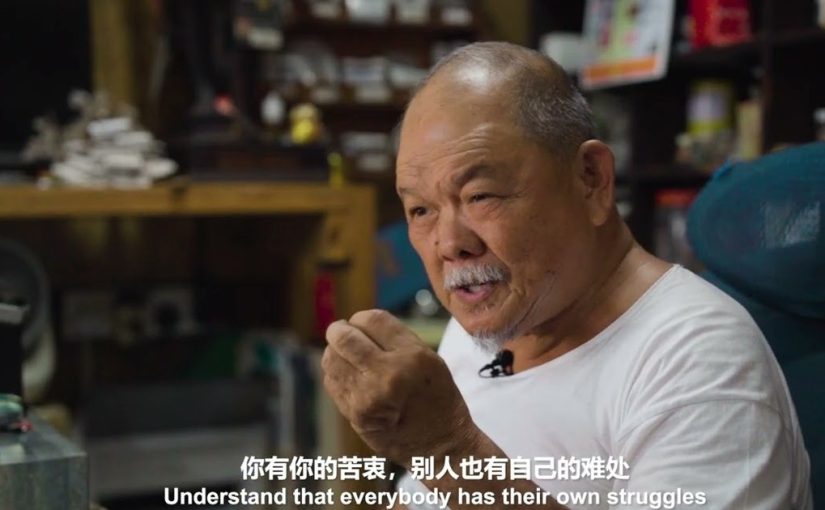
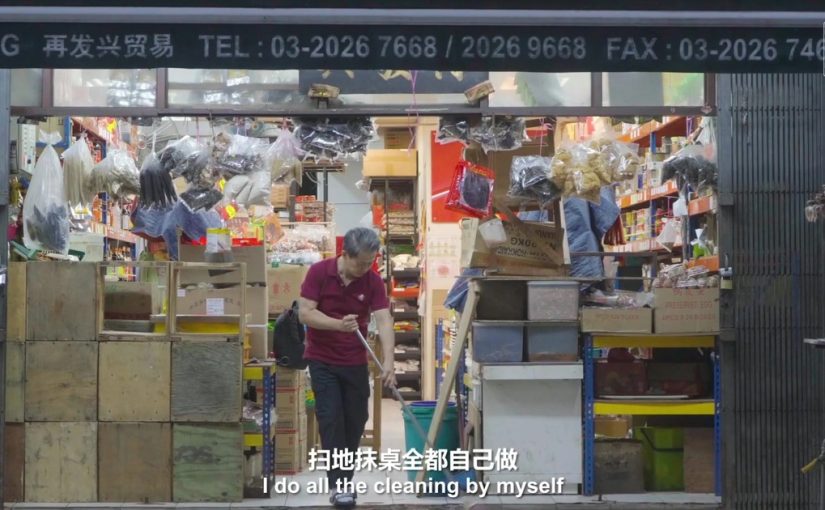
Upon entering the alley between Jalan Petaling and Jalan Sultan, the warm, comforting smell of delicious food makes one’s mouth water. Situated directly behind Kong Wooi Fong Tea Merchants, tucked beneath gray tarpaulin sheets, is the last remaining stir-fry stall in this alley – Sai Kee, which offers homely Cantonese cuisine made to order.

In the past, the alleyways around Petaling Street were filled with simple food stalls and temporary seating, offering a variety of affordable meals while also serving as community gathering spots. However, in recent years, such “Dai Pai Dong” hawker culture has gradually declined, and now the number of food stalls in the alley is few and far between. Despite the abundance of restaurants and cafés along the main streets, laneway hawkers are the go-to for comfort food.

The stall has always occupied the same spot since being established decades ago by Uncle Lai Seng Wai’s grandfather, who hailed from Panyu in Guangdong, China. At first it was an unnamed stall with no fixed menu, which served claypot chicken rice at one point, economy rice at another, and changed to serving Hokkien noodles when Uncle Lai’s father inherited the stall. Towards the end of 1969, the menu was revamped to serving stir-fry. Uncle Lai sees no reason for change when he took over the reins, therefore he retains his father’s cooking method and recipes.

Popular dishes include braised fish with tofu, sweet and sour pork, french beans with roasted pork, and fish paste soup, among others. All ingredients are freshly purchased and prepared daily. The signature fish balls are made from wild-caught mackerel, chopped, mixed, and beaten by hand to achieve a firm, chewy texture.

Bright orange flames momentarily shoot up as Uncle Lai Seng Wai ladles oil into a hot wok, engulfing the ingredients upon their being added. Uncle Lai stirs deftly with a stainless steel spatula, then instead of tossing the wok, he covers it with a flat metal lid and let the flames lick around the wok. Within a matter of moments, he removes the lid – the food is thoroughly cooked and ready to be served.

The fiery stir-fry is a technique that combines speed and precision, maintaining a high temperature throughout the cooking process. The intense heat elevates the flavors and imbues “wok hei” (breath of the wok), an enticing smoky savory aroma, to the food. The practice of covering the wok with a lid instead of tossing speeds up cooking, improving evaporation as well as flavor due to Maillard reaction. 

Among the Petaling Street community, the stall is verbally known as “Ah Sai” (scrawny lad), the nickname of Uncle Lai’s father due to his rake-thin physique. Later on, it was registered as the official name to be displayed on the stall’s signboard. The main clientele consists of long-time regulars whose families have been frequenting the stall over three generations. In recent years, the crowd consists of more office workers from the nearby area and tourists. 

Uncle Lai, who helms the wok at Sai Kee, displays his multitasking ability to handle four woks simultaneously during peak hours. He is also in charge of procuring goods from the wholesale market late at night after work, and picking up miscellaneous ingredients from the supermarket and wet market in the morning before heading to work. His younger brother Hoong Wye is in charge of taking orders, cutting ingredients and preparing steamed dishes, with the help of their aunt and a few workers. 

For Uncle Lai and his brother, helping their parents since a young age and taking over the family business in adulthood comes to them as something natural. They have been working together for more than 40 years, and as business partners in the past two decades, each taking care of their own duties, continuing the legacy of the alley’s bustling food scene. Unfortunately, there is no one to take over. The food industry requires constant, tireless work, and few are willing to accept the long hours and hard labor. Like many other food stalls that have gradually disappeared from the alley, once they can no longer work, they have no choice but to close.

有你 UNI Production
Producer : Daniel Lim
Cinematographer : Amelia Lim / Michael Lerk
Drone : Daniel Lim
Video Editor : Michael Lerk
Copywriter : Pua Hui Wen

COPYRIGHTS 2024 ECHINOIDEA SDN BHD

☕ Buy Us Coffee

Flower Garland Maker in Petaling Street

At dawn, the sound of bells and conch shells from the Sri Maha Mariamman Temple on Jalan Tun H.S. Lee in Kuala Lumpur heralds the start of daily prayer sessions. At the same time, about a dozen flower garland vendors set up their stalls in the adjacent alley. Fresh flowers in pure white, bright yellow, and vibrant red are skillfully woven into garlands and displayed on stands, creating an eye-catching scenery. Occasionally stirred by a playful breeze, the garlands emit delightful fragrances.

The Petaling Street area is a cultural melting pot. While the majority of residents are of Chinese ethnicity, there are also many from other ethnic groups, each building their own temples in the neighbourhood. The Hindu temple and the Kuan Ti Temple sit across from each other, coexisting peacefully for over a century. A row of garland stalls are located next to the Hindu temple, providing convenience for worshippers from both temples to purchase garlands as offerings. Uncle Anamalay Nadaraj (Kartik) has been making and selling garlands in the Petaling Street area for the longest duration, working up to fifteen hours a day i conjunction with the temple’s opening hours, and rarely taking a break in over thirty years. During major festivals like Thaipusam and Deepavali, he even work overnight to fulfill orders.

Uncle Kartik was born into a family constantly filled with the fragrance of flowers. His grandfather planted various flowers in their yard, and from a young age, he helped to pluck fresh flowers in the morning, hence developing an interest and learning to make garlands from his grandfather and mother. After graduating from high school, he set up his own stall in Brickfields to make and sell garlands. By chance, he obtained a business license in the Petaling Street area and relocated there. Due to the different demographic makeup of the area, compared to the predominantly Indian community in Brickfields, he expanded his customer base to include people from all three major ethnic groups as well as foreign tourists.

Flowers commonly used for making garlands include jasmine, chrysanthemums, roses, and carnations. Hindus choose flowers based on the preferences of individual deities, while Chinese typically buy lotus flowers to worship Guanyin, and tourists often favor colorful orchids. In addition to flowers, Uncle Kartik’s stall also sells items like limes and incense, a one-stop shop for worshippers before they enter the temple.

Customers can customize the size and flower selection of garlands based on different occasions and usage, from small ones to hang in cars for fragrance, medium ones for welcoming guests or during traditional Indian weddings, to large ones used for entrance or venue decorations. Different colors and types of flowers carry different meanings across cultures; for example, red garlands are chosen for Indian funerals, while white garlands are preferred for Chinese funerals. In recent years, gifting garlands instead of bouquets at graduation ceremonies became a trend, which Uncle Kartik finds amusing.

By weaving garlands for over thirty years, Uncle Kartik’s family also flourished. As he is getting advanced in years, he has started hiring help. Unfortunately, few local youths are willing to work in this trade, so he brought in staff from his ancestral home in India. Uncle Kartik’s son helps in managing social media and online orders during his free time and runs errands for deliveries. Perhaps in the future, he will inherit this family business, allowing the vibrant garlands to continue spreading their fragrance in Petaling Street.

有你 UNI Production
Producer : Daniel Lim
Cinematographer : Amelia Lim / Michael Lerk
Drone : Daniel Lim
Video Editor : Michael Lerk
Copywriter : Pua Hui Wen

COPYRIGHTS 2024 ECHINOIDEA SDN BHD

☕ Buy Us Coffee

Rattan in Gurun: Ban Lee

Raw rattan vines grow in the tropical rainforests, and require meticulous processing to be made into furniture. Rattan furniture maker Chiau Tai Huat, born and bred in Gurun, has been working in the industry for decades. Throughout his career, he worked in several different places before returning to his hometown and set up his own shop – Ban Lee. At 78 years old, he is still using his strong physique and skillful hands to craft all sorts of rattan furniture and household goods, at the same time accepting custom order requests.

Gurun is the second largest Chinese new village in Kedah, with around 300 households, the majority of them being TeoChew. Agriculture used to be the main local economy, later on there came manufacturing and industrialisation. In the early days, there were limited furniture options, almost every household used rattan furniture, which was inexpensive and of good quality. The rattan furniture industry in Gurun was most prosperous from the 1960s to the 1980s. Compared with wooden sofas or leather sofas, rattan sofas are light, cool and not easily damaged, therefore especially popular.

The first rattan furniture shop in Gurun, Eng Thye Lee, used to be an ironsmith shop ran by Chiau Tai Huat’s father. Chiau’s elder brother, who was unwilling to learn the trade, went outstation and learned to make rattan furniture instead, thus transforming the business but still operating under the same trade name. Back then he employed a dozen or so apprentices, providing livelihood for young dropouts. After mastering the craft, they would start their own rattan workshops at home in the new village. During peak seasons, Eng Thye Lee would even outsource some projects to them.

Chiau Tai Huat learnt to make rattan furniture from his elder brother, and became his aide in Eng Thye Lee. After a while, he went around Sungai Petani, Kulim, Yan, Alor Setar, and Kota Bharu, Kelantan, working in various rattan shops and gained much experience. He then returned to his hometown to set up his own shop, and took great pains to reclaim a shoplot that his father rented to an Indian barber. Ban Lee officially opened in 12th May 1986, with beautiful hopes of “prosperous” and “everything goes well”.

A rattan stick with a diameter of an inch or so does not change colour when burned, but gradually soften under the high temperature. Bend it while it is hot, and it will retain the shape when it cools down. To achieve a specific curvature, it may be necessary to repeat heating and apply force several times. Over time, the surface of the rattan furniture will appear shiny due to being moisturised by sebum, no maintenance is required. Even if the rattan strips wear out, Uncle Chiau provides repair services.

With the rapid rise of industrialisation around the 1990s, there were more furniture choices at affordable prices, demand for handmade rattan furniture decreased. Moreover, the government enacted strict laws to control forest harvesting, resulting in skyrocketing raw material prices. As things went from bad to worse, most rattan furniture makers had no choice but to switch careers, only a handful remain in Gurun new village. Till this day, Ban Lee and Eng Thye Lee are still standing on the old street. 

Rattan furniture provides excellent ventilation and is durable, suitable for both indoor and outdoor use, its natural colour exudes a simple and tranquil atmosphere. Furniture made from raw materials in local tropical rainforests has evolved from crude products in the early days to fashionable artisanal crafts, albeit less in demand. Uncle Chiau is optimistic about the future of rattan furniture, and he is glad to see his son taking interest in inheriting the trade. With passion, perseverance, and patience, one will manage to make a living.

有你 UNI Production
Producer : Daniel Lim
Cinematographer : Amelia Lim / Michael Lerk
Drone : Daniel Lim
Video Editor : Amelia Lim
Copywriter : Pua Hui Wen

COPYRIGHTS 2024 ECHINOIDEA SDN BHD

☕ Buy Us Coffee