Tung Loh Temple in Jenjarom

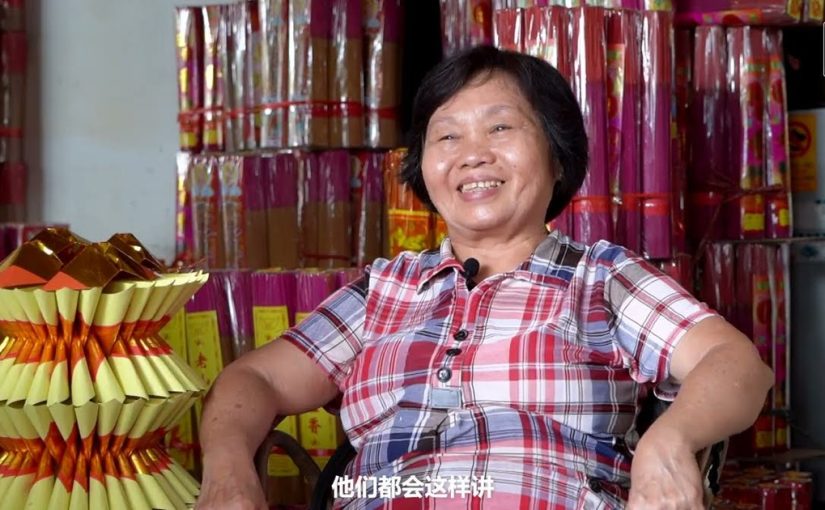
“Knock!” On the table dusted with flour, a few strokes are written by a tip of the wooden sedan chair. A red cloth is tied around the waist of the red-faced Guān Dì, who sits on the sedan chair carried by two bearers. When Guān Dì manifests, the sedan chair sways to convey messages from the deity. On Tuesdays and Fridays at 8P.M., devotees gather at Tung Loh Temple nestled in the village of Jenjarom for Guān Dì consultation sessions.

Tung Loh Temple worships Guān Dì, protector of the common folk. Originally named Guān Yǔ, courtesy name Yúncháng, he was a military general serving under Eastern Han in the Three Kingdoms. His heroic deeds were documented in the classical book, The Records of the Three Kingdoms, and became widespread with the popular fiction The Romance of the Three Kingdoms. After the Peach Garden Oath, despite being captured by Cáo Cāo, he remained loyal to Liú Bèi, therefore he became a virtuous role model. The common folk immortalized him in celebration of his good virtues, and various posthumous titles were conferred to him till the Dì (Emperor) level.

In the 1910s, China was in the midst of political instability, as forerunners sailed southwards to seek a better living, incense ashes from Tung Loh Temple in Anxi County were carried for protection. Upon settling in Jenjarom, the Guān Dì faith was worshipped at home. Due to resources being scarce, when facing problems or sickness, people could only pray to deities for blessings to overcome difficulties. With his supreme powers, Guān Dì offers effective solutions and treatments, attracting neighbouring villagers to come to pray and seek consultation. In the 1950-60s, Jenjarom did not have medical facilities, Guān Dì would give prescriptions and went around in a wooden sedan chair to find herbs in the vicinity for ill devotees.

Consulting Guān Dì via wooden sedan chair spanned over a century in history, although the practice has been abolished in China, the Chinese who migrated overseas kept it running. There are barely any prohibitions regarding Guān Dì consultation, only refrain from noisy behaviour or participating in illegal activities. The most crucial aspect is to show sincerity and respect towards Guān Dì. Upholding Guān Dì’s mentality of helping others, many devotees attend consultation sessions as volunteers, as well as train up generations of sedan bearers. Due to the unspoken rule of rejecting monetary gifts, devotees who received blessings and would like to show their gratitude raised funds to acquire land to build a temple for Guān Dì. Tung Loh Temple in Jenjarom was established in 1986 and has been flourishing since.

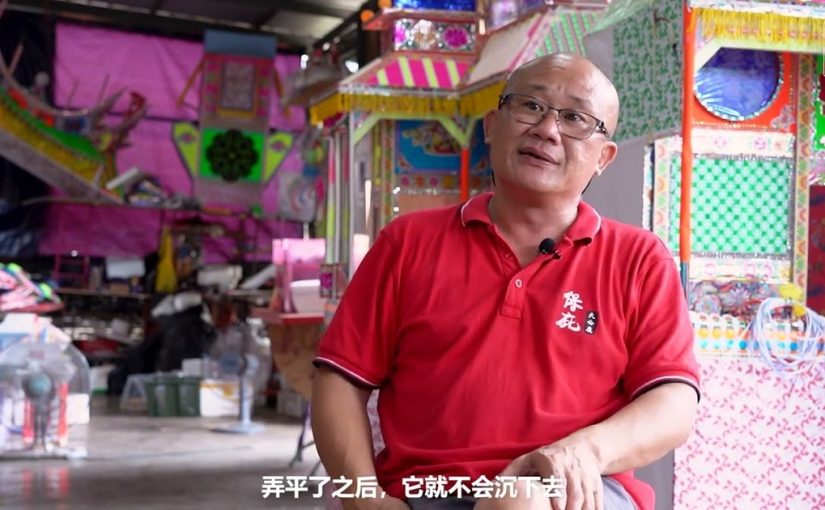
Like most local villagers, the current temple committee chairman, Mr Tan Chin Chuan, comes from a family of fervent Guān Dì devotees, of which five generations are sedan bearers. Under social influence, he also engaged in worshipping Guān Dì, thus learning the story behind the faith as well as inspirations: Uphold good moral principles, be filial to parents, be loyal to spouse, siblings, and friends. Incidentally he accepted the post of committee chairman, following Guān Dì’s will to help the Jenjarom community. During festive celebrations, Tung Loh Temple gives back to the society by contributing foods and goods to the needy.

The worship of Guān Dì may had its roots in feudalism, however it makes a positive impact on society, promoting valuable traditional culture as well as encouraging moral behaviour. Even though times change, loyalty and bravery are still generally appreciated. With devotees dedicated in spreading the Guān Dì mentality, Tung Loh Temple in Jenjarom thrives on.

有你 UNI Production
Producer : Daniel Lim
Cinematographer : Amelia Lim / Evon Pang / Michael Lerk
Drone : Daniel Lim
Video Editor : Michael Lerk
Copywriter : Pua Hui Wen

COPYRIGHTS 2022 ECHINOIDEA SDN BHD

☕ Buy Us Coffee

Chin Chong Soy Sauce

Kampung Lee Kong Chian in Gombak, Kuala Lumpur, is located beside Jalan Gombak heading east to Bentong, Pahang. Forking paths like palm lines led into the village, the yellow boundary walls of Chin Chong Soy Sauce enclosed hundreds of ceramic jars sunbathing in neat lines. The netting above the jars prevented entry of unwanted particles, yet unable to block the delicious aroma of soy sauce from spreading in the air.

Under the hot sun, Uncle Ng Chui Chong removes the lid of the soy sauce jar to yield a rich brown liquid with a slightly viscous texture. The first step of producing naturally brewed soy sauce is to soak and cook soy beans, then coat with flour to form a starter culture. Forming the starter culture and developing the bacterial culture is crucial in brewing soy sauce, as the amino acids produced during the weeklong fermentation process is essential to determine the quality grade of the soy sauce. Then combine the starter culture and brine in a ceramic jar, expose to direct sunlight and continue to ferment for three months.

Soy sauce craftsman plays the role of a vessel’s captain in determining to which direction the soy sauce’s flavour and quality should be heading, precisely controlling each step of the fermentation process to ensure the final outcome meets satisfactory standards. In Kuala Lumpur, there are only a handful of experienced craftsmen currently still active in the industry, Uncle Ng being one of them. During his youth, he worked at a large-scale soy sauce manufacturer for 12 years, began toiling before dawn, carrying burdens over 100 kilograms on the shoulders, accumulating precious experience and mastering the art of brewing soy sauce.

Having left his former employer, Uncle Ng chose Kampung Lee Kong Chian, a Chinese settlement of about 300 households, to start his own business. The village occupying 30 acres used to be a plot of coconut trees opposite Lee Rubber Manufacturing in Kuala Lumpur, in the 1960s it was offered to employees for building their own quarters, later on tenancy was extended to non-employees. The settlement was built without a plan, hence the unstructured character of the village layout and narrow paths, however the residents are very community oriented. Uncle Ng was elected as the community board chairperson for almost 30 years due to his diligence.

Chin Chong Soy Sauce was founded in 1973, producing naturally brewed soy sauce, cooking caramel, vinegar, and various sauces. The brand name was inspired by Uncle Ng’s name, suggested by a friend and heartily approved by Uncle Ng himself, as he jokingly said it is suitable for any line of business. In the initial days, Uncle Ng multitasked by brewing soy sauce in the morning and went selling soy sauce door-to-door with his mother-in-law. It was challenging to convince customers to try their homemade soy sauce, with doubts about product authenticity.

Eventually, Uncle Ng’s hard work paid off, Chin Chong Soy Sauce built a positive reputation and shifted to wholesaling, many restaurants became loyal customers. Apart from Uncle Ng’s excellent brewing skills, premium ingredients such as non-genetically modified soy beans are used. At the end of soy sauce fermentation, a sample of the resulting product is extracted and tasted by Uncle Ng who has a sensitive palate. After being approved by Uncle Ng, the soy sauce is required to undergo filtering, ultra-heat treatment, and bottling before leaving the facility.

86-year-old Uncle Ng Chui Chong now slowly steps into semi-retirement, reducing his work hours and handing over the reins to his children. In the yard full of old-time ceramic jars, by simply observing and sampling the flavourful soy sauce, the taste which lingers on Uncle Ng’s palate is a complex blend of life’s experiences.

有你 UNI Production
Producer : Daniel Lim
Cinematographer : Amelia Lim / Evon Pang / Michael Lerk
Drone : Daniel Lim
Video Editor : Amelia Lim
Copywriter : Pua Hui Wen

COPYRIGHTS 2022 ECHINOIDEA SDN BHD

☕ Buy Us Coffee

Lady Rubber Tapper

Rubber trees stand tall and straight in neat rows, bright rays of the morning sun shine through the leaves. Madam Chong Sew Cheen stoops slightly to score a rubber tree with the pull-type rubber tapping knife in her hands, milky-white latex sap flow downward the diagonal cut. Madam Chong inserts a metal spout to allow the latex to drip into a collection cup held in place by a galvanized wire.

In the 20th century, there was a massive boom in rubber trade, Malaya became the world’s largest producer of natural rubber, which attracted swarms of British capitalist investors. As Malaya gained independence from British rule, plantations were divided and sold upon British capitalists leaving the country, several locals spent their hard-earned money to buy over and became smallholders. Mambau, where Madam Chong resides, was mainly consisted of rubber plantations. At eleven years old, she followed in her mother’s footsteps to tap rubber at a British-owned plantation. Over the next six decades, she moved around to work under different smallholders. 

The rapid economic growth since Malaysia’s formation led to urban sprawl, property developers acquired plantations in Mambau and surrounding areas to build new townships such as Seremban 2 and Bandar Sri Sendayan. In order to sustain a livelihood, Madam Chong had to work at remote Malay reserved lands, making daily trips alone via motorcycle for about twenty minutes, passing by residential and commercial properties which used to be rubber plantations, to reach her current workplace. 

The switching of workplace brought on changes to Madam’s Chong working mode, where she now rents rubber trees from the landowner for a fixed monthly fee, and she is free to arrange her own working hours and workload.  Due to the amount of latex sap produced by rubber trees being limited, she divided the six-acre plot into two patches to be tapped alternately, the downscaled working area means that she no longer need to rush to work before dawn, as it can be completed throughout the morning.

Around seven in the morning, Madam Chong arrives at the rubber plantation on her motorcycle, ties on her apron and headscarf, lights a mosquito coil to hang upon her waist, then goes around the rubber trees with her bucket of tools. A regularly used tapping knife, a spare one, some metal spouts, a parang to collect firewood, and spare spark plugs in case her motorcycle misfires. After completing her work around noon, she goes home to have lunch and rest, later in the evening she sharpens the tapping knives and gets ready for the next day’s toil.

Mambau’s rubber industry dwindled in line with weakening global demand, smallholders converted to palm or durian plantations. Local rubber tappers either change their jobs or retire, only a handful remain persistent lke Madam Chong. Big cities offer more opportunities, younger generations rather flock to urban areas than tap rubber. Nowadays rubber plantations face workers shortage, even in hiring foreign labour. Local Chinese rubber tappers are becoming increasingly rare. 

Septuagenarian Madam Chong has been working as a rubber tapper for the majority of her life. Although she occasionally suffer leg pain from walking on slopes, she remains jovial and have no plans to retire yet, as she may pass time and exercise through her work. Despite the decline of the rubber industry, Madam Chong still manage to make a living.

有你 UNI Production
Producer : Daniel Lim
Cinematographer : Amelia Lim / Evon Pang / Michael Lerk
Drone : Daniel Lim
Video Editor : Evon Pang
Copywriter : Pua Hui Wen

COPYRIGHTS 2022 ECHINOIDEA SDN BHD

☕ Buy Us Coffee