Dexon Button Shop

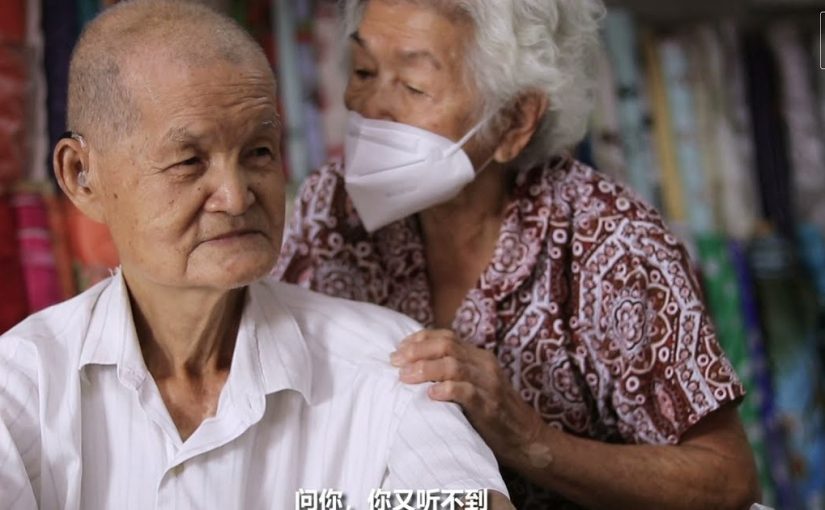
Dexon Button Shop is located on the ground floor of an old shophouse in Jalan Petaling, Kuala Lumpur. Numerous stalls in front of the five-foot way formed a barrier in which the shop is tucked away. Going through the narrow passageway leading to Dexon Button Shop, the sunlight rays which fall on the front of the shop radiates a special charm. Another captivating sight is the neat and compact wooden cabinets and the dazzling array of buttons on display inside the shop. A myriad of metallic buttons, shell buttons, wooden buttons, plastic and increasingly rare fabric buttons are procured both locally and internationally.

Apart from offering a multitude of buttons, Dexon is also a haberdashery, selling zippers, needles and thread, scissors etc. At the same time, Dexon is one of the few shops in Petaling Street which is family-run by Chinese owners to date, a 40-year-old establishment still in business today. The signboard hanging above the shop entrance became faded over the years, contrasting with the semi-circular column aside which retains bright scarlet letters. The two antique machines——a manual riveting machine and a fabric button machine, are not commonly found among haberdasheries.

The founder of Dexon Button Shop, Mr Chai Chang Nam, hails from Kuala Kangsar, Perak. During his youth, he worked at a tailor shop in Kuala Lumpur. When the shop ceased operations, he started his own haberdashery business at a corner on Jalan Tun H.S. Lee. After a fire incident, Mr Chai shifted to a half shop at No.37 Petaling Street. Later on, the property owner sold the shoplot to a hotel operator, he had no choice but to relocate. Fortunately another shop is available a stone’s throw away, thus he occupied the current premises at No.45 Petaling Street in 1992. The grand reopening was a major event, congratulatory flower stands from his peers almost filled the entire five-foot way. Mr Chai’s second daughter Villy vividly recalls the shop was as if a florist, a fun and exciting childhood memory.

Now that Mr Chai is growing old, he considered retirement during the Movement Control Order (MCO). As Villy took over the reins, he assumed an advisory role. Villy has often helped out since a young age, and is familiar with the shop’s operation. With the help of staff who have up to twenty years’ experience, she has no trouble with the transition. Everybody perform their own duties, covering basic tailor services besides selling sewing supplies, such as stitching buttons, alterations, seaming and zipper repairs.

Chinese knotted buttons are staple goods of the shop, all handmade by Villy and her mother. Colourful fabric strips are weaved into floral patterns, holding the collar in place by a knot and a loop. Usually found on traditional garments such as cheongsam, knotted buttons date back many centuries, with rich cultural heritage. The skills are passed down from Villy’s grandmother to her mother, and then her as the third generation. As knotted buttons fell out of style, this traditional skill may soon be forgotten.

Petaling Street and its surrounding areas, including Jalan Tun H.S. Lee and Jalan Sultan, is the main Chinese settlement during the early days of Kuala Lumpur, with 140 years of history. During her childhood, Villy would be at the shop after school, waiting for her parents to go home together. The staff would let her play around, and witnessed her growing up. Petaling Street is a bustling and friendly neighbourhood to Villy. Almost all shops in the area were previously run by Chinese merchants, there were many textile and clothing shops, as well as traditional herbal shops, hardware shops and food stalls. Some shops ceased operations due to lack of successors, while others rented their premises to foreigners, hence the Chinese cultural features in Petaling Street dwindled. Last year, Villy returned to this intimate shop and community, embarking on a new journey after being laid off.

A button may be tiny, but it is practical in fastening garments or as an accessory. Even though Petaling Street may have altered from the past, Dexon Button Shop remains low-key, holding on thanks to regular customers and craft hobbyists, forming intricate bonds in the same way buttons hold clothes together.

Text: Daniel Lim & Pua Hui Wen

有你 UNI Production
Producer : Daniel Lim
Cinematographer : Amelia Lim / Evon Pang / Michael Lerk
Video Editor : Amelia Lim
Copywriter : Pua Hui Wen
Music : 《Soft Piano》

COPYRIGHTS 2021 ECHINOIDEA SDN BHD

☕ Buy Us Coffee

Winson Burger

Around 7A.M., a figure could be seen riding an old motorcycle which bore a metal case, slowly heading towards the junction between Pudu Integrated Commercial Complex (ICC Pudu) and Pudu Plaza, the vehicle is then propped beside a lamppost. Uncle Chai Tsim Luk opens the metal case and starts prepping the fresh ingredients purchased daily from the market: cutting sheets of meat jerky into strips, and topping up the empty container with meat floss. The charcoal inside the portable stove is already ignited, all the necessary preparations have been made. At 8A.M., Uncle Chai starts selling charcoal-grilled meat jerky and floss buns, till noon or sold out. 

Meat jerky and floss bun was a creative approach by meat jerky stores to promote consumption of meat jerky besides being a festive food during Chinese New Year. Affordable and tasty, substantial and convenient, meat jerky and floss bun was the hype of the 1960s and 70s. Hawkers seized the business opportunity and sprung up everywhere, popularizing the meat jerky and floss bun which then became a classic breakfast fare. 

Firstly, slice the bun horizontally, spread with butter, and grill until crispy and aromatic. Uncle Chai carefully trims the burnt bits away, and spreads more butter before adding fillings. He piles up the meat floss and a few cucumber slices, add a strip of jerky, and then squeeze some chilli sauce or ketchup based on customer preference. 

Uncle Chai hailed from Sentul, a born-and-bred KL-ite. During his youth, he worked as a movie projectionist, a deliveryman and various other jobs. In his hectic lifestyle, he fell in love with the common and affordable meat jerky and floss bun. He happened to make an acquaintance with a hawker whom he frequented, and started selling meat jerky and floss buns in the morning, after he finished his night shift at the cinema. When the cinema ceased operations, he became an itinerant hawker, with flexible work hours and locations. He works if the weather permits, and rests when it rains. 

The eye-catching yellow signboard is handwritten by Uncle Chai himself, who acquired a bold calligraphy style from decades of writing movie flyers at the cinema. Since the British colonization era, Malaysians have started to adopt English names. Uncle Chai took a liking to the name ‘Winson’, transliterating it into ‘everlasting victory’ in Chinese, also containing good hopes for his enterprise. In his younger days, he went around crowded places, such as housing areas in Cheras, Bukit Bintang, and Chow Kit road. As he grew frailer with age, he chose to set up a stall in a fixed spot at Imbi wet market, now relocated to ICC Pudu. 

Uncle Chai believes that good grooming is courtesy to others, therefore he always keeps up a neat and clean appearance. Sporting a short-sleeved shirt, trousers, and black leather shoes, he appears to be full of spirit despite being over 80 years old. Uncle Chai thoroughly enjoys his job, as working hours are short, and no abusive scolding by superiors involved. Over the past 40 years, most of his fellow hawkers either changed jobs or switched to using gas stoves, yet he sticks to using a cumbersome charcoal stove to maintain the authentic flavour. Even though ingredient costs continue to hike, he only implemented slight price increases. Now that fellow hawkers are selling at RM4 to RM5 per piece, Uncle Chai sells at RM3.30, the portions remain generous. A single man, he only needs to generate sufficient income to sustain himself, without having to worry about feeding a family.

Pursuing his passion for a career, Uncle Chai retains an upbeat attitude and enjoys an ordinary life. An old motorcycle and a custom-made metal case keeps him company in making ends meet. He is satisfied with what he has, and is honest and kind, reaping a comfortable lifestyle. 

有你 UNI Production
Producer : Daniel Lim
Cinematographer : Amelia Lim / Evon Pang / Michael Lerk
Drone : Daniel Lim
Video Editor : Michael Lerk
Copywriter : Pua Hui Wen
音乐 Music : 《Nature》

COPYRIGHTS 2021 ECHINOIDEA SDN BHD

☕ Buy Us Coffee

Resilience During the Covid-19 Pandemic

More than a year passed since the outbreak of Covid-19 and implementation of Movement Control Order (MCO), a life-changing roller coaster ride for everyone. From worrying about getting infected, lack of income, to gradually returning to work, and getting used to the new normal standard operating procedures (SOP), our dear 10 uncles and aunties remain optimistic. Regardless of the situation, life goes on, they put on a brave face and take strong strides forward.

During the first phase of MCO, most economic sectors ceased operations temporarily. Uncles and aunties took this opportunity to have a good rest, bonding with family members while staying at home. Leisure time can also be spent in a productive way, such as trying out new things and learning new skills. They work on keeping the mind active in order to avoid laziness and procrastination.

As the numbers of confirmed Covid-19 cases are reined in, and MCO rules eased, certain economic sectors are allowed to reopen with SOP compliance. Despite footfall decline due to various travel restrictions, as well as difficulty in forecasting consumer spending habits, this decision sparked hopes as they could escape from boredom and income dilemma. Even as uncles and aunties return to work with anticipation and anxiety, suffering from revenue losses, they intend to work as long as they could, and to improve gradually.

The spike in cases nearing Chinese New Year resulted in tightened MCO restrictions, wanderers were unable to return home for family reunion. Fighting the Covid-19 pandemic remains the top priority, therefore uncles and aunties had to suppress their familial longings. Each celebrate Chinese New Year at their current place of residence, gathering via videocalls. Even though they were unable to visit each other, social distancing does not cut off family relationships. An occasional phone call, a greeting, brings along warm wishes.

The Covid-19 pandemic brought upon changes in our daily lives, a constant battle is still being waged. Our ten dear uncles and aunties shift their life perspectives, accept responsibility in preventing the spread of Covid-19, and carry on with their various labours. Their perseverance in uncertain times is much admirable, patiently march towards the future with unwavering steps.

Text: Daniel Lim & Pua Hui Wen

有你 UNI Production
Producer : Daniel Lim
Cinematographer : Amelia Lim / Evon Pang / Michael Lerk
Video Editor : Evon Pang
Copywriter : Pua Hui Wen
Music : 《Romantic Piano》 / 《Beautiful Inspiring Piano With Strings》

COPYRIGHTS 2021 ECHINOIDEA SDN BHD

☕ Buy Us Coffee