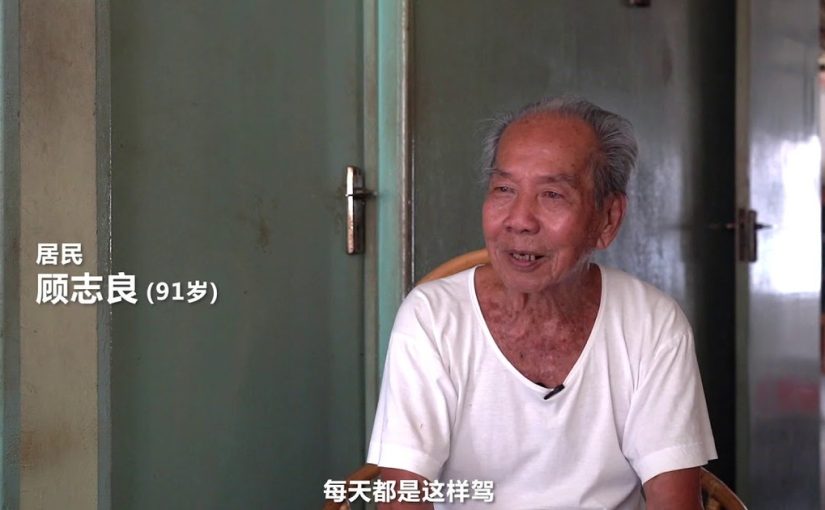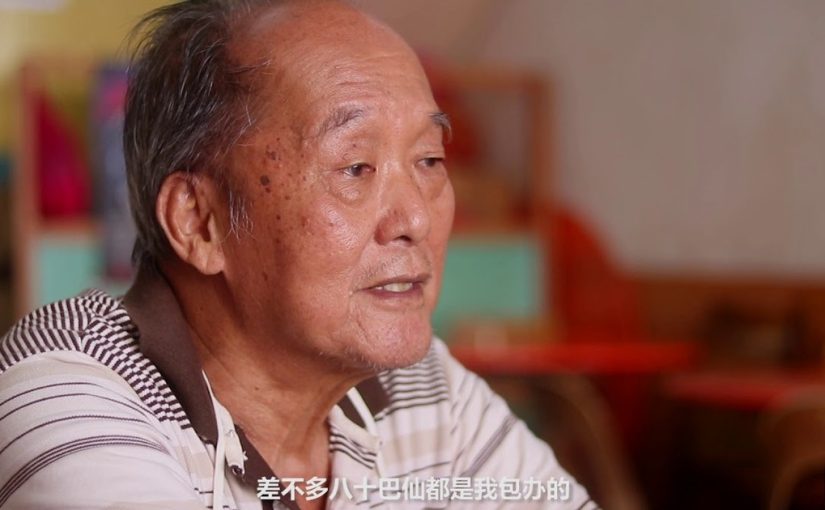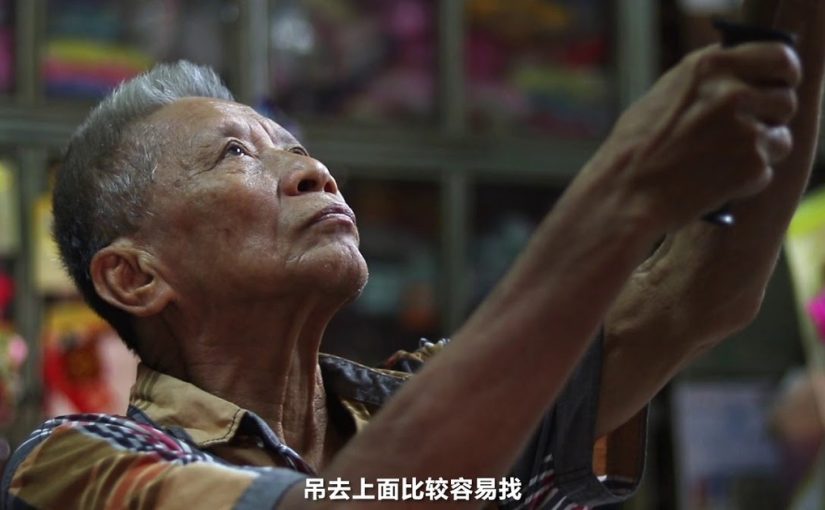
Teng Wun Bakery & Confectionery

The outmoded layout of the shop, with classical glass displays on either side, coral colours contrasting the white walls, highlighting the shop’s vintage appearance. Apart from two coral red shutters, there were no conventional doors, exposing full view of the shop’s unsophiscated style. Freshly out of the oven, the kaya puffs emit wafts of aroma. For donkey’s years, relentlessly making fresh kaya puffs in-house from scratch on a daily basis, with no additional preservatives, this is what makes Teng Wun Bakery and Confectionery popular with locals and a must-try for tourists.

Forty years ago (in 1979), Hoo Jee Suan and his wife leased the shop lot and partitioned the shop front into two: on the right is a female salon managed by Mrs Hoo, whereas on the left Mr Hoo bakes pastries and cakes to sell. Husband and wife worked hard together to make a living, as life is not easy back then. In the early days of the startup, he only baked cakes and bread. The favourable kaya puffs was afterwards learned from his father-in-law who runs a Hainanese coffee shop, as a result of several improvisations, the current version of crispy and fragrant kaya puff was introduced.

In the small town of Kuala Kubu Bharu where Hakkanese made up the majority, Mr Hoo was a true-bred Hainanese who migrated southwards to Malaya when he was 12 years old, and adopted his foster family’s surname “Hoo” instead of his birth family name “Yun”. Mr Hoo was born in Kuala Selangor, but spent most of his childhood years in Hainan, China. When the liberation war broke out on Hainan Island, civilants fell into poverty, rice and cassava were their only food. As the health of Mr Hoo’s birth parents deteriorated, they entrusted his elder sister who got married in Malaysia to bring him out of Hainan Island. That was in the second year of Malaysia’s gaining independence.

Under his sister’s arrangements, Mr Hoo embarked on a vessel setting sail to Malaysia. It was perilous to travel by sea in those days, as it took about one week to disembark at Singapore, and continue the journey northwards to Kuala Kubu Bharu. Having endured hardships, he understood that survival is undoubtedly difficult, the only way to face the ups and downs of life is by being practical and self-sufficient.

The meaning behind the brand “the rising sun a scarlet spot among the clouds” not only illustrates the beauty of dawn, it also aptly describes Mr Hoo and his past 73 years.

Text: Daniel Lim & Pua Hui Wen

有你 UNI Production
Producer : Mok Yii Chek
Coordinator : Daniel Lim
Cinematographer : Amelia Lim / Evon Pang
Video Editor : Evon Pang
Production Assistant : Michael Lerk
Music : Tenderness from Bensound

COPYRIGHTS 2019 ECHINOIDEA SDN BHD

Buy us coffee

Tricycle and Bicycle Repair

In Penang, trishaws are commonly seen on the bustling streets, especially in popular sightseeing spots. Trishaw pullers go at a moderate speed, exposing tourists to a full view of Penang’s beautiful scenery. Nowadays trishaws seem to have became a vehicle for sightseeing purposes, no longer a day-to-day transportation mode for local inhabitants. Between the end of the 1960’s to early 1970’s was the trishaws’ golden era in Penang, according to records there were more than 2500 officially registered trishaws on the roads. However, about a hundred trishaws remain in operation till now, with most of the pullers aged above fifty years. Moreover, half of them had no stable income, living in poverty, their trishaws a makeshift home.

The decline and plight of trishaws not only led to the trade eventually becoming a thing of the past, at the same time impacting the trade of repairing and producing trishaws. One by one, shops that manufacture trishaws close business, the sole remnant being Hup Huat Tricycle, a one-man-show by its fourth generation successor Mr Choo Yew Choon, striving to manage his family business. Mr Choo is also one of the few persons in Malaysia who could assemble the whole trishaw with his own hand, knowledgeable in the fields of carpentry, ironwork, and technical skills regarding bicycles and tricycles. From constructing the wooden passenger box, to welding the iron frame of the trishaw, these are common trades in immediate danger of extinction.

Trishaws are categorized by their functions, such as carrying passengers or cargo, or for operating hawker business, or selling groceries like vegetables, fruits, and breads. Through the transformational passage of time, the number of peripatetic hawkers lessened due to shifts in food cultures (hawker centres, hygienic environment) and government regulations (laws). Nevertheless, Mr Choo still receive orders for customizing new trishaws or facelifting old trishaws for ornamental usage from hotels, food and beverages operators, or even foreign tourists.

Mr Choo frankly discloses that in recent years, there has been a steep decline of orders for manufacturing new trishaws, his works are more focused on facelifts and maintenance. Maintenance and repairs range from as simple as changing tyres to as complicated as welding and remodel, to meet customization demands from customers. Besides substantial knowledge in his trade, Mr Choo also keeps a collection of small round “registration plates” assigned solely to trishaws, issued during the British colonization, akin to concurrent license plates, being a traditional feature of Penang trishaws, as well as a token of culture and collective remembrance.

In between difficulties jointly faced by trishaws and various fields related, ways to bestow legacy in maintaining and preserve these mobile antiques are worth serious attention and considerations.

Text: Daniel Lim & Pua Hui Wen

有你 UNI Production
Producer : Mok Yii Chek
Coordinator : Daniel Lim
Cinematographer : Amelia Lim / Evon Pang
Production Assistant : Michael Lerk
Video Editor : Michael Lerk
Music : Flowering from Felt Music

COPYRIGHTS 2019 ECHINOIDEA SDN BHD

Buy us coffee

Batu Maung Cheng Choo Tze Temple in Penang

Pristine pure white ling zhi (Ganoderma mushroom) medicated liquor bottles dispersed around the entire temple, from the interior to the exterior, from the temple halls till the courtyard, from the upper beams to the handrails of staircases. Constructed along the slope, Cheng Choo Tze temple occupied its current address over the period of half a century, utilizing ling zhi medicated liquor bottles contributed by devotees as decoration materials during its rebuilding, an unprecedented style. 

Due to ling zhi medicated liquor being favoured by the five deities worshipped in the temple, devotees usually contribute the medicated liquor as offerings in appreciation of advice given by the deities. The directors of the temple collected the liquor bottles under instruction by the deities, and the bottles accumulated over time. After a decade or so, when the deities manifested and proposed a fundraiser to construct a new temple, the directors realised they could utilise the liquor bottles as an environmentally friendly way of beautification. Therefore when the rebuilding project was completed in 2002, Cheng Choo Tze Temple was the only temple decorated by thousands of liquor bottles throughout Malaysia. 

Cheng Choo Tze Temple is located in Batu Maung, Penang, a small town near the second bridge of Penang (Jambatan Sultan Abdul Halim). Since 1981, the temple provides altar praying services at least thrice a week, the precious medicinal herbs on the shelves are given on a charity basis to devotees in need. A unique feature of Cheng Choo Tze Temple is having no doors at the few main entrances, and therefore remains open to devotees at any time of the day, being convenient for them to pray to the deities. At the same time, the open style of the temple draws folks staying nearby to gather and chit-chat, and functions to congregate a close-knit community. 

From a tiny temple on the hill which has been through relocating once and rebuilding twice, Cheng Choo Tze Temple boasts of over a hundred years in its historical trails. Every year, the blessed event of Master Nine Dragons attracts devotees from all over to join in the celebrations, as well as proactively organising various charity events during all these years in contribution to the local community, adding a touch of warmth besides ensuring continuous devotion. 

Text: Daniel Lim & Pua Hui Wen

有你 UNI Production
Producer : Mok Yii Chek
Coordinator : Daniel Lim
Cinematographer : Amelia Lim / Evon Pang
Production Assistant : Michael Lerk
Video Editor : Michael Lerk
Music : Blossum Dance from Youtube

COPYRIGHTS 2019 ECHINOIDEA SDN BHD

Buy us coffee