Kites in Jenjarom

Colourful kites dancing in the breeze, decorating the blue skies on a leisurely weekend afternoon. A group of kite enthusiasts gathered on a field in Jenjarom’s residential area, enjoying this traditional pastime regardless of age, ethnicity or nationality. Some of them would bring handcrafted kites, showcasing attractive appearances and excellent flying abilities.

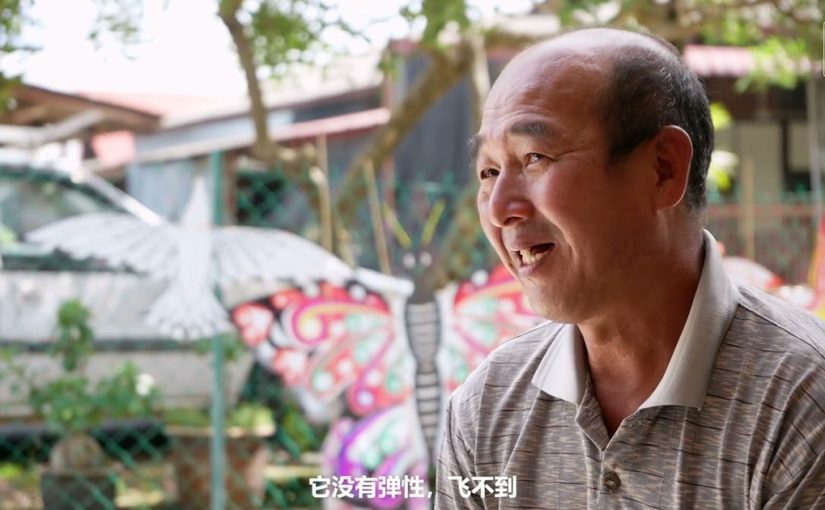
Two middle-aged kite hobbyists turned kite maker, Ang Lian Seng and Ang Teong, have been actively flying kites at the Jenjarom field for over thirty years. In their youth, they bought handcrafted kites by others to dismantle and study the dynamics, gradually mastering the skills by imitation and improvement. They are able to produce kites of various shapes and sizes, for instance bird, butterfly, and Malaysia’s iconic Wau. Previously they barely knew each other, however they got along capitally in recent years of semi-retirement, often spending time together making kites while exchanging ideas.

The history of kites date back over 3000 years, an established traditional handcraft. Bamboo strips, twine, paper, glue; merely four materials involved, seemingly simple yet the actual procedure put a kite maker’s skills to the test. Matured bamboo is preferred due to better resilience, split open and leave to dry for three months. The dried bamboo is then peeled and cut into strips, and sawn into required lengths conforming to the target kite size. Next up is the most important step —— whittling bamboo strips, which is using a knife to trim the bamboo strip into a consistent thickness. The resulting thickness determines how far could the bamboo strip be bent. To maintain the bamboo strip’s bendability and resilience, during the whittling process one must make adjustments through close observation and sense of touch, gaining experience along the way, hence it is most time-consuming, requiring much patience and attention to detail.

Having prepared satisfactory bamboo strips, the kite frame may be constructed in any desired shape, however it must achieve left-right balance as well as head-tail weight balance. After tying the kite frame with twine, brush some glue to attach the paper (nowadays water-resistant plastic sheet is used instead), ensuring uniform tightness. Excesses are trimmed after the glue dried, then the kite is ready for a test flight outdoors. As long as the aerodynamic surfaces are balanced, the kite may fly steadily. Different kites may yield different curved surfaces due to wind pressure, determining which wind conditions will be ideal for the kite’s flight. 

Kite flying does not require fancy skills, just pick a kite suitable to fly in the current wind condition and pull along with the prevailing wind direction. Larger kites may require two persons cooperating to launch, one holding the kite in a stationary position while the other holding the spool runs against the wind for a short distance, the kite can be released once the twine is taut. As the kite rises to a certain height, the airflow becomes relatively stable, therefore the kite maintains a steady position. To recover the kite, walk towards the kite while reeling in to bring it down slowly, preventing damages from a sheer drop.

Dragon kites are seldom seen in Malaysia, Jenjarom’s kite enthusiasts happened to pick up such skills by chance, enabling an impressive dragon kite soaring and wagging its tail to be seen. The dragon kite is made up of a three-dimensional head, eighty body parts, and a tail. Its overall length beyond a hundred feet, and requires at least three persons to launch it into flight. The making of the dragon head is tedious, it has to be as lightweight as possible due to being incapable of flight, so that it may be lifted into the air by the body parts. Besides, the production of eighty identical round pieces for the dragon body requires careful examination and much patience.

“Dance joyfully like a butterfly, height adjusted by a string.” The skyward kite and the people on the ground are connected by a single strand of twine. Brought together by common interest, pursued crafting due to passion; as their handcrafted kites rise to the skies, their faces are lit with proud smiles. Though times changed, people nowadays prefer playing mobile games over traditional pastimes, Ang Lian Seng and Ang Teong are happy to share their experience with rookies, in the hopes of passing down kite-making skills. 

有你 UNI Production
Producer : Daniel Lim
Cinematographer : Amelia Lim / Evon Pang / Michael Lerk
Drone : Daniel Lim
Video Editor : Amelia Lim
Copywriter : Pua Hui Wen

COPYRIGHTS 2022 ECHINOIDEA SDN BHD

☕ Buy us coffee

Malaysian Ngo Chor Fitness & Sports Society

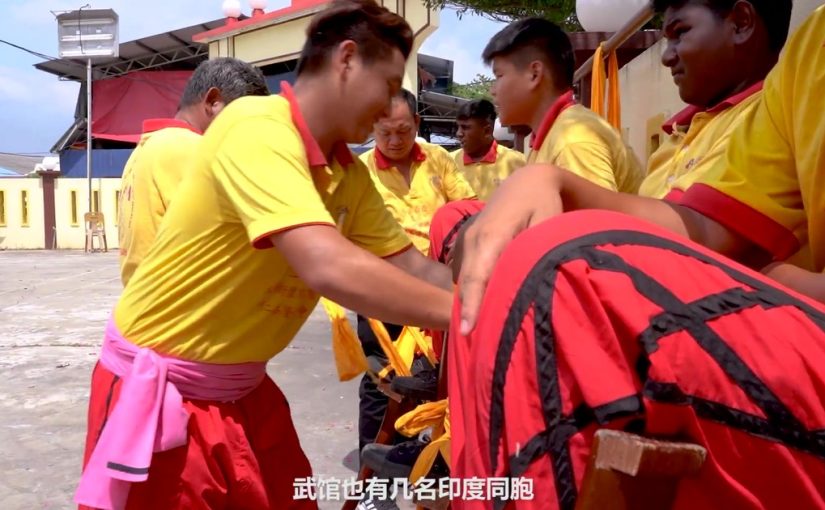
Performing powerful martial arts moves while emanating forceful shouts, disciples and committee members of the Malaysian Ngo Chor Fitness and Sports Society (Jenjarom Branch) gather on the training ground despite a blazing sun, practicing Ngo Chor drills under the guidance of Master Yap Loo Peng (transliteration). 81-year-old master Yap goes around at a steady pace, fixing his sharp eyesight on disciples, instructing and correcting their postures. Over the past 40-odd years, master Yap has been travelling between his home in Jinjang and the academy in Jenjarom to teach Ngo Chor martial arts. Even though semi-retired due to his advancing age, with older disciples in charge of the academy’s daily routine, master Yap often drops by to maintain his efforts in promoting this cultural sports activity. 

Founded in the late Qing dynasty, Ngo Chor martial arts originated from Quanzhou in Hokkien, China. The initiator being master Chua Giok Beng, who created a system after decades of research, by merging principles and techniques from five martial art styles, namely Taizu, White Crane, Bodhidharma, Arhat, and Monkey. Ngo Chor is renowned in southern China for its precision, forcefulness, and practical characteristics, therefore master Chua acquired numerous disciples. As there were some disciples among swarms of southern Chinese who migrated to Malaya, they continued the tradition of Ngo Chor upon settling down.

In Jenjarom where most villagers are of Hokkien ancestry, there was no martial arts academy during its early days. Master Yap’s instructor, the late grandmaster Poh Tie (transliteration), rented a vacant space to teach Ngo Chor, founding an academy together with a bunch of seniors. However various problems such as disciples being busy with their work and the implementation of a curfew caused the classes to be held sporadically. Following master Poh’s death some years later, senior Lim Teng Kiat (transliteration) took over as instructor, both disciples and martial art skills spread rapidly. Eventually as senior Lim was preoccupied with his work, master Yap was sought out to lead in the systematic practice on Aik Kuan kindergarten premises. ‘Poh Tie Ngo Chor Martial Arts Lion Dance Club’ was officially formed in 1977. Parents sent their children to learn Ngo Chor, participate in lion dance, and ride unicycles. Back when entertainment was scarce, it was the best gathering place, even compatriots from other races joined in the expanding martial arts club.

Immense support from local villagers, and the efforts of club members, the authorities approved of the martial arts club in 1982, hence renamed to Jenjarom branch of the Malaysian Ngo Chor Fitness & Sports Society. Apart from Ngo Chor, there are also lion dance, stilts, and unicycling derived from martial art basics. These are fun to learn, and able to perform during events. The society is recognised and gained support from local villagers who donated generously to build an academy. The Ngo Chor academy building, which stood amid Jenjarom village, was inaugurated in 2006. A small temple was built in honor of the three antecessors, namely Bodhidharma, the initiator Chua Giok Beng, and grand master Poh Tie. 

Ngo Chor is suitable for learners across all ages and genders, enhancing physical fitness and willpower, as well as achieving unity in a community. Despite training hard, disciples love and respect each other like a family. Senior disciples also carry on this legacy by helping master Yap to teach, such as the current team manager Soon Chin Tat (transliteration). He has been practicing Ngo Chor for 38 years, progressing from a young novice to being a senior who coordinates performances and takes care of team members. In recent years, due to young adults moving to the city for better opportunities, there is an age gap among disciples who are school children and middle-aged adults, their numbers dwindling from hundreds to merely 35. 

Inscribed on the pillars of the academy is the saying: “Training for self-defense and fitness, great skills inherited from ShàoLín”, highlighting the main purpose of practicing martial arts, not for fighting with others. A century-long inheritance, not only does Ngo Chor represent Chinese culture, it also incorporates lion dance to become a folk culture, a healthy sports activity.

Text: Daniel Lim & Pua Hui Wen

有你 UNI Production
Producer : Mok Yii Chek
Coordinator : Daniel Lim
Cinematographer : Amelia Lim / Evon Pang
Drone : Daniel Lim
Video Editor : Amelia Lim
Production Assistant : Michael Lerk
Music : Dawn of Man & Frozen In Love

COPYRIGHTS 2020 ECHINOIDEA SDN BHD

☕ Buy us coffee

Floral Lanterns

As the Cantonese saying goes, “Light up the lanterns when you walk on the streets, don’t be scared of police arresting you,” Granny Thong Aw Loy reminiscing about the mid-autumn festival celebrations in her childhood, where everyone gathers together playing with lanterns and wandering around the streets in the village while humming this playful little tune.

Despite her octogenarian age, Granny Thong is bright and optimistic, paying full attention to the lantern in making, not slacking for even a moment. The small space between the parlour and her room is Granny Thong’s personal workshop, the materials and tools she needed tidily kept in boxes of all sizes arranged around her, the handy distance easing her production. Rows and rows of various traditional lanterns are hanging above her, from her handmade floral lantern and hexagonal lanterns, to the cellophane lanterns her family crafted and sell.

Born and bred in Teluk Intan, Granny Thong comes from a family of lantern makers. Since a tender age, she and her siblings help their parents to assemble lanterns, almost 70 years ago. Her signature floral lantern is now rarely seen in the market, and there are only a handful of gurus who mastered the craft. Besides deft hands, the process of making a floral lantern requires the utmost attention, patience, and effort. The thickness of bamboo sticks used attest her skills and experience, while the six types of colourful paper flowers, such as rose and chrysanthemum, are made carefully, lining layer by layer using featherweight wrinkled paper. The creation of a traditional lantern is meticulous and time consuming, like an artwork masterpiece, seldom seen. It is especially painful to see this craft gradually dying out in this era due to the mismatch in profit and time costs.

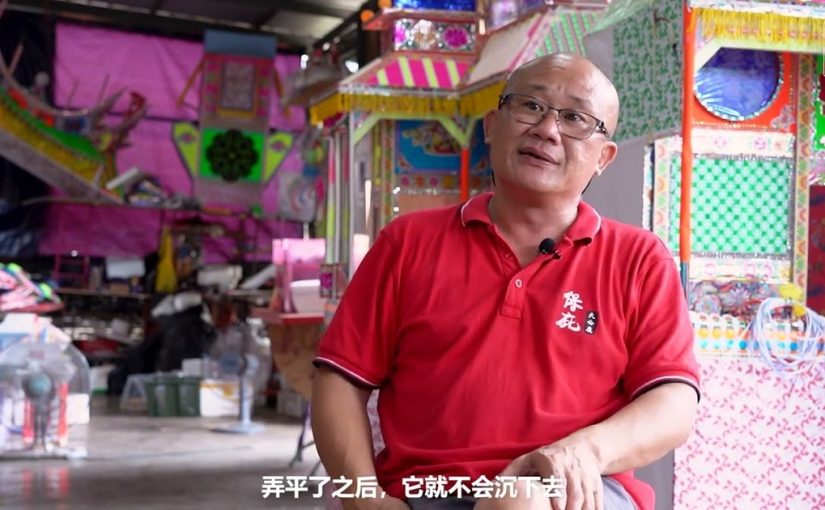
Under the same roof, Mr Yim Sai Peng and wife Chek Hiu Lan (transliteration) are the third generation in the traditional family business, focusing on producing cellophane lanterns of all shapes and sizes. More than 30 varieties of the cellophane lanterns are sold and distributed across Malaysia, as well as overseas. Since entering the 21st century, the rapid development of information and technology emphasizes efficiency, digital communication overpower socializing and interactions between human beings. In this day of reunion, maybe you should take a break, light a lantern, feel the warmth of the candlelight awakening the meaning of this traditional festival, and may the culture be handed down endlessly.

Text: Daniel Lim & Pua Hui Wen

有你 UNI Production
Producer : Mok Yii Chek
Coordinator : Daniel Lim
Cinematographer : Amelia Lim / Evon Pang
Video Editor : Evon Pang
Production Assistant : Michael Lerk
Music : Blue Butterfly from Felt Music

COPYRIGHTS 2019 ECHINOIDEA SDN BHD

☕ Buy us coffee