Yuen Choon Rattan

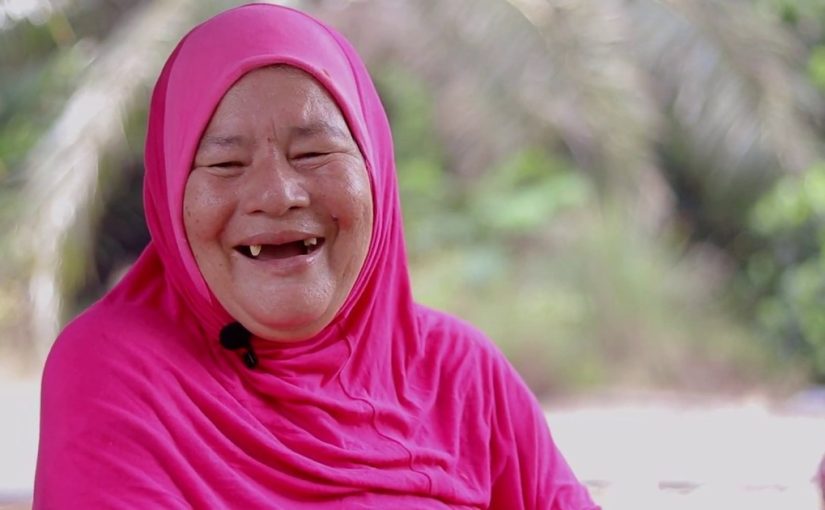
Utilising raw materials available locally, amid semi-completed and woven rattan products, long, thin rattan strips are neatly arranged on the floor. In the workspace, 80-year-old Grandma Lai Ah Moi attentively weaves rattan products using both hands and feet. Chop Yen Choon in Simpang Renggam, Johor, is the originator of the local rattan industry, operated by Grandma Lai and her husband Mr Chua for decades while raising their children. The old Mr Chua passed away 3 years ago, his son Chua Boon Ho succeeded the rattan workshop, while large and complex items are crafted by an Indonesian lead worker with more than a decade of experience.

In the 1950’s, pineapple planting was initiated in Simpang Renggam, thus derivative industries blossomed, such as pineapple processing manufacturers, iron smiths, and rattan weaving. Due to strong demand of rattan baskets during harvest in the pineapple plantations, the local rattan industry developed rapidly. From hand-carried baskets in the earlier days to baskets being worn on the back nowadays, pineapple plantation owners order thousands of rattan baskets annually, being a long-term regular customer of Chop Yen Choon. The rattan industry in Simpang Renggam flourished in the 70’s to 80’s, woven rattan products were being widely used in all sorts of trades. For instance, the extensive usage of rattan dustpans besides being a daily necessity, breeders can use it to scoop chicken droppings, while construction site workers can use it to scoop sand and soil. Since rattan products were greatly sought after, local housewives weave rattan products during their free time for side income. Even though plastic products then gained popularity and gradually replaced rattan products, customers still prefer the better flexibility of rattan dustpans.

Grandma Lai and her husband took over the rattan workshop from their brother-in-law 40 years ago, she was also a rubber tapper therefore she weaved rattan in the afternoon upon returning home. Without receiving any proper training, she took apart rattan products woven by others in order to research and gain insight on how to weave, putting in painstaking attempts to acquire this self-taught skill. Initiating a business is always challenging, when Grandma Lai first started selling rattan products, she went door-to-door convincing others to purchase her rattan dustpans at RM1.50 and rattan baskets at RM6. The amount of efforts she put in were greater than revenue, it was difficult to make ends meet, however she did not ever think of giving up. She continued to strive, working hard together with her husband. Their business improved, employing dozens of workers during its peak.

Under the influence of his parents, Chua Boon Ho mastered the basics of the rattan industry from childhood. Afterwards, with familial support, Boon Ho and his brothers went outstation during their youth on a journey of learning and broadening horizons, venturing into different industries or even starting their own businesses. Thanks to the stable operation of their parents’ rattan workshop, the Chua siblings have sufficient time and space for progress beyond, therefore Boon Ho truly appreciated the solid endeavors of his parents. Due to their advancing age, Boon Ho decided to return and take up the family business. Demands for traditional rattan products dropped over changing times, declining business volume and lack of staff are among the dilemmas which Boon Ho overcame. In honour of relationships over decades since the previous generation, Boon Ho did not implement drastic price increments, he simply maintains breakeven without causing financial burdens to his clients. Being brought up by weaving and selling rattan products, the affection of familial bonds aspired Boon Ho to share and spread the precious experience and knowledge inherited from his parents, transforming rattan products from daily necessities into decorative items, so that younger generations still get to recognize and admire rattan products.

In the historical trail of Simpang Renggam’s development, pineapple plantation and the rattan industry are closely interwoven into magnificence showered by laboring sweat. Sweet remembrance of his late father entwined like rattan vines, Boon Ho thankfully gives back to his parents’ nurturing grace, persevering to sustain the family-run rattan workshop.

Text: Daniel Lim & Pua Hui Wen

有你 UNI Production
Producer : Mok Yii Chek
Coordinator : Daniel Lim
Cinematographer : Amelia Lim / Evon Pang
Video Editor : Evon Pang
Production Assistant : Michael Lerk
Music : Morning Dew from SerenityStudio – Youtube

COPYRIGHTS 2020 ECHINOIDEA SDN BHD

☕ Buy Us Coffee

Liong Yu Barber Shop

Along with the snipping sounds of scissors, cascades of hair fall onto the ground, the barber deftly maneuvers a pair of small scissors, cleanly clipping from beside the ears, in front of the forehead, and the back of the head. In a row of half-century old shops situated near Simpang Renggam Wet Market, spot Kedai Gunting Liong Yu with clear glass panes on its wooden walls and door. The interior of the shop is simple and inelaborate, consisting of two barber chairs which are over 50 years old and all sorts of barber tools, among these a wooden plank used for elevating children on the seat, unchanged since the opening of the shop. However the traditional manual hand cutting method using scissors is replaced by electrical shears.

Traditional barber shops are commonly found in small towns, with an economical modest price, offering honest service ranging from half an hour to one whole hour. It is entirely different from 15-minute speed haircut shops found in shopping malls which offer convenient and fast service for city folk leading a hectic lifestyle. In recent years, branded hair salon chains blossomed, with ornate interior furnishing and advanced equipment, hair stylists on duty all graduated from vocational colleges. Besides hair wash, cut and blow dry, they also offer services such as dyeing, perm, hairstyle design, and even hair treatment and nail decoration, at a startling exorbitant price. In comparison, customers of traditional barber shops enjoy a more substantial service, not only obtaining a neat and clean hairstyle, there are also additional options such as facial hair removing, beard trimming, as well as earwax removal, an exceptional service rarely seen in barber shops.

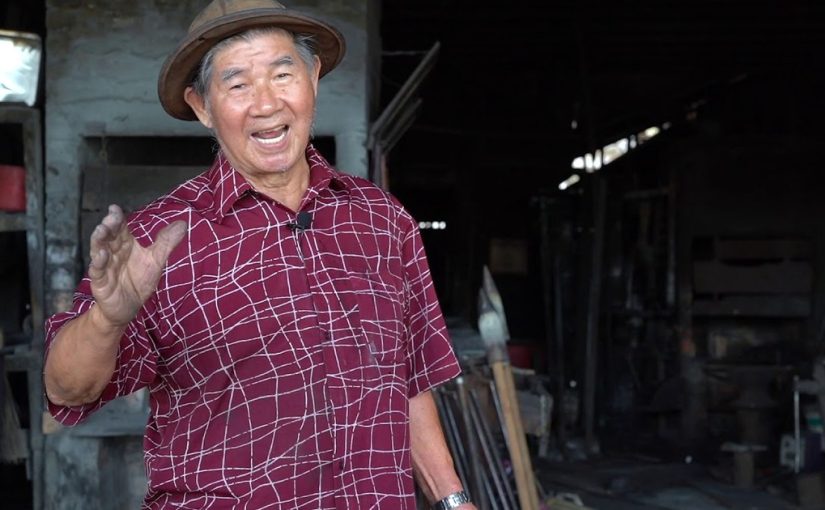
83-year-old Master Yu Yee Kong still has eyes like a hawk, carefully performing earwax removal by the dim lighting of a yellow light bulb, with antiseptic liquid and a set of tools made of silver consisting of an ear pick, extraction forceps, and ear rake. In the case of accidental injuries, silver tools would not cause infection. Mr Yu has been performing haircuts on up to four generations of local residents, he is especially eloquent when talking about the barbering industry and the treasurable tools used. Among his regular customers, there are some whose father brought them for a haircut since childhood, till now they work overseas and still visit his barber shop whenever back in their hometown. At present, the main customers of Mr Yu are local Malays and Chinese, mostly of the older generation, just a handful of children.

Reminiscing his life as an apprentice at Singapore in his teenage years, Mr Yu endured financial hardships with his constant persistence, working hard throughout his 18-month apprenticeship. In the earlier days where there was a lack of job openings, by picking up a skill Mr Yu mastered a trade which enabled him to work independently and support himself financially. Back then barbering was one of those rare jobs which does not require hard labour, no exposure to extreme weather conditions, able to generate a stable income and address essential needs. Often moving around since he started working, Mr Yu came across an opportunity to establish his own shop in his hometown. The original price list during setting up shop in 1968, a piece of calligraphy by Mr Yu’s friend, is well kept until the present, memorabilia of his challenging journey of being a barber, as well as a witness to the changes in the barbering industry.

With the passage of time, humane touch and warm memories fill the old shop front. From the ever-competitive past of traditional barber shops, to the decline in market demand causing barbers to relocate or switch careers, till now barbers within the same generation as Mr Yu eventually retire or pass away. Although the operating days are getting shorter, the relationship with customers become longer.

Text: Daniel Lim & Pua Hui Wen

有你 UNI Production
Producer : Mok Yii Chek
Coordinator : Daniel Lim
Cinematographer : Amelia Lim / Evon Pang
Video Editor : Evon Pang
Production Assistant : Michael Lerk
Music : Ivory Dreams from SerenityStudio

COPYRIGHTS 2019 ECHINOIDEA SDN BHD

☕ Buy Us Coffee

Lady Worker in Pineapple Plantation

At 6A.M. before dawn, Aunty Liew Chiew Moy is well prepared, carefully riding her motorcycle from her house towards the pineapple plantation in Simpang Renggam. Rows of pineapple trees forming a vast, boundless sea of pineapples welcome her. Aunty Liew proceeded slowly but steadily on the yellow mud road until the center of the plantation, gathering with her colleagues. Before starting the day’s work, they prepare their tools and protective equipment, for instance sharpening knives, wearing gloves and sunhat, get ready before starting to harvest pineapples. Not only is Aunty Liew the most senior worker in the plantation, she is also the only remaining Chinese lady worker.

Simpang Renggam is located in the mid section of Johor, close to the North-South Expressway, where the largest pineapple plantation in Malaysia is. The soil in the region is peat, formed from decomposed organic mass, having the advantages of being loose and good air circulation. Moreover, plentiful rainfall makes it an ideal place for planting pineapples. Pineapple plantation industry in Simpang Renggam started from the 50’s, achieving its peak in the 60’s to 70’s, becoming the main economic activity of the local population. Among them, Peninsula Plantation Sdn Bhd where Aunty Liew is attached, is the largest plantation in the vicinity, its surface area over 6,000 acres, with up to 400,000 pineapple trees.

Since a teenager, Aunty Liew has been working with pineapples for over half a century. Under the influence of her parents, she started working at 15 years old, having experience in grass-cutting, sowing pineapple seedlings, until focusing on harvesting pineapples as of now. At the age of 68 years old, she is still as fit as a fiddle, carrying a 50 kilograms basket on her back without any problem. Aunty Liew gets along well with her colleagues, always greeting each other warmly and showing concern for each other’s well being. They work diligently together as a team for three to four hours a day. Back then during peak seasons, they sometimes work for 8 to 9 hours per day. Even though the weather is extremely hot, they could still be seen harvesting pineapples from the low pineapple trees.

Pineapples grow in different positions on the tree, therefore the job of harvesting is difficult to replace by machinery, having to rely on traditional manpower. Aunty Liew grabs hold of the golden yellow fruit, with a swing of the knife, the fruit is separated from its stem, she then throws the harvested pineapple into the rattan basket on her back, developing deft “back air shot” skills over the years. Although the job itself is not difficult, there are several risks, including stumbling upon low leaves, which may have to be pared off on the way into the plantation to ensure a smooth journey. In the earlier days the plantation is adjacent to forests, bumping into pythons and wild hogs from time to time is a scary experience. Aunty Liew still trembles when reminiscing that she once accidentally cut a beehive, luckily her colleagues alerted each other to run for their lives, no harm was done.

Aunty Liew has been through the rise and fall of the pineapple plantation industry, witnessing on her own the plantation staff changed from a majority of Chinese to now mostly Malays and foreign labourers. As her friends eventually retired, she became the last Chinese lady worker in the plantation. Defending her duty for the most of her life, yet still passionate about her job, Aunty Liew’s dedication is much admirable.

Text: Daniel Lim & Pua Hui Wen

有你 UNI Production
Producer : Mok Yii Chek
Coordinator : Daniel Lim
Cinematographer : Amelia Lim / Evon Pang
Drone : Daniel Lim
Video Editor : Amelia Lim
Production Assistant : Michael Lerk
Music : Dancing Star

COPYRIGHTS 2019 ECHINOIDEA SDN BHD

☕ Buy Us Coffee