Khen Thye Hin

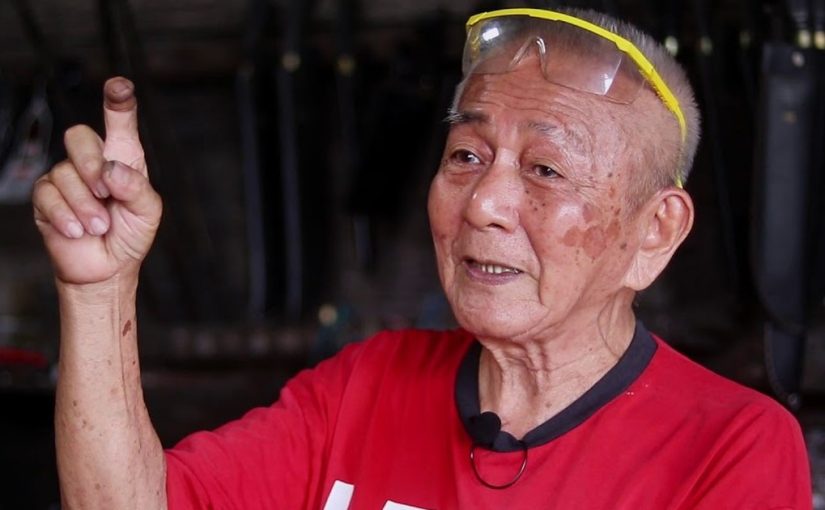
These three words ‘Khen Thye Hin’ have been a family legacy for three generations, hanging eye-catchingly over the doorway. The decrepit iron shutters are full of fingerprints. After pushing hard to open them, a variety of goods are hanging somewhat orderly amidst chaos near the entrance. Upon walking into the shop, steel racks divide the space into the left and the right sections, and more merchandise is hanging above the head, where wooden sticks were tied to the ceiling, hooks extending downwards to display the products like grapes on vines. The seemingly jumbled arrangements each have their own sort of order under the control of the third generation shop owner, Mr Yap Chee Cheong.

77-year-old Mr Yap is born and bred in Kuala Kubu Bharu, growing up together throughout the years with the Khen Thye Hin shop run by his father and uncle, which now is the last remaining traditional imported goods store. In the beginning, the shop only offered tailoring services and sold cloth. After saving up some funds, they progressively bring in imported goods for sale. There are an all-inclusive range of products, from cotton textiles, bedding merchandises, electrical devices, to metal spare parts. Khen Thye Hin is also the only newspaper distributor in Kuala Kubu Bharu, circulating publications such as Kin Kwok Daily News, Shin Min Daily News, Malayan Thung Pau Daily News, Sin Chew Daily, Nan Yang Siang Pau, China Press and more. 

The traditional imported goods stores and grocery stores are differentiated by what they stock: daily necessities versus foodstuff. Due to the imported goods being sourced from European countries and the United States, they were known as overseas goods stores. Back in when departmental stores and supermarkets were not as prevalent, imported goods stores were the people’s first choice in shopping, and could be immensely busy and overcrowded during the festive seasons. In the 21st century, consumer habits and models have changed, malls and hypermarkets are everywhere, the convenience of online shopping, as well as cheap made-in-China goods caused traditional imported goods stores to be unable to withstand the heavy blow from larger environmental waves and therefore die out eventually. The formulated shopping mall experience lacked humane touch, leading to traditional consumer experiences such as negotiation, greeting each other, aggregated pricing, and even crediting purchases, to no longer exist. 

Starting from 2018, Khen Thye Hin terminated their newspaper distributorship, the local villagers have to buy newspapers from the neighbouring Indian mart. Mr Yap intends to retire in a few months time, to move to Kuala Lumpur to stay with his son and family, enjoying the latter part of his life. His younger brother will be following up on disposal of the remaining goods and renting out the property, never to sell. After the Khen Thye Hin signboard is taken down, it will go into the possession of his son, to be bequeathed to the following generations in mind of not forgetting their ancestry.

Text: Daniel Lim & Pua Hui Wen

有你 UNI Production
Producer : Mok Yii Chek
Coordinator : Daniel Lim
Cinematographer : Amelia Lim / Evon Pang
Video Editor : Evon Pang
Production Assistant : Michael Lerk
Music : Sun in Your Eyes from Felt Music

COPYRIGHTS 2019 ECHINOIDEA SDN BHD

☕ Buy Us Coffee

Wong Ng Kee Restaurant

Upon stepping foot in the restaurant, it is as if time stood still in the past, having accompanied Kuala Kubu residents for decades, the familiar taste of generations. Moreover, it used to be the sole restaurant in Kuala Kubu Bharu which provides banquet catering services – Restoran Wong Ng Kee. Founded for nearly 80 years, from a tiny stall selling wonton mee and porridge, to banquets bearing memorable moments of the neighbourhood’s inhabitants, although it may seem decrepit, it is a long-established name and a well-acquainted place for countless local residents. 

77-year-old eldest brother Wong Siew Kei (transliteration) is the second generation heir, operating the restaurant alongside his wife and his three younger sisters. For half a century, they personally handled all matters in their restaurant instead of hiring manpower. From the preparation of ingredients, cooking and serving dishes, all are done by the five of them. In spite of their rising age, as all of them are now senior citizens, they still work hard in the restaurant by themselves. Made fresh daily by eldest brother Wong Siew Kei (transliteration) are their noodles, including marinating and roasting their signature traditional barbecued pork.

The senior Mr Wong migrated to Malaysia from China with his elder brother when he was nine years old. Initially he was in the grocery trade, after that he runs his own stall selling homemade wonton noodles. Due to the senior Mr Wong being the fifth in his family, and people from his hometown call him “fifth brother”, he named his restaurant ‘Wong Ng Kee’ (by fifth brother of Wong family). Self-taught chef Mr Wong Siew Kei (transliteration) helped his father at the stall since he was in primary school. Besides mastering noodle-making skills, after taking over the restaurant from his father, he suggested increasing the number of dishes, taking the initiative to research and develop recipes. Thus, he improved his culinary skills from books and reading materials, and even from customers’ feedback.

During the 1980’s when catering for banquets, Wong Ng Kee was quite famous. From catering to the banquets of usually six tables or more, to setting up a temporary canopy in front of the shop, they were as busy as bees. As time passed, although they no longer offer catering services, within the unpretentious interior, you may find the warm touches of the Wong family, and the silent trail of years gone by. 

Text: Daniel Lim & Pua Hui Wen

有你 UNI Production
Producer : Mok Yii Chek
Coordinator : Daniel Lim
Cinematographer : Amelia Lim / Evon Pang
Video Editor : Amelia Lim
Production Assistant : Michael Lerk
Music : Beneath The Moonlight

COPYRIGHTS 2019 ECHINOIDEA SDN BHD

☕ Buy Us Coffee

Tricycle and Bicycle Repair

In Penang, trishaws are commonly seen on the bustling streets, especially in popular sightseeing spots. Trishaw pullers go at a moderate speed, exposing tourists to a full view of Penang’s beautiful scenery. Nowadays trishaws seem to have became a vehicle for sightseeing purposes, no longer a day-to-day transportation mode for local inhabitants. Between the end of the 1960’s to early 1970’s was the trishaws’ golden era in Penang, according to records there were more than 2500 officially registered trishaws on the roads. However, about a hundred trishaws remain in operation till now, with most of the pullers aged above fifty years. Moreover, half of them had no stable income, living in poverty, their trishaws a makeshift home.

The decline and plight of trishaws not only led to the trade eventually becoming a thing of the past, at the same time impacting the trade of repairing and producing trishaws. One by one, shops that manufacture trishaws close business, the sole remnant being Hup Huat Tricycle, a one-man-show by its fourth generation successor Mr Choo Yew Choon, striving to manage his family business. Mr Choo is also one of the few persons in Malaysia who could assemble the whole trishaw with his own hand, knowledgeable in the fields of carpentry, ironwork, and technical skills regarding bicycles and tricycles. From constructing the wooden passenger box, to welding the iron frame of the trishaw, these are common trades in immediate danger of extinction.

Trishaws are categorized by their functions, such as carrying passengers or cargo, or for operating hawker business, or selling groceries like vegetables, fruits, and breads. Through the transformational passage of time, the number of peripatetic hawkers lessened due to shifts in food cultures (hawker centres, hygienic environment) and government regulations (laws). Nevertheless, Mr Choo still receive orders for customizing new trishaws or facelifting old trishaws for ornamental usage from hotels, food and beverages operators, or even foreign tourists.

Mr Choo frankly discloses that in recent years, there has been a steep decline of orders for manufacturing new trishaws, his works are more focused on facelifts and maintenance. Maintenance and repairs range from as simple as changing tyres to as complicated as welding and remodel, to meet customization demands from customers. Besides substantial knowledge in his trade, Mr Choo also keeps a collection of small round “registration plates” assigned solely to trishaws, issued during the British colonization, akin to concurrent license plates, being a traditional feature of Penang trishaws, as well as a token of culture and collective remembrance.

In between difficulties jointly faced by trishaws and various fields related, ways to bestow legacy in maintaining and preserve these mobile antiques are worth serious attention and considerations.

Text: Daniel Lim & Pua Hui Wen

有你 UNI Production
Producer : Mok Yii Chek
Coordinator : Daniel Lim
Cinematographer : Amelia Lim / Evon Pang
Production Assistant : Michael Lerk
Video Editor : Michael Lerk
Music : Flowering from Felt Music

COPYRIGHTS 2019 ECHINOIDEA SDN BHD

☕ Buy Us Coffee