Thye Chong Weighing Scale

Weighing scales are indispensable tools in daily life. From wooden steelyard balance in ancient times, spring scales invented in the 17th century, to electronic scales which have become common since the 20th century, accurate weight measurement is essential for commerce. While ancient units of measurement varied widely, nowadays, there are internationally standardized units such as the gram, kilogram, and metric ton. As long as there is a need for weight measurement, the weighing scale industry will continue to thrive.

The sole remaining weighing scale shop in Jalan Kampung Pantai, Melaka, Thye Chong, was established in 1943. Apart from selling weighing scales, they also perform repairs and adjustment, as well as assist with weighing scale license renewal. According to the laws of Malaysia, commercial weighing scales are subject to annual examination by the Ministry of Domestic Trade and Consumer Affairs. Approval stamps are then issued on compliant scales. Therefore, the weighing scale shop is not just about trading, but acts more like a service provider. If customers are unable to send in their weighing scales, door-to-door collection is available. The shop also has extra scales to lend out, to avoid customers’ daily business disruption during the period their weighing scales undergo maintenance or examination.

The second-generation owner of Thye Chong, 74-year-old Uncle Yong Koi Hin, has been dealing with weighing scales for over 50 years. A narrow aisle barely allows one to enter his shop, which is lined with piles of brand-new scales and stacks of used scales. Approval stamps are displayed on all the scales; the ones marked CTC belong to Thye Chong, while the rest bear markings from their respective owners for easy identification and return.

In the early 20th century, Uncle Yong’s father migrated from China to Ipoh, where he learned to make and repair wooden steelyard balance with his elder cousin. Upon completion of his apprenticeship, he chose to set up his own shop in Melaka, and settled there. Uncle Yong was born in 1952, the eldest of 10 siblings. At 17 years old, he had to give up his studies to take up the family business.

In the 1970s, the Malaysian government prohibited the use of wooden steelyard balance, only spring scales are permitted. Therefore, when he entered the trade, Uncle Yong focused on learning to repair spring scales, familiarizing himself with their working principles and internal structure. After 2000, electronic scales gradually became more common. Uncle Yong kept up with the times, mastering relevant technological knowledge and integrating it into his work.

No matter spring scales or electronic scales, the basic maintenance procedures are largely the same. Firstly, disassemble the casing, clean all dust and debris, and lubricate to ensure a smooth reading. Next, reset the scale and calibrate using standard test weights. Under most circumstances, Uncle Yong only needs to adjust the spring tension of the spring scale or replace the damaged parts inside the electronic scale. From time to time, the Ministry of Domestic Trade and Consumer Affairs personnel will conduct audits to verify that the scales and weights in the store comply with international standards.

Till this day, Uncle Yong and his wife still live in the upper storey of the shop. Their children had grown up, moved out and formed their own families. However, two sons chose to follow in their father’s footsteps. The eldest son recently set up a new branch, Sin Chop Thye Chong, in Taman Merdeka, specializing in industrial scales such as load cells. Their second son takes over the old shop, performing collection and delivery, as well as sending weighing scales for examination, while semi-retired Uncle Yong helps to look after the shop. 

For over 80 years, Chop Thye Chong remains rooted in Jalan Kampung Pantai, upholding the weight of integrity as well as bearing the weight of history. 

※※※

【Locality Info】

Jalan Kampung Pantai is on the west bank of Melaka River, once a vibrant trading centre second to Jonker Street during the 1800s, the pulse of Melaka’s riverside development. Back in those days, there were ports for barges to transport goods, therefore Jalan Kampung Pantai is full of grocers and wholesalers. As the city develops, land transportation became the main mode of logistics, yet the narrow roads are inconvenient for loading and unloading freight. Many businesses chose to relocate. Nowadays Jalan Kampung Pantai is less lively, however a handful of old shops are still in operation. Surging tourism sparks new vitality into the historic neighbourhood.

有你 UNI Production
Producer : Daniel Lim
Cinematographer : Amelia Lim / Michael Lerk
Drone : Daniel Lim
Video Editor : Michael Lerk
Copywriter : Pua Hui Wen

COPYRIGHTS 2026 ECHINOIDEA SDN BHD

☕ Buy Us Coffee

Yong Kong Haberdashery in Jinjang

In daily life, it is common to find clothes with threads coming loose, holes, missing buttons, or broken zippers. It would be a shame to discard them when minor repairs could extend their lifespan. The materials required, such as needles, threads, buttons, and zippers, may be purchased from a haberdashery. Yong Kong Haberdashery, established in Jinjang Utara for 50 years, is the only remaining store of its kind in the neighbourhood. Apart from selling tailoring supplies, they also offer services such as hemming, sewing buttonholes, and wrapping buttons in fabric. 

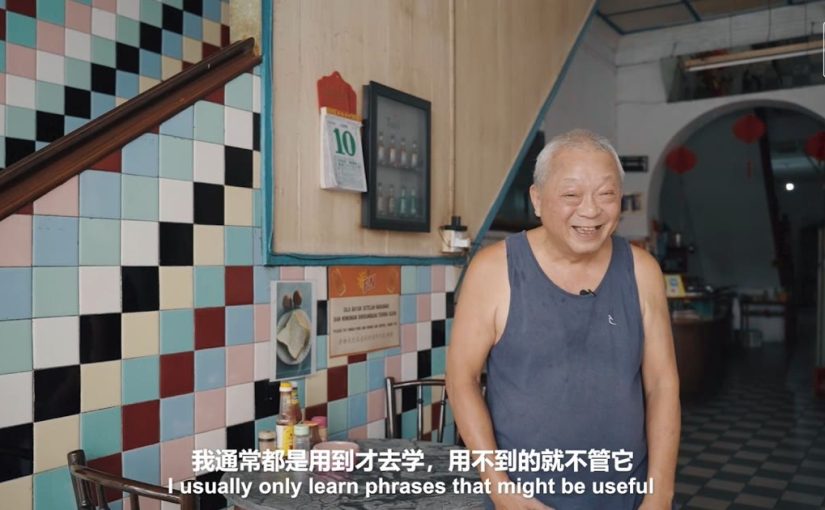
76-year-old Aunty Low Chon Fua always has a smile on her face, yet she is serious when working at the sewing machine, handling jobs with meticulous care. Even though customers would urge her, she shows no sign of impatience, gently comforting them that handiwork takes time. If the workload cannot be completed within a day, Aunty Low would ask the customer to leave a number, and to collect in a few days. When the customer comes back and give their number, she then magically pull out the corresponding bag from the humongous pile in the store, and hand it to the customer.

Aunty Low has been farming and taming pigs since she was a teenager. At her maternal grandfather’s suggestion, she worked at Yong Wah haberdashery in Petaling Jaya for a couple of years, until she got married and became a full-time housewife. Coincidentally, a friend of her husband wished to transfer ownership of a shop nearby Pasar Jinjang Utara, so she started a business together with her two younger sisters. When trying to come up with a shop name, she selected “Yong” from her former employment, and “Kong” from the Chinese transliteration of Jinjang back then. Her father heartily approved of the name, thus Yong Kong was established.

In the early days, Yong Kong Haberdashery merely occupied half a shoplot. Having relocated twice within the same street, Yong Kong finally secured a permanent spot at its current premises on 1st January 1980. The location is on the main road leading in and out of the wet market, next to Chen Kong Cinema, bustling with people from dawn till late night. Back then, the tailoring industry was flourishing, there were several tailoring academies in the area teaching the craft, as well as six tailor shops, constituting a steady customer base purchasing tailoring supplies. Three sisters, two glass cabinets, one hemming machine, and one sewing machine, worked from 7AM to 9PM every day.

Aunty Low’s husband, Uncle Chong Ah Yit, used to be a pesticide salesman, but had to resign due to health complications. Then, he started to help his wife in her budding enterprise. In order to increase sales, Aunty Low entrusted the shop to her sisters, and went to set up stall at various morning markets and night markets with her husband, selling sewing supplies and candied fruits. They went around Kepong, Serdang, Kuala Kubu Bharu, Kampung Baru Rasa, and even Cheras. After five years of hustling, they handed over the hawker business to her brother-in-law, and focused on running the shop.

Rapid development around Jinjang, the reconstruction of commercial areas, traffic flow diversions, plus the exodus of young people, led to a significant decrease of the local population. As times change, ready-to-wear clothing dominated the consumer market, the tailoring industry declined, tailoring academies closed for good, the demand for tailoring supplies gradually diminished. Now that Aunty Low no longer needs to support her family, the shop’s opening hours are reduced to 7.30AM till 1PM, just to pass time.

Yet another morning passed in the blink of an eye, with market vendors chatting animatedly outside the shop, while customers enter and leave the shop. Aunty Low hem and sew mundane days, moving through slowly in changing times.

※※※

【Locality Info】

Jinjang is situated in northern Kuala Lumpur, less than 10km from the city centre. In the 20th century, it was established as a massive rubber plantation named Estate Jinjang. During the Malayan Emergency in the 1950s, the British colonial government forcibly relocated Chinese settlers from the surrounding areas into a concentrated new village, thus shaping the largest and most densely populated Chinese New Village in the country. Jinjang is divided into north and south sections, separated by a main road. In the early days, there were about 1000 Chinese households in South Jinjang, and over 3000 Chinese households in North Jinjang.

有你 UNI Production
Producer : Daniel Lim
Cinematographer : Amelia Lim / Michael Lerk
Drone : Daniel Lim
Video Editor : Amelia Lim
Copywriter : Pua Hui Wen

COPYRIGHTS 2025 ECHINOIDEA SDN BHD

☕ Buy Us Coffee

Handmade Joss Sticks in Kampung Baru Rasah

Grasp hundreds of fine bamboo sticks, align them, dip in water, coat with finely ground sandalwood powder. Swirl the wrists in a “blooming” motion, the powder that float up in the air will attach to the bamboo. Repeat the above steps thrice, produce batch by batch, spread out on racks and dry under the sun. Once dried, dye the base and pack. 67-year-old Foo Kok Keong inherited the skill of handmaking joss sticks, passed down over three generations in his family, and runs his own manufacturing site – Tanyi Enterprise at Kampung Baru Rasah, Seremban.

Mr Foo’s grandfather hailed from Anxi County in China, and settled in Kampung Baru Rasah. Utilizing his skill in handmaking joss sticks, he founded a family-run workshop named Hiong Yee Teng. Blessed with a shrewd mind, apart from handmaking joss sticks, he also purchased some joss paper and praying materials, filled a large basket and went around for miles selling them on a bicycle. After getting the business on track, he started production on a larger scale in 1963, hiring numerous helpers, doing wholesale and exports. The second-generation owner of Hiong Yee Teng is Mr Foo’s uncle. Not only did he inherited his father’s business, but also his shrewd mind, expanding to import sandalwood as well. 

Mr Foo Kok Keong is interested in handmaking joss sticks since a young age. He begun shadowing his uncle when he was 10 years old, learning the craft. After a few months of hands-on, he gained approval from his grandfather, and started to get paid according to the amount of joss sticks he made. While he was still a student, Mr Foo worked hard to earn his own pocket money, and saved up to buy little luxuries at the time, such as a radio, a bicycle. After graduating from high school, he went outstation and overseas to work, nevertheless he finally chose to return to help his uncle manage the family business, and later branched out on his own.

Back when entertainment was scarce, relatives and young people from the neighbourhood would come over for fun, and gradually learnt how to make joss sticks. In the 70s to 80s, there were lots of swine farms in Kampung Baru Rasah, after facing closure due to swine fever, a dozen or so were converted into joss stick manufacturing sites. Since the 90s, machine-made joss sticks became commonly available, moreover joss sticks imported from China are way cheaper, hitting the joss stick manufacturing industry hard, only the Foo family’s businesses managed to stay afloat. Hiong Yee Teng embraced machinery, whereas Tanyi Enterprise became the sole remaining handmade joss stick manufacturer. Foo Kok Keong and his nephew are in charge of production, while his sister takes care of packaging. 

Handmaking joss sticks puts physical abilities to the test. A handful of bamboo sticks already weigh over two kilograms, becoming even heavier after dipping in water and coating in sandalwood powder, yet still need to swirl the wrists in order to “bloom”. During the process, one must pay close attention, joss sticks that are stuck together, broken, or flawed, must be immediately discarded. The procedure may seem easy, but repetitive and dull, trying one’s patience. Mastery is achieved after having endured all the above and countless hands-on practice. 

Praying with joss sticks is an important element in Chinese traditional culture and folk beliefs. Joss sticks are used to pay respects to deities and ancestors, as well as purifying the space and the mind. Joss sticks made using natural ingredients exude a mellow aroma, fresh and pure, and would not cause discomfort even when smelling up close. Besides handmaking the signature sandalwood joss sticks, Mr Foo also blends incense powders according to customers’ preference and demand, such as agarwood, kayu raja, lakawood, or even sulfur. His biggest satisfaction arises from customers making repeat purchases because they like the aroma he blended.

Nowadays craftspeople handmaking joss sticks are increasingly rare, skill inheritance is endangered. Mr Foo Kok Keong spent the better part of his life making joss sticks, and is still passionate about it, never getting tired of carrying out the tedious work in a hot and stuffy environment on a daily basis.

※※※

【Locality Info】

Kampung Baru Rasah is the first Chinese New Village established nationwide, as well as the largest in Negeri Sembilan, spanning about 200 acres, located about 3km away from Seremban town centre.

According to folk studies research conducted by scholars, the name “Rasah” originated from:

  1. Rassak(a tree in the family Dipterocarpaceae), a type of wood suitable for boat-building.
  2. Asah(meaning “to sharpen” in Malay), in the early days, pioneers came upriver to this area covered in dense forest, so they sharpened their knives and sickles on the rocks by the river to clear the natural terrain. They named the river “Asah”, which gradually became “Rasah”.

In the early days, Rasah had tin mines and rubber plantations, where large numbers of Chinese labourers sought employment. The Malayan Emergency was declared by the British in Malaya (Peninsular Malaysia) on 18th June 1948, they viewed the Chinese as a threat to public security, and intended to carry out forced deportation. Chinese settlers in rural Seremban, namely Ulu Temiang and Sikamat, bore the brunt. Fortunately prominent Chinese community leaders carried out negotiations with the British, and agreed on establishing a re-settlement area in Seremban for the Chinese to rebuild their homes.

In 1951, the re-settlement area was affected by floods, and had to move to higher grounds nearby, where Kampung Baru Rasah currently stands. The layout of the new village was meticulously planned by the British, comprising residences, police station, schools etc. Residential plots sized 40ft x 100ft were marked by four cement poles, labelled with numbers, and allocated through a draw. Then, residents may construct their own houses.

有你 UNI Production
Producer : Daniel Lim
Cinematographer : Amelia Lim / Michael Lerk
Drone : Daniel Lim
Video Editor : Michael Lerk
Copywriter : Pua Hui Wen

COPYRIGHTS 2025 ECHINOIDEA SDN BHD

☕ Buy Us Coffee