Prawn Fishing

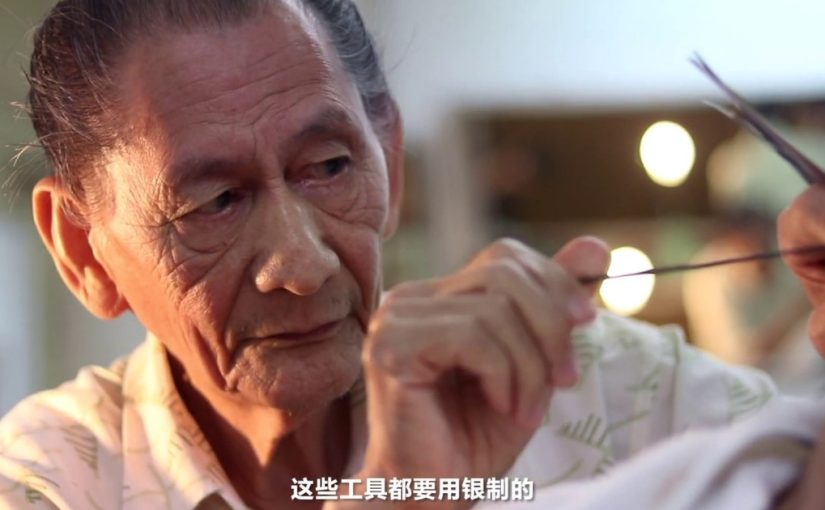
Early in the morning, when moist fogs still permeate the air, the old house surrounded by tall and straight palm trees, 64-year-old Seah Tiam Chai sorts out his tools in front of the doorstep, packing them onto his motorcycle and rides to the small jetty nearby in preparation to go out to the sea for prawning. Dozens of small fishing boats are parked in the intertidal zone of the estuary, with mangrove forests all over, the rivershore is not deep, Mr Seah races against time to steer his boat out of the estuary before the tide ebbs. As a layer of golden rays pop up from the horizon, and the sky gradually brightens, the motor of the boat is already ignited, sailing towards the unpredictable sea.

Since his childhood years, Mr Seah has a close relationship with the sea, accompanying his elder brother in deep sea fishing at the age of 10, picking up fishing skills and knowledge from his two elder brothers. When he was 13, he went out to sea alone in a sampan, without an engine in the olden days, rowing manually and cast a net to catch fish and prawns. Mr Seah is much experienced in sailing at sea, in his 50 years of fishing he used fishing nets of various sizes, catching different fishes according the different mesh sizes. In his youth he used to steer a fishing boat with medium horsepower, often witnessing and experiencing pirate attacks, being robbed off the fish that he worked hard to catch, the industry having a high degree of risk. Among all risks, natural hazards especially storms are beyond control.

The opposite shores invisible across the boundless blue sea, the five-metre long fishing boat seems extremely meagre, unable to withstand slightly stronger waves, even more at a loss against the sudden occurence of natural hazards. Any storms or strong waves cause direct harm to a fisherman’s production, and even life. Mr Seah’s fishing boat is not big, with sufficient room for three persons, with the addition of fishing tools and operation, the narrow boat has barely room for one to two persons to move about. Hence usually Mr Seah works alone, fishing at sea on his own.

After deciding on a suitable spot, he starts to cast prawning nets piece by piece into the sea. Twenty pieces of prawning nets forming into a fishing net, laying horizontal in the sea, the half-kilometre long shaped net drifting along with the tides, when fish and prawns pass through they will be caught in the mesh, this traditional and widely used fishing method is named: Gillnetting. Due to the fishing net being set up on the migration pathway of the schools of fish, catching them all regardless of size. An hour afterwards, Mr Seah draws up the net, keeping the prawns that are entangled on the mesh fresh by freezing them with ice, the rest of the fish will be further processed upon returning to the jetty.

Besides the unpredictable natural factors, industrial development in recent years brought upon environmental damage, endangering the fishing industry in Chuah area, especially with the construction of two power stations at the seaside. The lessening of mangrove forests and the changes in water quality caused reduction or damage to the natural habitat of prawns, directly impacting Mr Seah and his livelihood, the amount of his catch declined more than a half from usual. The fishing industry which faced higher risks than the general industries on the ground is dealt with a heavier blow.

The open-minded and optimistic Mr Seah does not wish for riches, nor did he encourage his children to work in the fishing industry. He leads a rustic life in the 50-year-old cottage which houses three generations, enjoying delightful family times with his wife and granddaughter.

Text: Daniel Lim & Pua Hui Wen

有你 UNI Production
Producer : Mok Yii Chek
Coordinator : Daniel Lim
Cinematographer : Amelia Lim /Evon Pang
Drone : Daniel Lim
Video Editor : Michael Lerk
Production Assistant : Michael Lerk
Music : Peder B. Helland – Our Journey from YouTube

COPYRIGHTS 2019 ECHINOIDEA SDN BHD

Buy us coffee

Paku Vegetable Gatherer

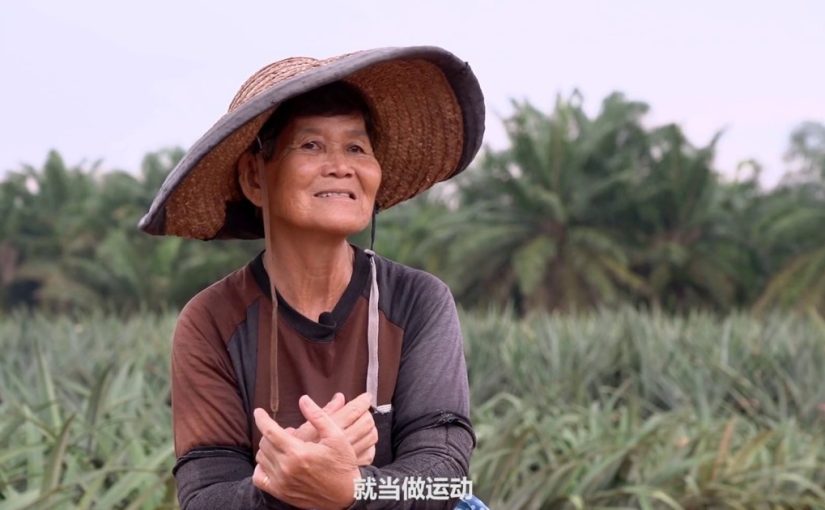
As dawn breaks, there is still mild fogs throughout the air, dewdrops rolling down from the tips of leaves. Husband and wife, Lim Boon Seng (transliteration) and Loke Yuet Kwai (transliteration), parked their motorcycle aside, heading into the bushes after getting their stuff and tools ready. In what seemed to be thickets overgrown with weeds, both husband and wife utilise their sharp eyesight and deft hands, each holding a sack in one hand, while the other hand accurately picking fiddlehead ferns growing among the bushes and weeds.

Fiddleheads are wildgrown foliage, the young shoots curling inwards, looking like dainty commas or question marks, belonging to the family of edible shrubs (ferns), also known as Diplazium esculentum. They generally grow at moist, watery but sunny guttersides, having incredible vitality and wide adaptability. Common edible parts are the curly tips of young shoots and upper stems which are more delicate. Fiddleheads are nutrient-rich, boasting of high mineral content, high protein, high fibre etc. After cooking, its texture is smooth with a little mucilage, its mouthfeel crispy without any trace of bitterness.

Growing naturally in the wild, fiddleheads have a strong resistance, after the rain, they grow tenaciously in broad stretches, full of vitality as in the poem “undestroyable by fire, growing again when the breeze blows”. Nowadays, urban development and environmental pollution, as well as artificial cultivation and pesticides, are unsuitable for the growth of fiddleheads. They are only found growing wild in swampy wetlands, a type of foliage popular with rural villagers and indigenous folk. Due to the wide distribution and diversity of Diplazium esculentum, they have different names and nicknames across all regions, such as paku vegetables, wild ferns, perennial ferns, tsuen choi, midin (East Malaysia), lynx (Taiwan), sayur paku, pucuk paku, fiddleheads etc.

The hot sun shining above their heads, the ground beneath their feet humid, the 70-year-old Lim Boon Seng (transliteration) and his 67-year-old wife Loke Yuet Kwai (transliteration) each bearing one or two sacks full of fiddleheads, as well as ripe cassava harvested along the way, loading onto their motorcycle, ready to trade with restaurants or customers who placed orders. The both of them stay in Bukit Pelanduk, giving up swine farming 20 years ago in consequence of the Nipah virus outbreak tragedy, shifting towards the agricultural industry such as planting cassava and yam to make a living, one of their activities being gathering fiddleheads.

Due to the growing environment and distinctive feature of fiddleheads, there are certain dangers in the gathering process. Apart from preventing bugs and mosquitoes bites, there is need to constantly staying alert, taking precautions against attacks from snakes, lizards and wild bees which often inhabit the wild. Besides, to ensure a consistent supply of fiddleheads, the duo will walk around in search of suitable thickets, some of them as far as 20 minutes away by car. There are a few regular locations where they take routine care and manage properly to facilitate continual growth and ease gathering.

After the disaster brought upon by the Nipah virus outbreak, Lim Boon Seng (transliteration) and Loke Yuet Kwai (transliteration) and their family pull themselves back together, returning to their home in the village to seek an alternative way in making a living, their unyielding spirit similar to wildgrown fiddleheads, determined to survive.

Text: Daniel Lim & Pua Hui Wen

有你 UNI Production
Producer : Mok Yii Chek
Coordinator : Daniel Lim
Cinematographer : Amelia Lim / Evon Pang
Drone : Daniel Lim
Video Editor : Evon Pang
Production Assistant : Michael Lerk
Music : Beautiful & Emotional from MorningLightMusic – YouTube

COPYRIGHTS 2019 ECHINOIDEA SDN BHD

Buy us coffee

Fú Zhōu Peaceful Eggs

Inside the well-lit kitchen, both mother and daughter, 77-year-old Tan Hai Wah and 53-year-old Lau Lan Chi are busy at work, each performing their own duties while at times helping each other, without a moment’s slacking. Briefly, a spread of Fú Zhōu home cooked food is served, the sumptuous dishes fit for a banquet. Among them is Fú Zhōu Peaceful Eggs with its complicated procedures, a must-have during festive celebrations, weddings, funerals, gatherings and farewells of FúZhōunese and their relatives. It symbolizes serenity and peace, bearing hopes for year-long good health and safety.

Peaceful Eggs are also known as Golden Eggs. Folklore goes that in year 1564, when General Qī Jì Guāng and his army faced pirates at Fú Níng (now Fú Dǐng district), the villagers try to support, therefore deciding on deep fried hard-boiled Golden Eggs, to feed the military personnel, as it is easy to keep and delicious, without the need to peel shells. After General Qī Jì Guāng succeeded in banishing the pirates, the local livelihood was back to normal, the seaside areas were peaceful, and people went around happily. As a remembrance of General Qī Jì Guāng’s contribution, Golden Eggs were renamed to Peaceful Eggs.

To date, due to changes in regional food culture, the poultry eggs used in Peaceful Eggs are different. In the seaside areas of Fú Zhōu in China, people mostly use duck eggs, homophonic with “suppressing waves” in the Fú Zhōu dialect, praying for calm waves and a safe, fruitful journey. Chefs use quail eggs or dove eggs as replacement in banquets to suit the recent food trends, quail is homophonic with “safety”, therefore well received by most people. There are also FúZhōunese who source materials locally, replacing duck eggs with chicken eggs. The only thing unchanged is the deep rooted inheritance of native food culture from generation to generation.

In Bukit Pelanduk where the majority is FúZhōunese, Lau Lan Chi and her mother uses up to nine ingredients to cook Fú Zhōu Peaceful Eggs, including bamboo shoots, shiitake mushroom, black fungus, carrots, cabbage, lily, minced pork, and eggs. The preparation of ingredients is extremely time-consuming, apart from cutting all ingredients into fine shreds, the selection of ingredients and the cooking method is also quite particular. For instance baby bamboo shoots needs to be pre-ordered from vegetable farmers, depending on its harvest; the eggs are peeled after being hard-boiled, and then deep fried in hot oil, finally adding in the stir-fried ingredients, a pot containing a cultural dish inherited for generations: Peaceful Eggs, is completed.

To cook this dish, it contains hope and blessing towards life.
To consume this dish, it accommodates prayers and cherish from others.
To master this dish, it continues the cultural legacy.

Text: Daniel Lim & Pua Hui Wen

有你 UNI Production
Producer : Mok Yii Chek
Coordinator : Daniel Lim
Cinematographer : Amelia Lim / Evon Pang
Video Editor : Amelia Lim
Production Assistant : Michael Lerk
Music : Kiss The Sky

COPYRIGHTS 2019 ECHINOIDEA SDN BHD

Buy us coffee