Khen Thye Hin

These three words ‘Khen Thye Hin’ have been a family legacy for three generations, hanging eye-catchingly over the doorway. The decrepit iron shutters are full of fingerprints. After pushing hard to open them, a variety of goods are hanging somewhat orderly amidst chaos near the entrance. Upon walking into the shop, steel racks divide the space into the left and the right sections, and more merchandise is hanging above the head, where wooden sticks were tied to the ceiling, hooks extending downwards to display the products like grapes on vines. The seemingly jumbled arrangements each have their own sort of order under the control of the third generation shop owner, Mr Yap Chee Cheong.

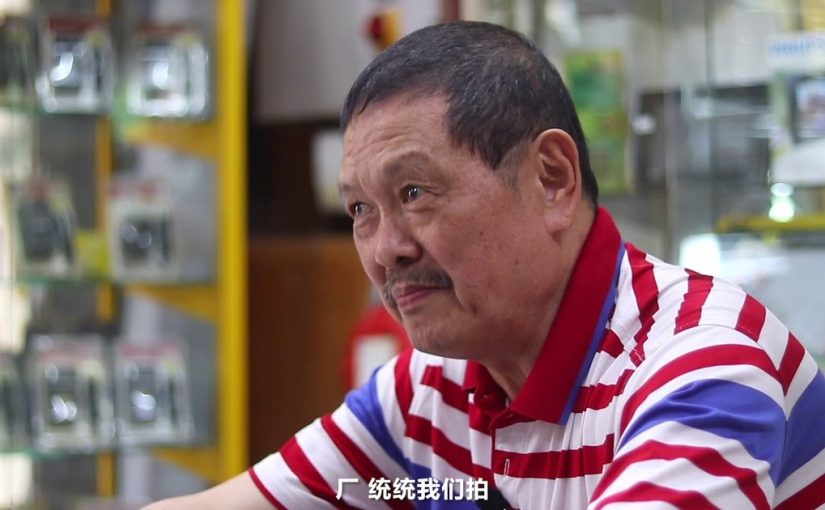
77-year-old Mr Yap is born and bred in Kuala Kubu Bharu, growing up together throughout the years with the Khen Thye Hin shop run by his father and uncle, which now is the last remaining traditional imported goods store. In the beginning, the shop only offered tailoring services and sold cloth. After saving up some funds, they progressively bring in imported goods for sale. There are an all-inclusive range of products, from cotton textiles, bedding merchandises, electrical devices, to metal spare parts. Khen Thye Hin is also the only newspaper distributor in Kuala Kubu Bharu, circulating publications such as Kin Kwok Daily News, Shin Min Daily News, Malayan Thung Pau Daily News, Sin Chew Daily, Nan Yang Siang Pau, China Press and more. 

The traditional imported goods stores and grocery stores are differentiated by what they stock: daily necessities versus foodstuff. Due to the imported goods being sourced from European countries and the United States, they were known as overseas goods stores. Back in when departmental stores and supermarkets were not as prevalent, imported goods stores were the people’s first choice in shopping, and could be immensely busy and overcrowded during the festive seasons. In the 21st century, consumer habits and models have changed, malls and hypermarkets are everywhere, the convenience of online shopping, as well as cheap made-in-China goods caused traditional imported goods stores to be unable to withstand the heavy blow from larger environmental waves and therefore die out eventually. The formulated shopping mall experience lacked humane touch, leading to traditional consumer experiences such as negotiation, greeting each other, aggregated pricing, and even crediting purchases, to no longer exist. 

Starting from 2018, Khen Thye Hin terminated their newspaper distributorship, the local villagers have to buy newspapers from the neighbouring Indian mart. Mr Yap intends to retire in a few months time, to move to Kuala Lumpur to stay with his son and family, enjoying the latter part of his life. His younger brother will be following up on disposal of the remaining goods and renting out the property, never to sell. After the Khen Thye Hin signboard is taken down, it will go into the possession of his son, to be bequeathed to the following generations in mind of not forgetting their ancestry.

Text: Daniel Lim & Pua Hui Wen

有你 UNI Production
Producer : Mok Yii Chek
Coordinator : Daniel Lim
Cinematographer : Amelia Lim / Evon Pang
Video Editor : Evon Pang
Production Assistant : Michael Lerk
Music : Sun in Your Eyes from Felt Music

COPYRIGHTS 2019 ECHINOIDEA SDN BHD

Buy us coffee

The Story of Kuala Kubu Bharu Village

“Gu Mao” is the direct translation into the Hakka dialect from the Malay language “Kuala Kubu”, meaning “fortress upon the river”. Located between the rivers Sungai Kubu and Sungai Rening, after the Selangor civil war ended in the mid 19th century (1867-1874), the fortress used to defend against attack from the opposing forces (Tengku Kudin and Yap Ah Loy) remain standing, thus the namesake. 

Due to the strategic geographical location and rich tin cassiterite resources, Kuala Kubu Lama was the pearl in Selangor river. Water transportation along Sungai Selangor and Sungai Kubu played a vital role in the local economy development, as it was the main channel of transporting goods, especially mined tin. The abundance of tin in Kuala Kubu Lama attracted the interests of various mining tycoons to initiate mining activity, e.g. Yap Ah Loy, Loke Yew etc. and the vast majority of Chinese mine workers were Hakkanese who came over from Huizhou, still making up 70 percent of the present village inhabitants. 

The small town of Kuala Kubu Lama leaped into prosperity as Selangor’s second largest town, rivalling Kuala Lumpur in its golden era of tin mining, and was the British colonial administration centre in Ulu Langat. However, the wealthy land faced flood hazards over the years. The ancient dam upstream of Kubu collapsed in 1883, where the flood water destroyed the whole town of Kuala Kubu Lama, generally referred to as “White Crocodile” legend, which is still talked about nowadays. The former town of Kubu (Kuala Kubu Lama) eradicated by the flood is now named Ampang Pecah, meaning broken dam. 

On a side note, the unauthorised changing of Sungai Kubu’s watercourse owing to mass mining and lawless excavation activity damaged the river structure and the riverbed became increasingly shallow, thus causing Kuala Kubu Lama to suffer from flash floods. In 1926, a heavy downpour once again submerged the streets of Kubu, victims of the great misfortune had to emigrate. Hence, the British colonial government relocated the town to a highland three kilometres away north of Kubu – Kuala Kubu Bharu. 

After the new village of Kuala Kubu Bharu was built during the national emergency in 1948, the local residents refer to the two separate areas as ‘the town’ and ‘the village’. In the 1990’s, the new village was renamed to Kampung Assam Kumbang, attributing it to the roselle flowers. 

The historical trace of a town consists of advancement and regression, old and new, destruction and establishment, diminishment and rebirth, not to mention progressing a new history. There is no harm to pay a visit, to listen to the evolution and transformation of the town as time lapses, to experience the depth of history, as well as humanity tales.

Text: Daniel Lim & Pua Hui Wen

有你 UNI Production
Producer : Mok Yii Chek
Coordinator : Daniel Lim
Cinematographer : Amelia Lim / Evon Pang
Drone : Daniel Lim
Video Editor : Evon Pang
Production Assistant : Michael Lerk
Music : 37.2度雜貨店 Three Seven Two Shop

COPYRIGHTS 2019 ECHINOIDEA SDN BHD

Buy us coffee

Wong Ng Kee Restaurant

Upon stepping foot in the restaurant, it is as if time stood still in the past, having accompanied Kuala Kubu residents for decades, the familiar taste of generations. Moreover, it used to be the sole restaurant in Kuala Kubu Bharu which provides banquet catering services – Restoran Wong Ng Kee. Founded for nearly 80 years, from a tiny stall selling wonton mee and porridge, to banquets bearing memorable moments of the neighbourhood’s inhabitants, although it may seem decrepit, it is a long-established name and a well-acquainted place for countless local residents. 

77-year-old eldest brother Wong Siew Kei (transliteration) is the second generation heir, operating the restaurant alongside his wife and his three younger sisters. For half a century, they personally handled all matters in their restaurant instead of hiring manpower. From the preparation of ingredients, cooking and serving dishes, all are done by the five of them. In spite of their rising age, as all of them are now senior citizens, they still work hard in the restaurant by themselves. Made fresh daily by eldest brother Wong Siew Kei (transliteration) are their noodles, including marinating and roasting their signature traditional barbecued pork.

The senior Mr Wong migrated to Malaysia from China with his elder brother when he was nine years old. Initially he was in the grocery trade, after that he runs his own stall selling homemade wonton noodles. Due to the senior Mr Wong being the fifth in his family, and people from his hometown call him “fifth brother”, he named his restaurant ‘Wong Ng Kee’ (by fifth brother of Wong family). Self-taught chef Mr Wong Siew Kei (transliteration) helped his father at the stall since he was in primary school. Besides mastering noodle-making skills, after taking over the restaurant from his father, he suggested increasing the number of dishes, taking the initiative to research and develop recipes. Thus, he improved his culinary skills from books and reading materials, and even from customers’ feedback.

During the 1980’s when catering for banquets, Wong Ng Kee was quite famous. From catering to the banquets of usually six tables or more, to setting up a temporary canopy in front of the shop, they were as busy as bees. As time passed, although they no longer offer catering services, within the unpretentious interior, you may find the warm touches of the Wong family, and the silent trail of years gone by. 

Text: Daniel Lim & Pua Hui Wen

有你 UNI Production
Producer : Mok Yii Chek
Coordinator : Daniel Lim
Cinematographer : Amelia Lim / Evon Pang
Video Editor : Amelia Lim
Production Assistant : Michael Lerk
Music : Beneath The Moonlight

COPYRIGHTS 2019 ECHINOIDEA SDN BHD

Buy us coffee