Charcoal Stove Factory in Jalan Kuala Kangsar

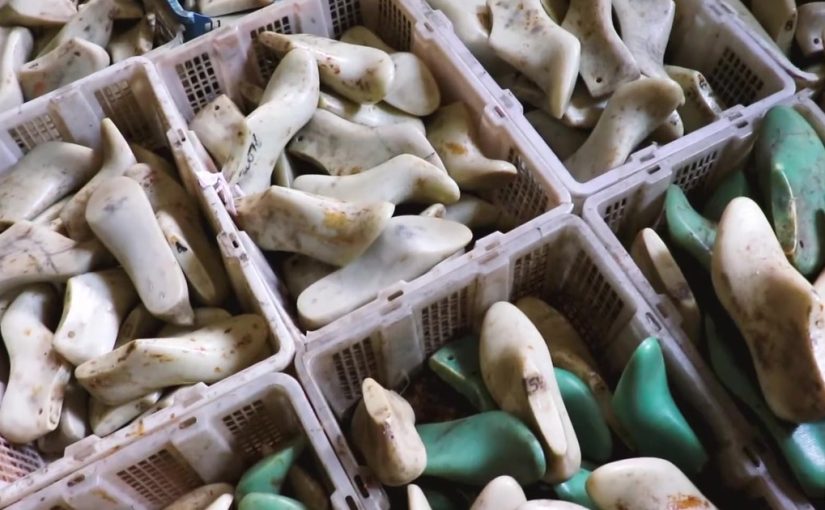
Be it in red or original clay colour, charcoal stoves were once a must-have kitchen equipment in every household, lending a unique charcoal aroma to foods cooked on it. Besides, charcoal stoves could be sighted on the traditional ceremonies of moving into a new house or ancestor worshipping, in order to pray for good luck or get rid of bad luck by stepping over a stove with burning charcoals. As times change, the convenience of gas stoves, as well as the increase of environmental friendliness lead to a steep decline in the demand of charcoal stoves, causing a slump in the local manufacturing of traditional charcoal stoves.

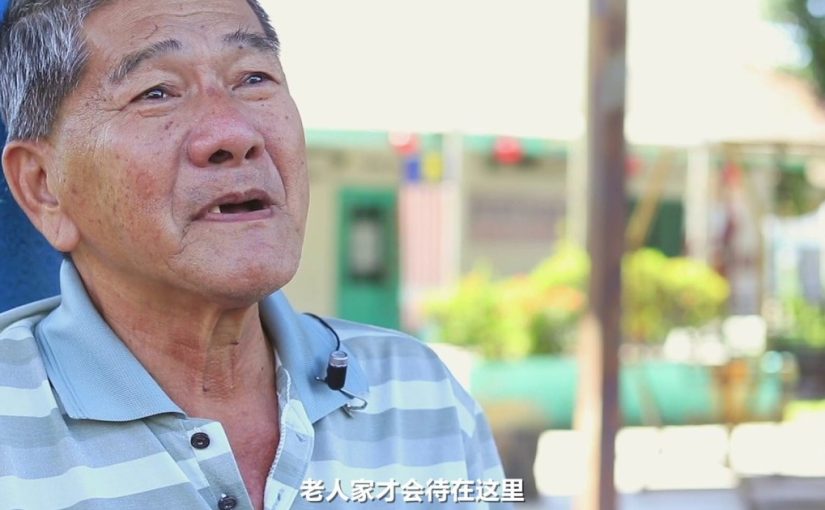
At the riverside area of Jalan Kuala Kangsar in Ipoh, there is still one family working in the industry of charcoal stove manufacturing who persists in using a traditional kiln. Mr Foong Cheah Thong is the second generation successor of Ban Li Stove Factory, a simple erection under an old zinc roof which houses two small workshops, a kiln, and an empty space. Over five decades, the factory is family-run under a small capital.

The manufacturing process of a traditional charcoal stove is time-consuming and strenuous, the work environment stifling hot, even foreign labourers are unable to endure the harshness of this industry. Market demand for charcoal stoves is lacklustre, with the increase in production costs, the profit margin is quite faint. Moreover, from time to time people complain about the environmental issue of heavy smoke erupting from the kiln to the authorities, which prompted inspection visits from the ministry of environmental health. Apart from receiving complaints, compounds were issued due to their inability in getting a legal operating license.

Despite the various challenges and blows, Mr Foong and his family are tenacious in keeping the family trade alive. The hard work involved in a seemingly simple charcoal stove is difficult to perceive by onlookers.

Text: Daniel Lim & Pua Hui Wen

有你 UNI Production
Producer : Mok Yii Chek
Coordinator : Daniel Lim
Cinematographer : Amelia Lim / Evon Pang
Video Editor : Amelia Lim
Music : The Back Porch from Felt Music

COPYRIGHTS 2018 ECHINOIDEA SDN BHD

Buy us coffee

Dragon Kiln in Ipoh

As early as 5000 years ago, the ancient people are already equipped with the knowledge of putting shaped piles of mud into holes for firing. Whereas the dragon kiln is the traditional way of firing ceramics in China, with its history tracing over 2000 years back to the Warring States Period. The dragon kiln is a long tunnel-shaped kiln, usually built on hillslopes, from the bottom to the top, utilizing the feature of height differences in the slope and the theory of rising flames, the design showcasing the wisdom of the ancient people.

The name ‘dragon kiln’ is attributable to the shape and sloping build similar to that of a crouching dragon, the interior is built by laying bricks, and the exterior is welded using clay. The structure of the dragon kiln is divided into three sections: kiln inlet, kiln floor, and kiln outlet. The kiln inlet is built downhill, mainly functioning as the fuel chamber, and is also known as dragon head. The kiln floor is a dome-like vault, and is made up of hoppers for firing ceramics. The chimney where the furnace spread backwards to discharge is the kiln outlet, namely dragon tail. As the operational cost for running a dragon kiln is high, labour-consuming, and has high requirements for pottery firing skills and exquisite control over the temperature used, dragon kilns are gradually replaced by modernized electrical kilns.

At present, two ancient dragon kilns remain at Sin Cheak Seng in Ipoh. According to the person-in-charge Mr Chin Kam Peng, clay mud of high quality could be found along Ipoh’s Jalan Kuala Kangsar in the earlier days. In the golden age of the pottery industry, there were over 60 dragon kilns, globally famous for their excellent pottery. Due to the riverside topography is unable to house the traditional sloping dragon kilns, the potters make changes to suit the circumstances by building flat dragon kilns, which is a feat in itself.

With the diminishing of the pottery industry, abandoned dragon kilns were dismantled one by one, Mr Chin heaved a heavy sigh. Nevertheless in recent years, a few local pottery artists spurred the spirit of crafting wood-fired ceramics. As if awakening the unextinguished dragon kiln fire inside Mr Chin’s heart, employing his amazing skills in kiln-building, he rebuilt two mini dragon kilns using the red bricks from dismantled ancient dragon kilns for the usage of pottery hobbyists, with the hope of promoting the craft of wood-fired pottery.

Text: Daniel Lim & Pua Hui Wen

有你 UNI Production
Producer : Mok Yii Chek
Coordinator : Daniel Lim
Cinematographer : Amelia Lim / Evon Pang
Video Editor : Evon Pang
Music : Laki from Felt Music

COPYRIGHTS 2018 ECHINOIDEA SDN BHD

Buy us coffee

Handmade Mee Sua

In the courtyard, hanging fully on numerous wooden frames are strands of fine yarn-like mee sua, the scene comprising of thread curtain layers looking splendid and spectacular. Sitiawan is known as mini Fú Zhōu due to local inhabitants mainly originating from Fú Zhōu, China. In addition, mee sua is one of the most sentimental traditional Fú Zhōu foods, no matter during relatives and friends visit, or during celebrations and festivals, when a bowl of mee sua is served, not only taste is consumed, but also a wish for safety, happiness, and longetivity.

As times progress, the production of mee sua gradually converted into semi or fully motorised, eventually a bowl of genuine handmade Fú Zhōu mee sua became a rare indulgence. Mr Ding Hock Gong is one of the incredibly few masters who persists in the laborious craft of purely handmade mee sua.

Observing the 66-year-old Mr Ding carrying five clusters of noodles hanging on bamboo chopsticks in one go, firstly he inserts one end into the matching hole on the wooden rack, with his wife lending a hand in steadying the chopsticks; the other end is hooked in between his fingers, his body reclining backwards, by pulling strongly, the noodles will stretch into long fine strands, up to 5-6 metres in length. The seemingly simple action needs to be carried out smoothly to ensure good viscosity and mouthfeel of the mee sua, and could not be mastered within a short timeframe. The force employed in pulling not only needs to be powerful but also spread evenly, a bit lesser it fails, a bit more it breaks.

Nevertheless this is merely one out of almost ten procedures in producing handmade mee sua, other procedures include kneading the dough, twisting into strands, flouring the strands, hanging the strands onto bamboo chopsticks, stretching the noodles, and a few sequences of fermentation then proofing etc. The process is extremely time-consuming, being busy since before dawn breaks until the late afternoon, and could be said as an ingenious artisanal unique craft.

Mr Ding’s mastery in this craft is apprenticed to his father who migrated southwards from China to Malaysia. He grudgingly feels pity for the craft being almost extinct, however he respects that his children did not wish to succeed this laborious industry. Nevertheless Mr and Mrs Ding still enjoy the production of handmade mee sua in their courtyard, indicating that it is one of the ways to exercise, living a relaxed life in this rustic village.

Text: Daniel Lim & Pua Hui Wen

有你 UNI Production
Producer : Mok Yii Chek
Coordinator : Daniel Lim
Cinematographer : Amelia Lim / Evon Pang
Video Editor : Amelia Lim
Music : Breakfast In Bed from Felt Music

COPYRIGHTS 2018 ECHINOIDEA SDN BHD

Buy us coffee