Dragon Kiln in Ipoh

As early as 5000 years ago, the ancient people are already equipped with the knowledge of putting shaped piles of mud into holes for firing. Whereas the dragon kiln is the traditional way of firing ceramics in China, with its history tracing over 2000 years back to the Warring States Period. The dragon kiln is a long tunnel-shaped kiln, usually built on hillslopes, from the bottom to the top, utilizing the feature of height differences in the slope and the theory of rising flames, the design showcasing the wisdom of the ancient people.

The name ‘dragon kiln’ is attributable to the shape and sloping build similar to that of a crouching dragon, the interior is built by laying bricks, and the exterior is welded using clay. The structure of the dragon kiln is divided into three sections: kiln inlet, kiln floor, and kiln outlet. The kiln inlet is built downhill, mainly functioning as the fuel chamber, and is also known as dragon head. The kiln floor is a dome-like vault, and is made up of hoppers for firing ceramics. The chimney where the furnace spread backwards to discharge is the kiln outlet, namely dragon tail. As the operational cost for running a dragon kiln is high, labour-consuming, and has high requirements for pottery firing skills and exquisite control over the temperature used, dragon kilns are gradually replaced by modernized electrical kilns.

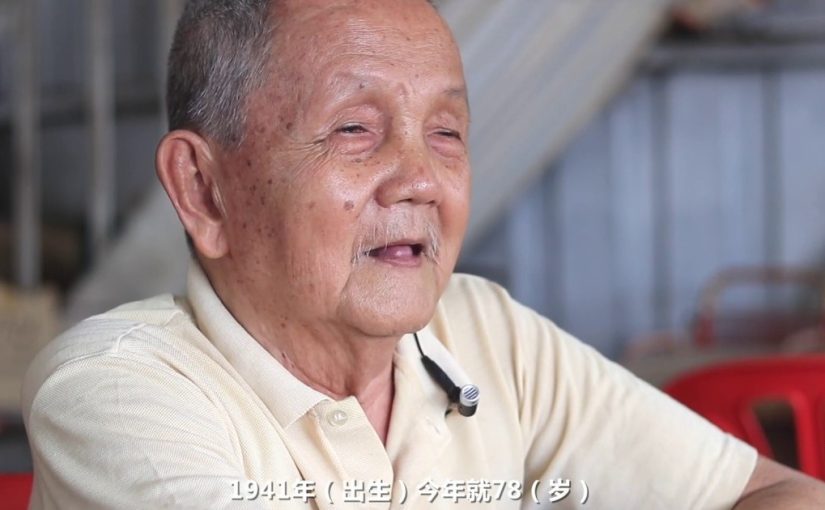
At present, two ancient dragon kilns remain at Sin Cheak Seng in Ipoh. According to the person-in-charge Mr Chin Kam Peng, clay mud of high quality could be found along Ipoh’s Jalan Kuala Kangsar in the earlier days. In the golden age of the pottery industry, there were over 60 dragon kilns, globally famous for their excellent pottery. Due to the riverside topography is unable to house the traditional sloping dragon kilns, the potters make changes to suit the circumstances by building flat dragon kilns, which is a feat in itself.

With the diminishing of the pottery industry, abandoned dragon kilns were dismantled one by one, Mr Chin heaved a heavy sigh. Nevertheless in recent years, a few local pottery artists spurred the spirit of crafting wood-fired ceramics. As if awakening the unextinguished dragon kiln fire inside Mr Chin’s heart, employing his amazing skills in kiln-building, he rebuilt two mini dragon kilns using the red bricks from dismantled ancient dragon kilns for the usage of pottery hobbyists, with the hope of promoting the craft of wood-fired pottery.

Text: Daniel Lim & Pua Hui Wen

有你 UNI Production
Producer : Mok Yii Chek
Coordinator : Daniel Lim
Cinematographer : Amelia Lim / Evon Pang
Video Editor : Evon Pang
Music : Laki from Felt Music

COPYRIGHTS 2018 ECHINOIDEA SDN BHD

☕ Buy Us Coffee

Handmade Mee Sua

In the courtyard, hanging fully on numerous wooden frames are strands of fine yarn-like mee sua, the scene comprising of thread curtain layers looking splendid and spectacular. Sitiawan is known as mini Fú Zhōu due to local inhabitants mainly originating from Fú Zhōu, China. In addition, mee sua is one of the most sentimental traditional Fú Zhōu foods, no matter during relatives and friends visit, or during celebrations and festivals, when a bowl of mee sua is served, not only taste is consumed, but also a wish for safety, happiness, and longetivity.

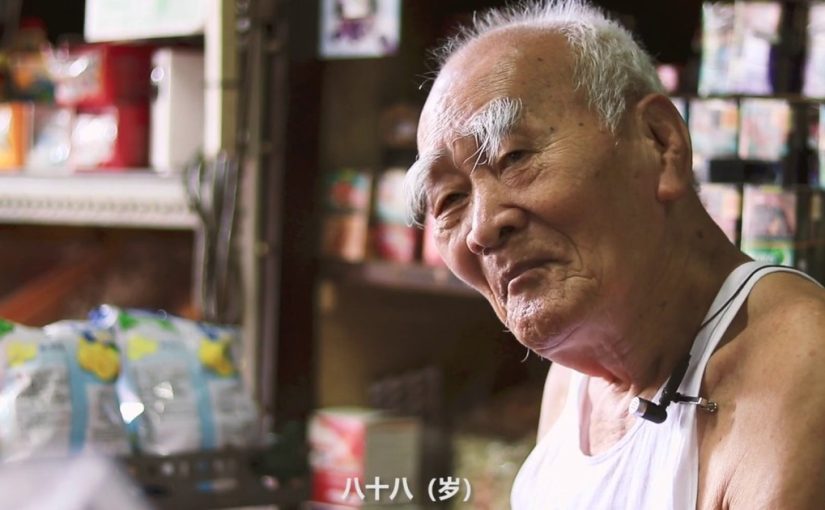
As times progress, the production of mee sua gradually converted into semi or fully motorised, eventually a bowl of genuine handmade Fú Zhōu mee sua became a rare indulgence. Mr Ding Hock Gong is one of the incredibly few masters who persists in the laborious craft of purely handmade mee sua.

Observing the 66-year-old Mr Ding carrying five clusters of noodles hanging on bamboo chopsticks in one go, firstly he inserts one end into the matching hole on the wooden rack, with his wife lending a hand in steadying the chopsticks; the other end is hooked in between his fingers, his body reclining backwards, by pulling strongly, the noodles will stretch into long fine strands, up to 5-6 metres in length. The seemingly simple action needs to be carried out smoothly to ensure good viscosity and mouthfeel of the mee sua, and could not be mastered within a short timeframe. The force employed in pulling not only needs to be powerful but also spread evenly, a bit lesser it fails, a bit more it breaks.

Nevertheless this is merely one out of almost ten procedures in producing handmade mee sua, other procedures include kneading the dough, twisting into strands, flouring the strands, hanging the strands onto bamboo chopsticks, stretching the noodles, and a few sequences of fermentation then proofing etc. The process is extremely time-consuming, being busy since before dawn breaks until the late afternoon, and could be said as an ingenious artisanal unique craft.

Mr Ding’s mastery in this craft is apprenticed to his father who migrated southwards from China to Malaysia. He grudgingly feels pity for the craft being almost extinct, however he respects that his children did not wish to succeed this laborious industry. Nevertheless Mr and Mrs Ding still enjoy the production of handmade mee sua in their courtyard, indicating that it is one of the ways to exercise, living a relaxed life in this rustic village.

Text: Daniel Lim & Pua Hui Wen

有你 UNI Production
Producer : Mok Yii Chek
Coordinator : Daniel Lim
Cinematographer : Amelia Lim / Evon Pang
Video Editor : Amelia Lim
Music : Breakfast In Bed from Felt Music

COPYRIGHTS 2018 ECHINOIDEA SDN BHD

☕ Buy Us Coffee

Sin Chin Hin

Unity between brothers, having a strong sibling bond. 

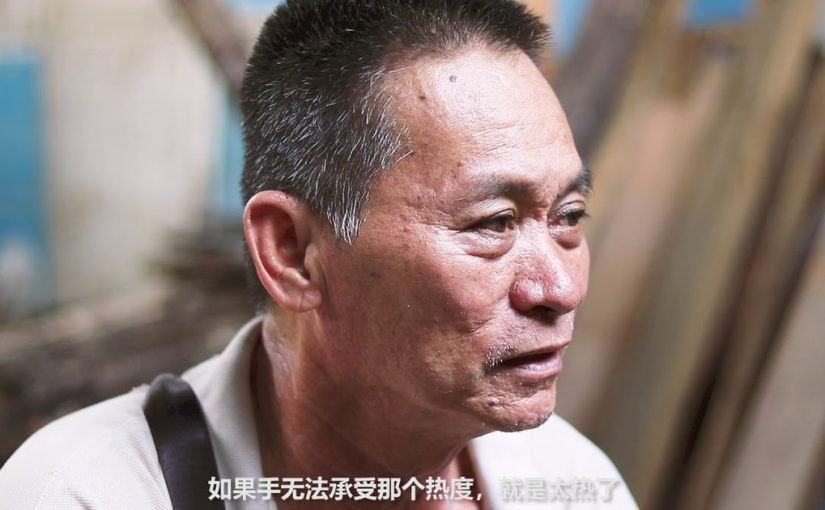
The traditional trade of manufacturing stainless steel goods is gradually going downhill, but in an old shop lot at Jinjang, four brothers work under the same roof, each sticking to their own duties. The Yong (transliteration) brothers inherited the family business, and are the third generation managers. Since the establishment of Jinjang village till now, they never relocated, providing their services to this neighbourhood. 

A wide array of stainless steel products are showcased in the shop, from household utensils such as buckets, plates, bottles and cans, to large appliances which are in demand from hawkers and food and beverages operators, as well as offering customization options. The manufacturing process requires particular skills and craft of the smiths, from drawing a blueprint, to cutting a large piece of galvanized iron and hammering it to shape, then converging and soldering each part together to build. Besides, the shop also offers repair services for customers who wish to prolong the usability of their utensils, to achieve reuse and reduce. 

Handmade metal utensils are doubtlessly durable. However, in the 21st century where speed and efficiency comes first, durability is no longer of importance. Moreover, with the prevalence of plastic and its cheap cost, people are getting used to disposable products. The Yong brothers are facing a succession crisis, while their eldest brother retired, the rest of the brothers continue with their busy knocking and striking in the stainless steel store, persevering.

Text: Daniel Lim & Pua Hui Wen

有你 UNI Production
Producer : Mok Yii Chek
Coordinator : Daniel Lim
Cinematographer : Amelia Lim / Evon Pang
Video Editor : Evon Pang
Music : Reynisfjall from Felt Music

COPYRIGHTS 2018 ECHINOIDEA SDN BHD

☕ Buy Us Coffee