Roast Pork in Lukut

After dark, the surroundings of Lukut Sri Parit village is veiled by serenity, however the See (transliteration) father and son are busying themselves at the rear of their old family house. Hanging on stainless steel racks are processed and marinated whole pigs as well as slices of cut raw pork, ready for firing in the kiln. Kenny and his three siblings are the third generation heirs to Heng Kee roast pork stall, growing up in a family of roastery, they are familiar with every single procedure from handling raw meat to taking the roasted pork straight out the kiln. Among all, the greatest challenge lies in the technique of using a traditional kiln.

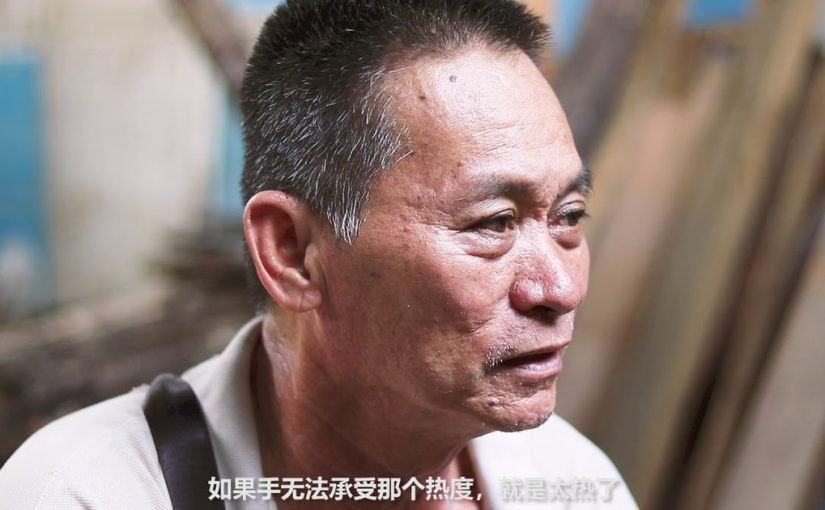
The See (transliteration) family’s traditional kiln roasting technique started from Kenny’s grandfather, lasting for well over half a century till the third generation at present. They are also among the handful who persist in the ancestral practice of using rubber tree trunks as firewood to roast the pork over low heat. The process of roasting pork over a traditional kiln is a test to the skills, especially exercising control over the temperature, how to ensure the pork is roasted evenly and not burnt, at the same time preserving the juiciness of the meat as well as the crispiness of the skin. Both father and son showcase their years of experience through the practice of solid skills, using bare hands, observation, torchlight, and metal shreds to determine and control the heat, and to which extent is the pork roasted.

As the third generation inheritance of the family business, Kenny and his brothers who all graduated from university are reluctant to see the extinction of their ancestral trade. As a token of appreciation towards their family for the hard work in raising them, they decided to take up the family business, as well as expanding it. Apart from continually operating a roast pork stall inside Lukut wet market, they also set up a retail store in the commercial area selling roast pork and mixed roast items such as barbecued pork and roast duck, steadily refusing to compromise on quality, all items homemade. Kenny hopes to organize the traditional kiln roasting technique into a more systematic way, transforming the family business into a corporate.

Text: Daniel Lim & Pua Hui Wen

有你 UNI Production
Producer : Mok Yii Chek
Coordinator : Daniel Lim
Cinematographer : Amelia Lim / Evon Pang
Video Editor : Amelia Lim
Production Assistant : Michael Lerk
Music : A Good Feeling from Felt Music

COPYRIGHTS 2018 ECHINOIDEA SDN BHD

☕ Buy Us Coffee

Handmade Mee Sua

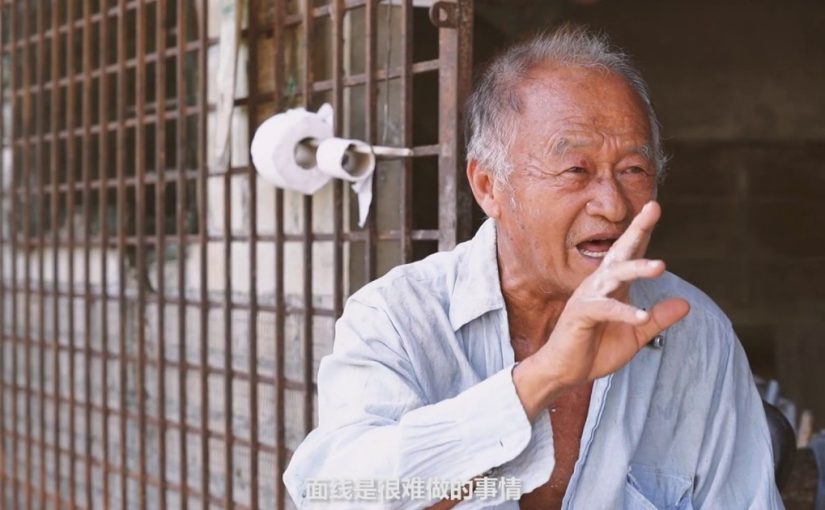
In the courtyard, hanging fully on numerous wooden frames are strands of fine yarn-like mee sua, the scene comprising of thread curtain layers looking splendid and spectacular. Sitiawan is known as mini Fú Zhōu due to local inhabitants mainly originating from Fú Zhōu, China. In addition, mee sua is one of the most sentimental traditional Fú Zhōu foods, no matter during relatives and friends visit, or during celebrations and festivals, when a bowl of mee sua is served, not only taste is consumed, but also a wish for safety, happiness, and longetivity.

As times progress, the production of mee sua gradually converted into semi or fully motorised, eventually a bowl of genuine handmade Fú Zhōu mee sua became a rare indulgence. Mr Ding Hock Gong is one of the incredibly few masters who persists in the laborious craft of purely handmade mee sua.

Observing the 66-year-old Mr Ding carrying five clusters of noodles hanging on bamboo chopsticks in one go, firstly he inserts one end into the matching hole on the wooden rack, with his wife lending a hand in steadying the chopsticks; the other end is hooked in between his fingers, his body reclining backwards, by pulling strongly, the noodles will stretch into long fine strands, up to 5-6 metres in length. The seemingly simple action needs to be carried out smoothly to ensure good viscosity and mouthfeel of the mee sua, and could not be mastered within a short timeframe. The force employed in pulling not only needs to be powerful but also spread evenly, a bit lesser it fails, a bit more it breaks.

Nevertheless this is merely one out of almost ten procedures in producing handmade mee sua, other procedures include kneading the dough, twisting into strands, flouring the strands, hanging the strands onto bamboo chopsticks, stretching the noodles, and a few sequences of fermentation then proofing etc. The process is extremely time-consuming, being busy since before dawn breaks until the late afternoon, and could be said as an ingenious artisanal unique craft.

Mr Ding’s mastery in this craft is apprenticed to his father who migrated southwards from China to Malaysia. He grudgingly feels pity for the craft being almost extinct, however he respects that his children did not wish to succeed this laborious industry. Nevertheless Mr and Mrs Ding still enjoy the production of handmade mee sua in their courtyard, indicating that it is one of the ways to exercise, living a relaxed life in this rustic village.

Text: Daniel Lim & Pua Hui Wen

有你 UNI Production
Producer : Mok Yii Chek
Coordinator : Daniel Lim
Cinematographer : Amelia Lim / Evon Pang
Video Editor : Amelia Lim
Music : Breakfast In Bed from Felt Music

COPYRIGHTS 2018 ECHINOIDEA SDN BHD

☕ Buy Us Coffee

“Mua Lao” and “Lao Huei” in Batang Kali

Upon stepping into the new village of Batang Kali, without any hustle and bustle of the city, all peace and tranquility throughout the small village. Gazing down from Fu Quan Miao temple on the slopes, rows and rows of new village houses were built neatly in accordance with the slope, clearly layered. As times progress and emigration of the population, currently about 600 people remain in the village, most of them Hokkien. Situated within is Swee Len Food Industries which is established for ninety-odd years, specializing in manufacturing traditional wedding treats for Hokkiens marrying a daughter —— “mua lao” and “lao huei”.

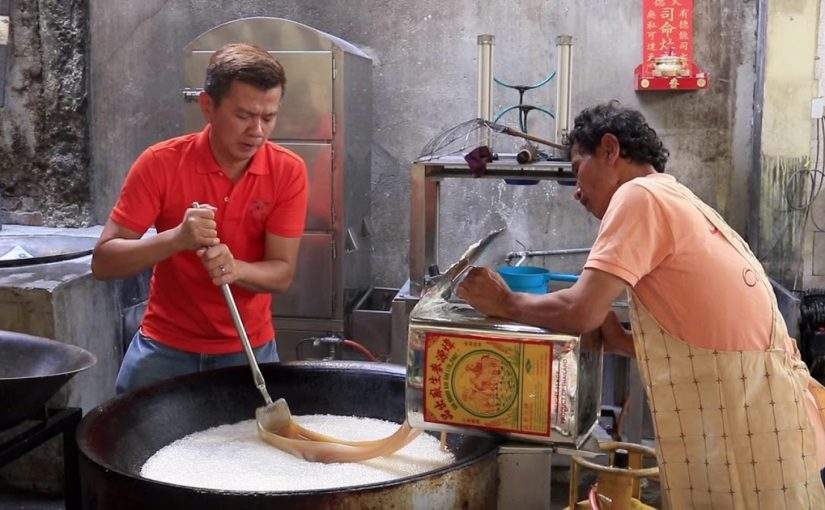
Having been working in Singapore for quite some time, a few years back the third generation owner Leonard Oh and wife decided to return to his hometown with the intention of succeeding his family business, sustaining traditional handcrafted goods with the flavour of remembrance, preserving his grandfather’s painstaking efforts in the craft of mua lao and lao huei. The production of mua lao and lao huei are renowned for the complicated handiwork and procedures involved, from the processes of milling, steaming, drying, cutting, frying and many more, the entire production operation spans over a week until completion. Nonetheless Leonard Oh and wife both stick to authentic hand crafting throughout the process, even the sesame and rice puffs dredged on in the final step were stir-fried in person, instead of using ready-made products.

Week-long process in return for three flavours, husband and wife taking a firm stance in remaining true to traditional handcraft, perceiving tradition as loyalty to artistry, essentially shouldering the duties of heritage and promoting cultural norms.

Text: Daniel Lim & Pua Hui Wen

有你 UNI Production
Producer : Mok Yii Chek
Coordinator : Daniel Lim
Cinematographer : Amelia Lim / Evon Pang
Video Editor : Evon Pang
Music : Can You Hear Me from Felt Music

COPYRIGHTS 2018 ECHINOIDEA SDN BHD

☕ Buy Us Coffee