Ko Hou Kam Herbal Tea in Mambau

Ko Hou Kam herbal tea, the first sip fills the mouth with bitterness, yet yields a lingering sweetness once it slips down the throat, hence its name meaning sweetness after consumption. A nationwide popular beverage back in the 90s, Ko Hou Kam advertisements were aired on various television stations, and even distributed abroad. With a superfluity of health drinks available nowadays, Ko Hou Kam eventually diminishes, and can only be found at certain traditional Chinese medicine store or its place of origin – Mambau.

Mambau is a small town on the outskirts of Seremban, Negeri Sembilan. At the beginning of the 20th century, as the rubber industry flourished, large-scale plantations were developed in Mambau. The village was established in the 50s, the majority of the 200 households were rubber tappers. Due to its strategic geographical location, the rail freight route from Port Dickson pass through the border of Mambau village (now demolished), and so does the Federal Route 53 linking Seremban and Port Dickson. Before the construction of Seremban–Port Dickson Highway, Federal Route 53 is the main road leading to Port Dickson, tourists usually stop by Mambau for rest and refreshments.

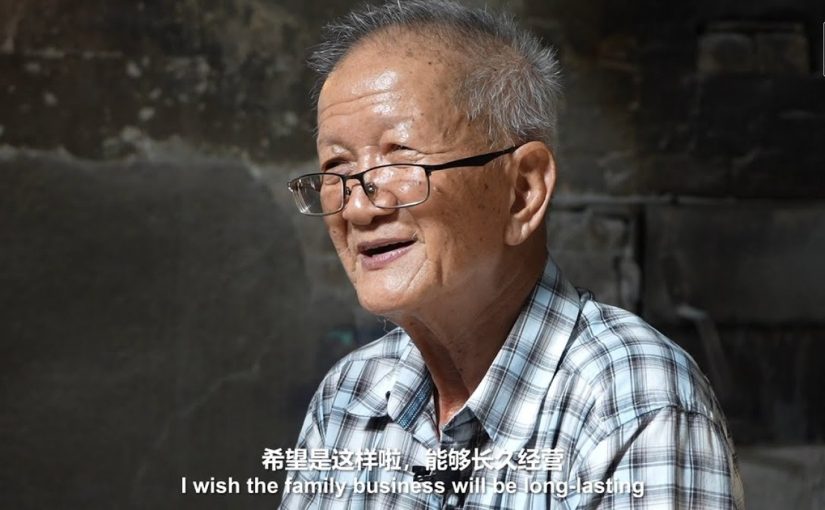
Located just off the main road, Mambau Khek Yong Tau Fu may have a shabby appearance, however it is the birthplace of Ko Hou Kam herbal tea. The founder, the late Mr Kum Loong Poh, used to work in the construction industry. However, business failure due to the global economic recession of the early 1980s caused him to seek new opportunities in the food and beverages industry. In order to finance the household, Mr Kum worked long hours till the point that he suffered from health complications. After consuming a herbal tea prepared according to a prescription which his ancestors brought over from China, his condition improved. Since the herbal tea has proven health benefits, Mr Kum decided to promote it so that others can enjoy improved health too.

The original herbal brew has a bitter aftertaste, therefore the late Mr Kum Loong Poh researched and developed an ideal herbal tea formula suitable for general consumption as well as offering a lingering sweetness. The main ingredients of Ko Hou Kam herbal tea are camellia, silver needle, and chrysanthemum. Silver needle tea leaves are subjected to processing in order to neutralise acidity: sun-dried after being harvested, stems removed, and the tea leaves are then fermented for 100 days. Ko Hou Kam herbal tea comes in individually sealed tea bags for ease of consumption.

Ko Hou Kam herbal tea was initially sold in Mambau Khek Yong Tau Fu as well as a friend’s coffee-shop. Back then, the health drink market just started to grow, imported health drinks were expensive, and there were barely any local manufacturers. Mr Kum Loong Poh’s savviness in launching Ko Hou Kam herbal tea at an affordable price instantly gained market popularity, hitting the shelves of medical stores as well as being distributed nationwide. As manual packaging became inefficient due to increasing demands, he set up a small factory and invested in an automated packaging system to ease operations and storage.

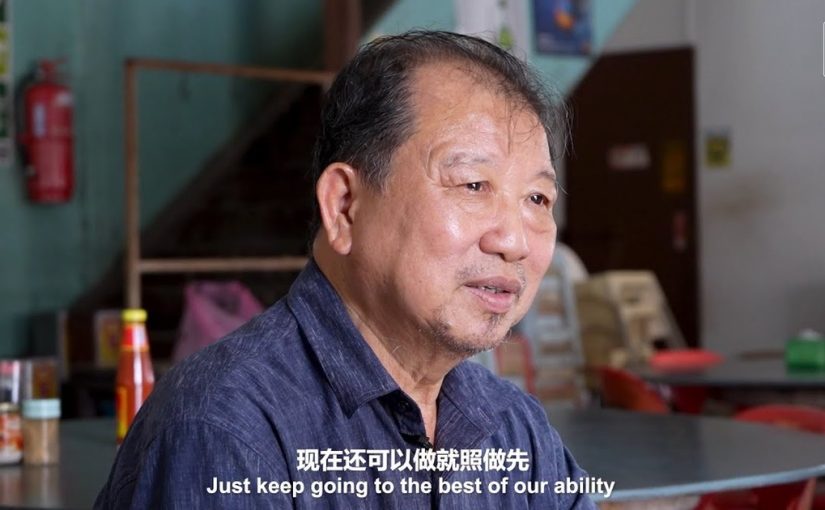
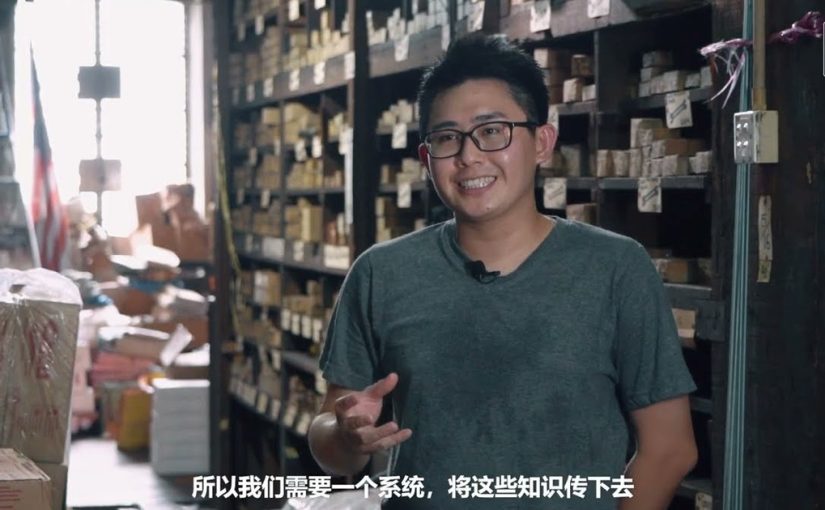
After the passing of the late Mr Kum Loong Poh, his sons Kum Han Soon and Kum Han Loong took over the operations of Mambau Khek Yong Tau Fu and Ko Hou Kam, thus prevented disappointing regular customers. However, intensifying market competition led to business decline, structural market changes dealt another severe blow – younger generations prefer to consume unhealthy beverages such as bubble milk tea, only a few would appreciate herbal tea. Even so, Kum Han Loong did not give up, but turned to taking phone orders and online marketing to explore new opportunities.

The Kum brothers are born and bred in Mambau, plus Ko Hou Kam was founded by their late father in this small town, tight bonds flourish within the local community, therefore they chose to stay in their hometown to carry on the family business. Nevertheless, herbal tea is not some magical remedy. Kum Han Loong gently reminds everyone not to simply rely on herbal tea for health benefits, but to combine with regular exercise, maintain a daily routine, and eat a balanced diet, living a healthy lifestyle to keep the mind and body fit.

有你 UNI Production
Producer : Daniel Lim
Cinematographer : Amelia Lim / Evon Pang / Michael Lerk
Drone : Daniel Lim
Video Editor : Evon Pang
Copywriter : Pua Hui Wen

COPYRIGHTS 2022 ECHINOIDEA SDN BHD

☕ Buy Us Coffee

Lady Rubber Tapper

Rubber trees stand tall and straight in neat rows, bright rays of the morning sun shine through the leaves. Madam Chong Sew Cheen stoops slightly to score a rubber tree with the pull-type rubber tapping knife in her hands, milky-white latex sap flow downward the diagonal cut. Madam Chong inserts a metal spout to allow the latex to drip into a collection cup held in place by a galvanized wire.

In the 20th century, there was a massive boom in rubber trade, Malaya became the world’s largest producer of natural rubber, which attracted swarms of British capitalist investors. As Malaya gained independence from British rule, plantations were divided and sold upon British capitalists leaving the country, several locals spent their hard-earned money to buy over and became smallholders. Mambau, where Madam Chong resides, was mainly consisted of rubber plantations. At eleven years old, she followed in her mother’s footsteps to tap rubber at a British-owned plantation. Over the next six decades, she moved around to work under different smallholders. 

The rapid economic growth since Malaysia’s formation led to urban sprawl, property developers acquired plantations in Mambau and surrounding areas to build new townships such as Seremban 2 and Bandar Sri Sendayan. In order to sustain a livelihood, Madam Chong had to work at remote Malay reserved lands, making daily trips alone via motorcycle for about twenty minutes, passing by residential and commercial properties which used to be rubber plantations, to reach her current workplace. 

The switching of workplace brought on changes to Madam’s Chong working mode, where she now rents rubber trees from the landowner for a fixed monthly fee, and she is free to arrange her own working hours and workload.  Due to the amount of latex sap produced by rubber trees being limited, she divided the six-acre plot into two patches to be tapped alternately, the downscaled working area means that she no longer need to rush to work before dawn, as it can be completed throughout the morning.

Around seven in the morning, Madam Chong arrives at the rubber plantation on her motorcycle, ties on her apron and headscarf, lights a mosquito coil to hang upon her waist, then goes around the rubber trees with her bucket of tools. A regularly used tapping knife, a spare one, some metal spouts, a parang to collect firewood, and spare spark plugs in case her motorcycle misfires. After completing her work around noon, she goes home to have lunch and rest, later in the evening she sharpens the tapping knives and gets ready for the next day’s toil.

Mambau’s rubber industry dwindled in line with weakening global demand, smallholders converted to palm or durian plantations. Local rubber tappers either change their jobs or retire, only a handful remain persistent lke Madam Chong. Big cities offer more opportunities, younger generations rather flock to urban areas than tap rubber. Nowadays rubber plantations face workers shortage, even in hiring foreign labour. Local Chinese rubber tappers are becoming increasingly rare. 

Septuagenarian Madam Chong has been working as a rubber tapper for the majority of her life. Although she occasionally suffer leg pain from walking on slopes, she remains jovial and have no plans to retire yet, as she may pass time and exercise through her work. Despite the decline of the rubber industry, Madam Chong still manage to make a living.

有你 UNI Production
Producer : Daniel Lim
Cinematographer : Amelia Lim / Evon Pang / Michael Lerk
Drone : Daniel Lim
Video Editor : Evon Pang
Copywriter : Pua Hui Wen

COPYRIGHTS 2022 ECHINOIDEA SDN BHD

☕ Buy Us Coffee

Golden Horse Bakery

Tear open the white packaging with red printing of a horse standing amid the glow, nibble on the soft vanilla cream bun, it brings back sweet childhood memories. Golden Horse Bakery in Semenyih has been producing handmade traditional breads and buns since 1981, feeding generations of the local population. The most popular item is cream bun, followed by coconut bun and oven-dried bread (roti kok). The breads are not only sold in the bakery itself, but also supplied to nearby grocery stores and traditional coffee shops, a familiar favourite of those born and bred in Semenyih.

40 years flew by, Semenyih has developed from agricultural plantations into a township, yet Golden Horse Bakery retained its original facade. Upon opening the cream-colored folding shutters, breads and buns filled the wooden racks and shelves in sight. In the other part of the shop sits a large wooden workbench, on which countless bread were made and decorated. A shared space for both production and retail was the idea of the founders, who made the wooden furniture with their own hands. The original packaging and recipes are also passed down, including how to make the cream bun fillings and coconut bun fillings.

The current proprietor of Golden Horse Bakery, Lee Boon Kit, is born into a family of bakers. His grandfather ran a bakery in Tampin, Negeri Sembilan, and most of their relatives are also bakers. In 1980, his aunt got married in Semenyih and invited her brothers (Lee’s parents and uncle) to establish a joint venture, hence Golden Horse Bakery came into being. As Lee’s uncle and aunt pulled out of the business, his parents considered closing for good. Having just graduated from high school, Lee decided to take over the business. With his sisters lend a helping hand every now and then, the family managed to keep the bakery in operation.

Since childhood, Lee Boon Kit observed his family members at work, and fully understood the onerous nature of producing handmade bread. Daily working hours range from 12 to 15 hours, with meagre earnings and very little free time. The family members work as a team, sharing the workload from measuring ingredients, mixing and rolling the dough, bread shaping, moulding and fermenting, to baking. For Lee, getting his face flushed red upon removing bread from the hot oven is just another ordinary aspect of his work. There are no hired workers, the family are quite happy to do everything themselves despite the tedium.

In earlier years, Golden Horse Bakery offered certain types of classic bread, recently increased to over a dozen varieties due to market demand. Apart from serving long-term regular customers, tourists, and foodies looking for traditional taste, they also supply Hainanese bread loaves to coffee shops. As all the bread are made by hand, Lee keeps a tight constraint on each day’s production quantities to avoid compromising the food quality. If necessary, he liaises with the customer to complete large orders in two days instead of one. 

Rapid urbanization caused a shift from traditional handmade food to mass production for increased efficiency and output volume, as well as the usage of food additives to extend shelf life and taste enhancement. As a youngster, Lee Boon Kit keeps up the practice of handmaking breads and is strongly against food additives, maintaining the rustic texture and the simple yet familiar taste.

有你 UNI Production
Producer : Daniel Lim
Cinematographer : Amelia Lim / Evon Pang / Michael Lerk
Drone : Daniel Lim
Video Editor : Evon Pang
Copywriter : Pua Hui Wen

COPYRIGHTS 2022 ECHINOIDEA SDN BHD

☕ Buy Us Coffee