Sin Han Seong Restaurant

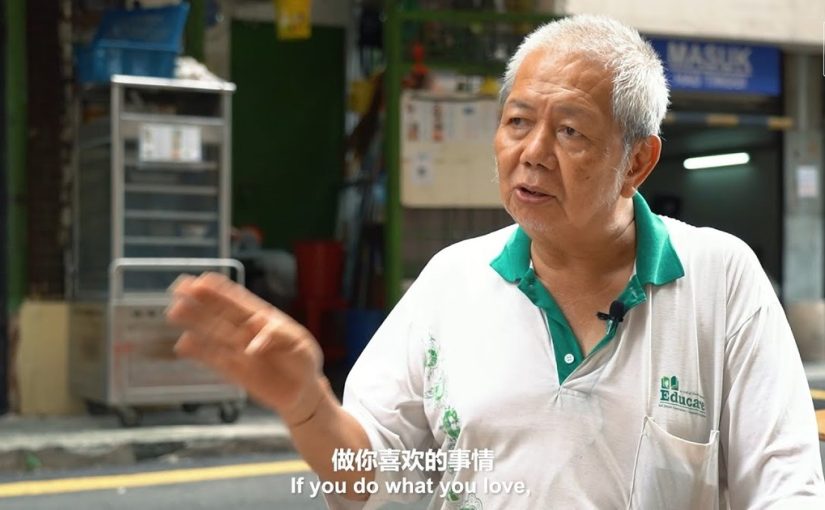
As the clock strikes 11A.M., Uncle Ling Hing Kooi rolls up the shutters of Sin Han Seong Restaurant, sunlight pours into the half-brick and half-wood double-storey old shophouse, lending brightness and warmth to the interior. The ancient wooden counter is his fortress, and the small round table opposite is laden with glass beer bottles, containing not beer but homemade barley drink instead. Uncle Ling arranges dimsum handmade in-house into the steaming cabinet, and greets customers as they enter. At least one of the signature dishes will appear on each table: spicy and sour fish fillets, spicy and sour pork ribs, Fuzhou mixed vegetables, spicy and sour fish maw soup, red rice wine noodles, or Fuzhou braised noodles.

Ayer Tawar in Perak is situated between Ipoh and Lumut, adjacent to Sitiawan. Most of the residents are Chinese, originating from Fuzhou in China, who retain their ancestral dialect and food culture even after a century of settlement. Sin Han Seong Restaurant was established within a row of shophouses facing the main road, originally belonged to the same landowner as the cinema behind it, built around 1935. Previously named Han Seong Teahouse, it was renamed Sin Han Seong upon changing ownership to Ling Hing Kooi’s father in 1954.

The senior Mr Ling hailed from China, at first he settled in Kampung Koh working as a hot kitchen cook, then he moved to work in Ayer Tawar, where he acquired a shop and brought his family over. In the face of difficult living conditions at the time, the entire family worked together to run the restaurant. Upholding the hardworking spirit of the Fuzhou clan, they open for long hours every day. Serving bao, dimsum, and porridge from 6A.M. onwards, so that rubber tappers may fill their stomachs before work; cooking hot meals all day long to cater for local residents, especially at night when many Indian customers dine in; late night supper spot for movie-goers. Through joint effort by all family members, Sin Han Seong’s business flourished, and the second floor was expanded as a banquet hall, which hosted various banquets during the 1970s and 1980s.

In the 1990s, emerging market competition dealt a blow to Sin Han Seong’s glory, therefore they focused on dine-in foodservice instead. After the senior Mr Ling retired, his seven sons take turns to run the restaurant. However, as the second generation grew older and some passed away, they resumed joint operation, with shorter opening hours from 11A.M. to 7P.M. Among the three siblings still actively involved in the business, the eldest brother is semi-retired and only helps occasionally. The fourth brother, Ling Hing Kooi, is in charge of operations and beverage-making. He sources goods at the wet market in the morning, then rushes back to prepare barley drinks, cook rice, and take care of general affairs at the restaurant. The youngest brother, Ling Hing Tee, is in charge of the cooking, together with two nephews and a few hired help.

Since the opening of the West Coast Expressway, lesser travellers drop by the town, business declined but fortunately there still are regular customers. On weekends and public holidays, foodies flock from Kuala Lumpur and Penang to get a taste of authentic Fuzhou cuisine. During Chinese New Year, when those working outstation return to their hometown, they would come for the nostalgic childhood taste. The cinema behind the restaurant ceased operations 20 or 30 years ago, most of the shophouses in the same row were abandoned due to disrepair. Word has it that the government intends to reclaim the area to widen public roads, and lawyers are handling property valuation. Uncle Ling is already in his 70s, all the restaurant employees are also ageing, it is beyond their capabilities to start over in a new place. As his nephews have no intention of taking over the restaurant, there is a possibility that it will eventually close down.

Decades of serving Fuzhou-style delicacies, shaping collective food memories of Ayer Tawar residents, Sin Han Seong restaurant has a warm atmosphere where most conversations are carried out in Fuzhou dialect, family and friends gather happily around tables full of sumptuous dishes that are mostly red in colour. These scenes may no longer exist in the future, but forever sealed in memory.

有你 UNI Production
Producer : Daniel Lim
Cinematographer : Amelia Lim / Michael Lerk
Drone : Daniel Lim
Video Editor : Amelia Lim
Copywriter : Pua Hui Wen

COPYRIGHTS 2023 ECHINOIDEA SDN BHD

Buy us coffee

Handmade Bao in Petaling Street

Catty-corner to the Ka Yin Fui Kon building at Jalan Sultan, Kuala Lumpur, a tarpaulin makeshift roof in the alley between two rows of double-storey shophouses shelters a crude hawker stall. Billows of steam arise from the multi-tiered bamboo steamer on top of the gas stove, marking the spot of Tuck Kee Dim Sum Pau. About 60 years ago, the alley was bustling with hawker stalls selling rice and porridge, cockle noodles soup, stuffed tofu, beef brisket noodles soup, wonton noodles, chee cheong fun, fruits and so on. Along with changing times, most hawkers either moved elsewhere, switched careers, or retired. Tuck Kee alone remains operating in the same place.

The second-generation owner, Chan Kam Weng, is born in 1965, the same year the bao stall was founded. A native KL-ite of Petaling Street, he took over his father’s unnamed bao stall upon finishing middle school. As a tribute to the struggling and enduring story of his father’s migration from China to Malaysia, Chan Kam Weng named the bao stall Tuck Kee after his father, who learnt bao-making skills and set up the stall to upkeep a family with nine children.

In the past, Petaling Street was a bustling area, several families lived together in the upper storey of the shophouses. In the evening, they would come downstairs for tea and supper. Tuck Kee has its own water and electricity supply, hence no need to draw from neighbouring shophouses. Opening from 7P.M. until the wee hours, Tuck Kee sells various types of bao and dimsum, as well as making tea. During those busy times, six to seven siblings help out at the stall. Later on, the numbers diminished, Chan Kam Weng alone persisted in the business for more than 40 years. As more and more old neighbours moved out of Petaling Street, Uncle Chan had to reduce his product line and adjust business hours. Nowadays the bao stall is open from 11A.M. to 3P.M., the only items on the menu include char siu bao (barbecued pork bun), sang yuk bao (steamed meat bun), lotus bao, red bean bun, and glutinous rice chicken.

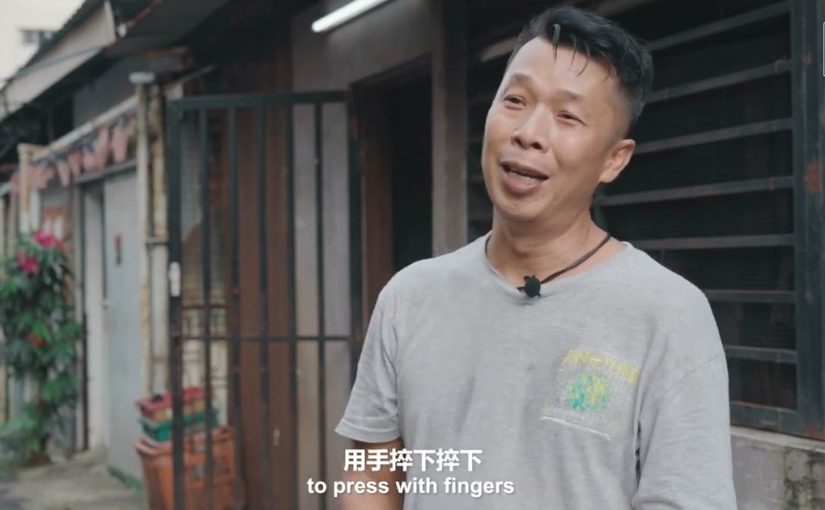
Starting a business is hard, sustaining a business is even harder. Although times changed to pursue low cost and high efficiency, Uncle Chan maintains the consistent practice for decades by not employing foreign labourers or any machinery, and relies entirely on his hands to control the taste and quality. The daily production maximum cap is 500 pieces, leavened by a decades-old natural starter, resulting in a slightly yellowish appearance with a soft but chewy texture. The bao fillings are not made from pre-packed mince pork, but from a whole slab of fresh pork selected with care by Uncle Chan himself. One part is used to marinate the barbecued pork, while the other is finely chopped into mince for steamed meat bun. He dares to guarantee that his bao can be safely consumed by customers adhering to certain dietary restrictions.

Before dawn, Uncle Chan, his nephew Leong Kah Wai, and two helpers arrive at the stall to start kneading dough and letting it rise, cutting meat, and prepare fillings. Around 9A.M., they skillfully make bao stuffed with different fillings, which were fermented until they were about the size of a fist and are ready to be steamed. At noon, as vast amounts of vapour drift from the steamer, customers come one after another to buy freshly steamed bao. Most of them have been regular customers for ages, there are also new customers attracted by the aroma. Uncle Chan takes his insistence on the authentic taste seriously, as long as it is accepted by 80% of customers, he will stick to his usual seasonings and will not easily make adjustments.

Chan Kam Weng has always stayed in an alley of the busy city, declining offers by investors to set up mass production facilities, choosing to continue the legacy of local community culture and authentic taste. Throughout the years, even though not extremely rich, he is quite self-sufficient. As he is getting on in years, Uncle Chan gradually hand over the reins to his nephew, who followed in his footsteps for more than 20 years. The future of the bao stall is up to Leong Kah Wai, whether to remain in the alley or shift into a shop.

有你 UNI Production
Producer : Daniel Lim
Cinematographer : Amelia Lim / Michael Lerk
Drone : Daniel Lim
Video Editor : Michael Lerk
Copywriter : Pua Hui Wen

COPYRIGHTS 2023 ECHINOIDEA SDN BHD

Buy us coffee

Tai Kwong Hardware

Towering wooden shelves stand within the unpretentious shophouse, seemingly unobstructed yet hinting at mysteries, head upstairs and find the storage place with mezzanine floors. All kinds of hardware accessories are arranged in an orderly manner, according to category, brand, and size. The yellowing labels indicate the passage of time, yet the neat marker pen handwriting remains legible. Both veterans and rookies are able to quickly and accurately locate products that customers need. The inventory is a mix of new and old items, such as old-fashioned paraffin blow torch, drop-forged steel wrenches directly imported from Europe, as well as safety boots and hammers which are in high demand recently.

Tai Kwong Hardware Trading occupies a pre-war double-storey shophouse at the first section of Jalan Petaling, near the intersection with Jalan Tun Tan Cheng Lock. Since its establishment in 1945, there has been no elaborate furnishings, only solid wooden shelves expanding upwards due to increasing inventory, and self-built mezzanine floors which made up the third and fourth floors. The five original founders (Soo, Lee, Chong, Kim, and Tan) all passed away, currently the second and third generations are in charge, with long-serving staff of 30-40 years, including loyal employees promoted to directorship.

Hardware trading covers a comprehensive range of materials, from large hardware such as sheet metal and construction materials, to small hardware such as tools and accessories, necessary in day to day life. Due to different target markets, large hardware resort to wholesale distribution while small hardware are sold retail. Tai Kwong is among the very few companies that operate both a retail shop selling small hardware and a warehouse selling large hardware such as bronze foil and lead sheets.

The early days of Tai Kwong’s establishment coincided with post-World War II reconstruction, hardware was in high demand, the founders had to carry heavy bags of cement on their shoulders to make deliveries to construction sites. Putting down firm roots in Petaling Street not only relied on their blood and sweat, but also their active thinking to bring in a wide variety of semi-finished hardware and appliances. Despite being strategically located, the shoplot does not have sufficient space for lorries to load and unload goods, therefore Tai Kwong set up a warehouse at Jalan Sungai Besi, later on relocated to Jalan Chan Sow Lin upon land reclamation for Mass Rapid Transit project.

In recent years, the major clientele has shifted from construction companies on credit terms to foreign labourers on cash terms. Tai Kwong’s long-standing reputation has a competitive edge, as customers feel at ease in making purchases. Due to the sizable variety and complexity of goods stocked, the front desk staff still practice handwritten bills and account ledgers, while utilizing a computer system to keep track of inventory. Certain items are considered out-of-date due to changing industrial standards and became slow-moving, therefore left to gather dust until collectors chance to come on a treasure hunt.

In ever-changing times, the business model must constantly evolve to suit changing consumer needs. It is a common understanding shared by sales and procurement manager Mr Lee Zhan Wei and finance director Mdm Liew Fui Tse. Eventually all in-store transactions will be computerized to reduce human errors. Taking a leaf from various traditional hardware tradings that achieved modernization, Tai Kwong is confident to succeed in doing so.

Hardware stores are essential in daily lives. Tai Kwong Hardware remain standing in Petaling Street for nearly eight decades, undergoing changes and transformation, supplying building materials as well as household necessities. Despite generational differences, business partners and staff share the same vision, working in cooperation towards a better future.

有你 UNI Production
Producer : Daniel Lim
Cinematographer : Amelia Lim / Michael Lerk
Drone : Daniel Lim
Video Editor : Amelia Lim
Copywriter : Pua Hui Wen

COPYRIGHTS 2023 ECHINOIDEA SDN BHD

Buy us coffee