Ko Hou Kam Herbal Tea in Mambau

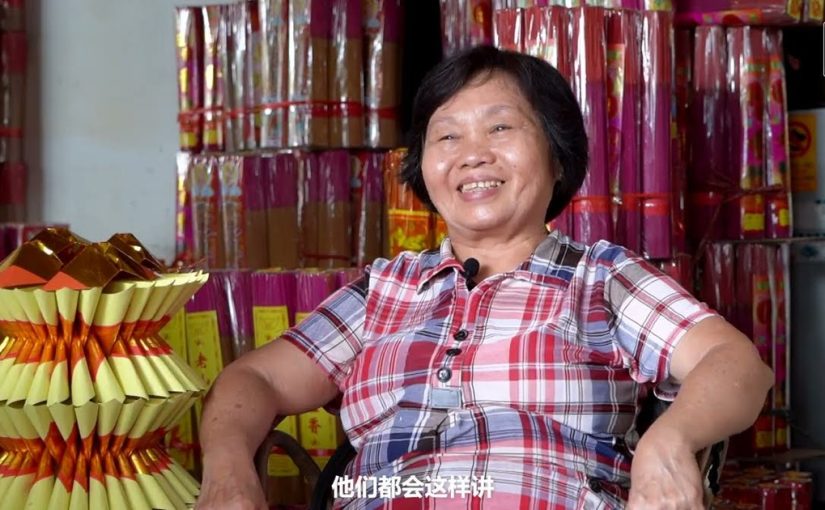
Ko Hou Kam herbal tea, the first sip fills the mouth with bitterness, yet yields a lingering sweetness once it slips down the throat, hence its name meaning sweetness after consumption. A nationwide popular beverage back in the 90s, Ko Hou Kam advertisements were aired on various television stations, and even distributed abroad. With a superfluity of health drinks available nowadays, Ko Hou Kam eventually diminishes, and can only be found at certain traditional Chinese medicine store or its place of origin – Mambau.

Mambau is a small town on the outskirts of Seremban, Negeri Sembilan. At the beginning of the 20th century, as the rubber industry flourished, large-scale plantations were developed in Mambau. The village was established in the 50s, the majority of the 200 households were rubber tappers. Due to its strategic geographical location, the rail freight route from Port Dickson pass through the border of Mambau village (now demolished), and so does the Federal Route 53 linking Seremban and Port Dickson. Before the construction of Seremban–Port Dickson Highway, Federal Route 53 is the main road leading to Port Dickson, tourists usually stop by Mambau for rest and refreshments.

Located just off the main road, Mambau Khek Yong Tau Fu may have a shabby appearance, however it is the birthplace of Ko Hou Kam herbal tea. The founder, the late Mr Kum Loong Poh, used to work in the construction industry. However, business failure due to the global economic recession of the early 1980s caused him to seek new opportunities in the food and beverages industry. In order to finance the household, Mr Kum worked long hours till the point that he suffered from health complications. After consuming a herbal tea prepared according to a prescription which his ancestors brought over from China, his condition improved. Since the herbal tea has proven health benefits, Mr Kum decided to promote it so that others can enjoy improved health too.

The original herbal brew has a bitter aftertaste, therefore the late Mr Kum Loong Poh researched and developed an ideal herbal tea formula suitable for general consumption as well as offering a lingering sweetness. The main ingredients of Ko Hou Kam herbal tea are camellia, silver needle, and chrysanthemum. Silver needle tea leaves are subjected to processing in order to neutralise acidity: sun-dried after being harvested, stems removed, and the tea leaves are then fermented for 100 days. Ko Hou Kam herbal tea comes in individually sealed tea bags for ease of consumption.

Ko Hou Kam herbal tea was initially sold in Mambau Khek Yong Tau Fu as well as a friend’s coffee-shop. Back then, the health drink market just started to grow, imported health drinks were expensive, and there were barely any local manufacturers. Mr Kum Loong Poh’s savviness in launching Ko Hou Kam herbal tea at an affordable price instantly gained market popularity, hitting the shelves of medical stores as well as being distributed nationwide. As manual packaging became inefficient due to increasing demands, he set up a small factory and invested in an automated packaging system to ease operations and storage.

After the passing of the late Mr Kum Loong Poh, his sons Kum Han Soon and Kum Han Loong took over the operations of Mambau Khek Yong Tau Fu and Ko Hou Kam, thus prevented disappointing regular customers. However, intensifying market competition led to business decline, structural market changes dealt another severe blow – younger generations prefer to consume unhealthy beverages such as bubble milk tea, only a few would appreciate herbal tea. Even so, Kum Han Loong did not give up, but turned to taking phone orders and online marketing to explore new opportunities.

The Kum brothers are born and bred in Mambau, plus Ko Hou Kam was founded by their late father in this small town, tight bonds flourish within the local community, therefore they chose to stay in their hometown to carry on the family business. Nevertheless, herbal tea is not some magical remedy. Kum Han Loong gently reminds everyone not to simply rely on herbal tea for health benefits, but to combine with regular exercise, maintain a daily routine, and eat a balanced diet, living a healthy lifestyle to keep the mind and body fit.

有你 UNI Production
Producer : Daniel Lim
Cinematographer : Amelia Lim / Evon Pang / Michael Lerk
Drone : Daniel Lim
Video Editor : Evon Pang
Copywriter : Pua Hui Wen

COPYRIGHTS 2022 ECHINOIDEA SDN BHD

☕ Buy Us Coffee

Tung Loh Temple in Jenjarom

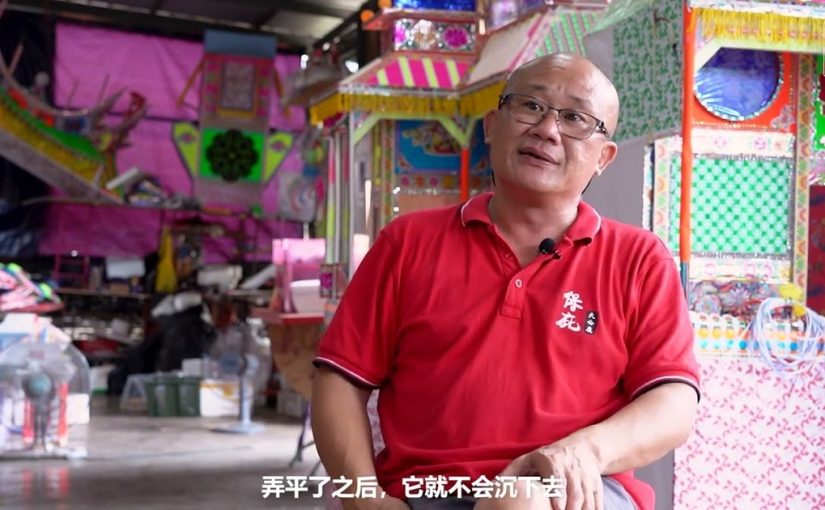
“Knock!” On the table dusted with flour, a few strokes are written by a tip of the wooden sedan chair. A red cloth is tied around the waist of the red-faced Guān Dì, who sits on the sedan chair carried by two bearers. When Guān Dì manifests, the sedan chair sways to convey messages from the deity. On Tuesdays and Fridays at 8P.M., devotees gather at Tung Loh Temple nestled in the village of Jenjarom for Guān Dì consultation sessions.

Tung Loh Temple worships Guān Dì, protector of the common folk. Originally named Guān Yǔ, courtesy name Yúncháng, he was a military general serving under Eastern Han in the Three Kingdoms. His heroic deeds were documented in the classical book, The Records of the Three Kingdoms, and became widespread with the popular fiction The Romance of the Three Kingdoms. After the Peach Garden Oath, despite being captured by Cáo Cāo, he remained loyal to Liú Bèi, therefore he became a virtuous role model. The common folk immortalized him in celebration of his good virtues, and various posthumous titles were conferred to him till the Dì (Emperor) level.

In the 1910s, China was in the midst of political instability, as forerunners sailed southwards to seek a better living, incense ashes from Tung Loh Temple in Anxi County were carried for protection. Upon settling in Jenjarom, the Guān Dì faith was worshipped at home. Due to resources being scarce, when facing problems or sickness, people could only pray to deities for blessings to overcome difficulties. With his supreme powers, Guān Dì offers effective solutions and treatments, attracting neighbouring villagers to come to pray and seek consultation. In the 1950-60s, Jenjarom did not have medical facilities, Guān Dì would give prescriptions and went around in a wooden sedan chair to find herbs in the vicinity for ill devotees.

Consulting Guān Dì via wooden sedan chair spanned over a century in history, although the practice has been abolished in China, the Chinese who migrated overseas kept it running. There are barely any prohibitions regarding Guān Dì consultation, only refrain from noisy behaviour or participating in illegal activities. The most crucial aspect is to show sincerity and respect towards Guān Dì. Upholding Guān Dì’s mentality of helping others, many devotees attend consultation sessions as volunteers, as well as train up generations of sedan bearers. Due to the unspoken rule of rejecting monetary gifts, devotees who received blessings and would like to show their gratitude raised funds to acquire land to build a temple for Guān Dì. Tung Loh Temple in Jenjarom was established in 1986 and has been flourishing since.

Like most local villagers, the current temple committee chairman, Mr Tan Chin Chuan, comes from a family of fervent Guān Dì devotees, of which five generations are sedan bearers. Under social influence, he also engaged in worshipping Guān Dì, thus learning the story behind the faith as well as inspirations: Uphold good moral principles, be filial to parents, be loyal to spouse, siblings, and friends. Incidentally he accepted the post of committee chairman, following Guān Dì’s will to help the Jenjarom community. During festive celebrations, Tung Loh Temple gives back to the society by contributing foods and goods to the needy.

The worship of Guān Dì may had its roots in feudalism, however it makes a positive impact on society, promoting valuable traditional culture as well as encouraging moral behaviour. Even though times change, loyalty and bravery are still generally appreciated. With devotees dedicated in spreading the Guān Dì mentality, Tung Loh Temple in Jenjarom thrives on.

有你 UNI Production
Producer : Daniel Lim
Cinematographer : Amelia Lim / Evon Pang / Michael Lerk
Drone : Daniel Lim
Video Editor : Michael Lerk
Copywriter : Pua Hui Wen

COPYRIGHTS 2022 ECHINOIDEA SDN BHD

☕ Buy Us Coffee

Chin Chong Soy Sauce

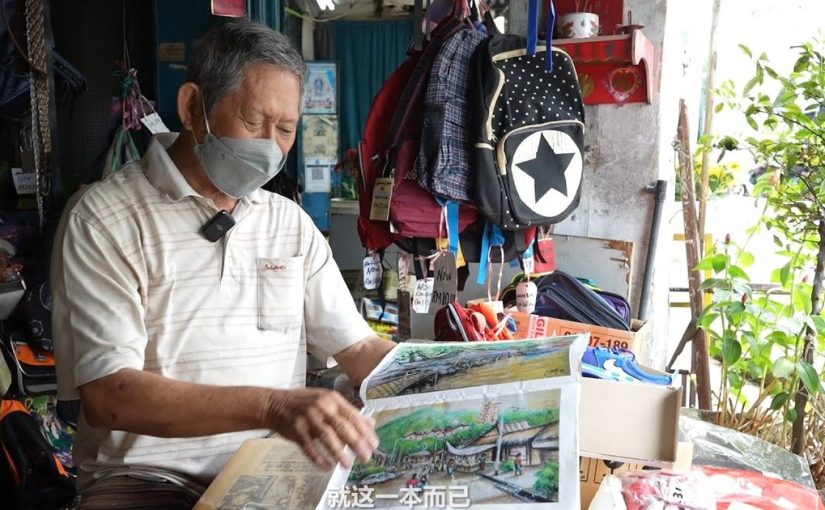
Kampung Lee Kong Chian in Gombak, Kuala Lumpur, is located beside Jalan Gombak heading east to Bentong, Pahang. Forking paths like palm lines led into the village, the yellow boundary walls of Chin Chong Soy Sauce enclosed hundreds of ceramic jars sunbathing in neat lines. The netting above the jars prevented entry of unwanted particles, yet unable to block the delicious aroma of soy sauce from spreading in the air.

Under the hot sun, Uncle Ng Chui Chong removes the lid of the soy sauce jar to yield a rich brown liquid with a slightly viscous texture. The first step of producing naturally brewed soy sauce is to soak and cook soy beans, then coat with flour to form a starter culture. Forming the starter culture and developing the bacterial culture is crucial in brewing soy sauce, as the amino acids produced during the weeklong fermentation process is essential to determine the quality grade of the soy sauce. Then combine the starter culture and brine in a ceramic jar, expose to direct sunlight and continue to ferment for three months.

Soy sauce craftsman plays the role of a vessel’s captain in determining to which direction the soy sauce’s flavour and quality should be heading, precisely controlling each step of the fermentation process to ensure the final outcome meets satisfactory standards. In Kuala Lumpur, there are only a handful of experienced craftsmen currently still active in the industry, Uncle Ng being one of them. During his youth, he worked at a large-scale soy sauce manufacturer for 12 years, began toiling before dawn, carrying burdens over 100 kilograms on the shoulders, accumulating precious experience and mastering the art of brewing soy sauce.

Having left his former employer, Uncle Ng chose Kampung Lee Kong Chian, a Chinese settlement of about 300 households, to start his own business. The village occupying 30 acres used to be a plot of coconut trees opposite Lee Rubber Manufacturing in Kuala Lumpur, in the 1960s it was offered to employees for building their own quarters, later on tenancy was extended to non-employees. The settlement was built without a plan, hence the unstructured character of the village layout and narrow paths, however the residents are very community oriented. Uncle Ng was elected as the community board chairperson for almost 30 years due to his diligence.

Chin Chong Soy Sauce was founded in 1973, producing naturally brewed soy sauce, cooking caramel, vinegar, and various sauces. The brand name was inspired by Uncle Ng’s name, suggested by a friend and heartily approved by Uncle Ng himself, as he jokingly said it is suitable for any line of business. In the initial days, Uncle Ng multitasked by brewing soy sauce in the morning and went selling soy sauce door-to-door with his mother-in-law. It was challenging to convince customers to try their homemade soy sauce, with doubts about product authenticity.

Eventually, Uncle Ng’s hard work paid off, Chin Chong Soy Sauce built a positive reputation and shifted to wholesaling, many restaurants became loyal customers. Apart from Uncle Ng’s excellent brewing skills, premium ingredients such as non-genetically modified soy beans are used. At the end of soy sauce fermentation, a sample of the resulting product is extracted and tasted by Uncle Ng who has a sensitive palate. After being approved by Uncle Ng, the soy sauce is required to undergo filtering, ultra-heat treatment, and bottling before leaving the facility.

86-year-old Uncle Ng Chui Chong now slowly steps into semi-retirement, reducing his work hours and handing over the reins to his children. In the yard full of old-time ceramic jars, by simply observing and sampling the flavourful soy sauce, the taste which lingers on Uncle Ng’s palate is a complex blend of life’s experiences.

有你 UNI Production
Producer : Daniel Lim
Cinematographer : Amelia Lim / Evon Pang / Michael Lerk
Drone : Daniel Lim
Video Editor : Amelia Lim
Copywriter : Pua Hui Wen

COPYRIGHTS 2022 ECHINOIDEA SDN BHD

☕ Buy Us Coffee