The Story of Pengkalan Kempas, Sungai Linggi

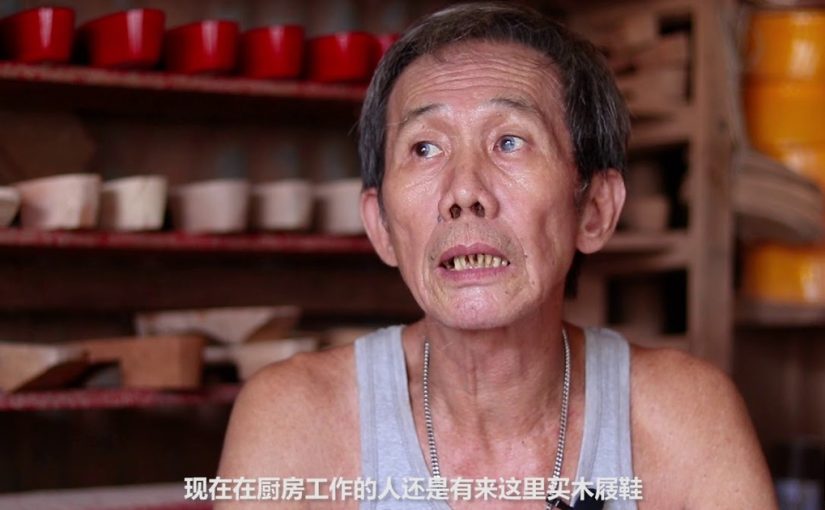
Pengkalan Kempas is like a sleeping town, without any urban development for decades. A temple, a church, a primary school, a wet market, a police station, a historical site which is one of Malaysia’s oldest muslim burial sites, a central harbour, and two rows of double-storey pre-war shophouses, these are all the buildings that made up the small town of Pengkalan Kempas, and all of them are located on the same road, which is the only main road.

Unknown to most, the harbour in this century-old quiet town is an important cultural stronghold in the history of Negeri Sembilan, bearing witness to the bravery of predecessors who overcame hardships in making a living. Due to the harbour being situated at the downstream shores of Sungai Linggi, a strategic geographical location, it has became the essential landing point of the early Chinese south migrants to Negeri Sembilan, and is also the gathering point for overseas Chinese to make a living in Negeri Sembilan. Ever since, the harbour developed from a simple riverside into a busy commercial port. During the British colonisation, it became an important port for the transportation of raw materials (rubber, tin etc.) and groceries (daily necessities, rice etc.), leading the economy lifeline of Negeri Sembilan back then.

With the passage of time, road construction development brought upon convenience in transportation, gradually replacing water transport, hence the busy harbour fell back into peace and quiet. Pengkalan Kempas is no longer use for loading and unloading goods, losing its former bustle, the pace of the small town’s development slowed down, the lack of diversified economical projects causing younger people leaving to seek employment outstation, only the elders remain in town gathering for chit-chat. Moreover with the construction of the North-South Expressway and Kuala Linggi Bridge, shortening the travel distance between Negeri Sembilan and Melaka, causing Pengkalan Kempas to be a hidden gem, no longer a place that must be passed while travelling between these two states, dealing a heavier blow to the economical activity of Pengkalan Kempas.

At present, what remains of the two rows of old shophouses on the street are a tea shop, two grocers, a family-run shop selling freshwater prawns and fishing equipment, a motorcycle mechanic, the rest are converted into dwellings, some are left empty. The only micro-school in town —— SJK (C) Yik Hwa Pengkalan Kempas, used to be housed upstairs one of the shophouses in the street, as the number of students increased, a few deceased Chinese school forebearers initiated the building of a school, moving into the current site, to date the school has around 50 teachers and students.

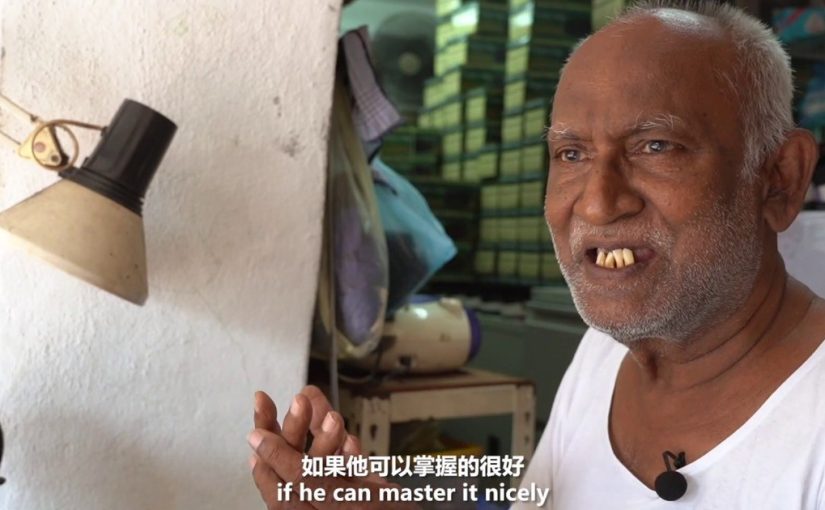
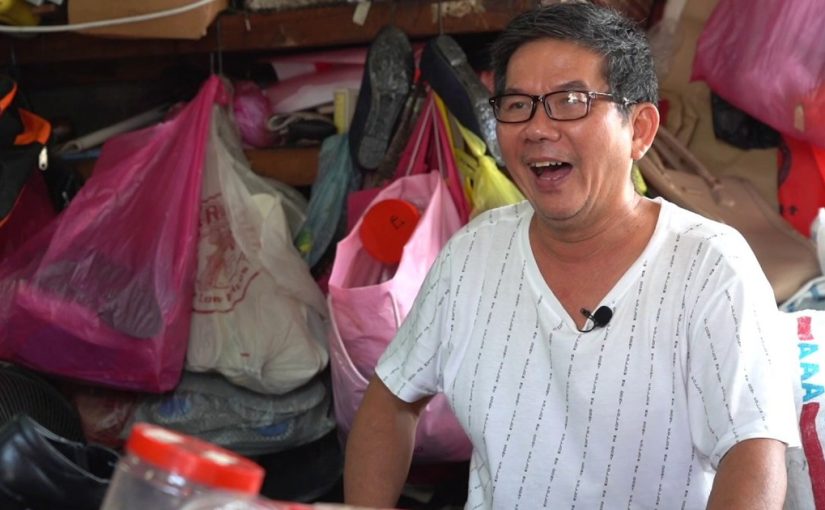
The old town with a century’s history keeping records of forefathers who worked hard in cultivating unexploited land; the ever-flowing Sungai Linggi bearing blood and sweat of numerous forefathers who survived uncertainty and dangers. This sentiment should be preserved for future generations.

Text: Daniel Lim & Pua Hui Wen

有你 UNI Production
Producer : Mok Yii Chek
Coordinator : Daniel Lim
Cinematographer : Amelia Lim / Evon Pang
Drone : Daniel Lim
Video Editor : Amelia Lim
Production Assistant : Michael Lerk
Music : By The River from Felt Music

COPYRIGHTS 2019 ECHINOIDEA SDN BHD

Buy us coffee

The Story of Kampung Baru Sungai Nipah

Cease to struggle and you cease to live.

20 years ago, a merciless virus brought upon a disaster to Chuah area, reaping over a hundred lives, crumpling the swine farming industry in Bukit Pelandok, which used to be the largest swine farm in Southeast Asia, and the neighbouring Kampung Baru Sungai Nipah. The Nipah virus outbreak caused a massive shock, and the whole nation was thrown into panic. The government then declared curfews, evacuated villagers from the stricken region, as well as began the greatest pigs culling movement in order to contain the disease. This rewrote the future plans of almost 80% of Kampung Baru Sungai Nipah villagers who relied on swine farming to make a living, as they lost their source of income, dealing with a heavy blow.

20 years later, the virus outbreak may have changed the appearance of Kampung Baru Sungai Nipah, however it did not break the tenacious wrestling spirits of the villagers, who are unyielding, eventually transforming the village to develop in other industries such as plantation and tourism. Under the cooperation from the village committee and villagers, sprouting new vitality into the rustic village of Kampung Baru Sungai Nipah, for instance winning runner-up in the national most beautifully decorated new village contest, and the first village in Malaysia to name its roads in Chinese characters after local fruits, and the establishment of Sungai Nipah Time Tunnel Museum, recording the building history of Kampung Baru Sungai Nipah as well as the Nipah virus outbreak.

A calamity which destroyed a peaceful and prosperous village, and caused the villagers to suffer both physically and mentally where bystanders would not be able to comprehend. Even so, being optimistic, and having faith that the sun will shine after the rain, the skies remain blue, and a rainbow will appear across the sky, a multicoloured arc.

Text: Daniel Lim & Pua Hui Wen

有你 UNI Production
Producer : Mok Yii Chek
Coordinator : Daniel Lim
Cinematographer : Amelia Lim / Evon Pang
Drone : Daniel Lim
Video Editor : Evon Pang
Production Assistant : Michael Lerk
Music : Piano Ambient – Ashmaluev from Youtube

COPYRIGHTS 2019 ECHINOIDEA SDN BHD

Buy us coffee

Bǎi Jí Joss Stick Maker

During deity birthday celebrations or when praying for blessings, brightly coloured joss sticks could be seen, sizes range from 4 ft up to 20 ft or even 30 ft. Besides being an offering to deities, joss sticks are also a form of traditional folk art. Especially pure handiwork joss sticks made by craftsmen, the intricate skills involved and the strenuous procedures, are admirable.

Not far away from the main street of Bukit Pelandok, following the expanse of a side road named “100 Acres” along the Sepang river, there is a handcrafted joss stick factory. The person-in-charge Mr Ong Sze Hong (transliteration) named the factory as Bǎi Jí Joss Stick Maker. Mr Ong mocks himself as being inexperienced, as joss stick manufacturing is not his career, he has been helping in his elder brother’s joss stick manufacturing factory when he was young, alas the factory closed down after a few years. At present, he inherited this skill under fortunate circumstances.

The procedures of manufacturing handcrafted joss sticks put patience to the test, and is not to be rushed. From the materials, style, size, coating, dragon head, moulding, dragon body, pinching and pressing, painting, to packaging, it takes at least two months, even up to a year, depending on the size of the joss stick. The most time-consuming procedure is the layer by layer coating of wood bran, once a layer is thoroughly dried, only can the next layer be coated. Meanwhile in the drying process, the joss stick should not be exposed to sunlight to prevent cracking, and weather changes affect the progress rate of natural drying.

Even though there is a steady market demand for joss sticks, a chasm has appeared in the manufacturing of traditional handcrafted joss sticks, rarely any of the younger generations inherit the legacy. Under the challenges imposed by limited manpower and mechanization, despite bearing cultural essence, the traditional joss stick manufacturing industry faces difficulties in operations and inheritance.

Text: Daniel Lim & Pua Hui Wen

有你 UNI Production
Producer : Mok Yii Chek
Coordinator : Daniel Lim
Cinematographer : Amelia Lim / Evon Pang
Production Assistant : Michael Lerk
Video Editor : Michael Lerk
Music : Another Day To Remember from Felt Music

COPYRIGHTS 2019 ECHINOIDEA SDN BHD

Buy us coffee