Handmade Bao in Petaling Street

Catty-corner to the Ka Yin Fui Kon building at Jalan Sultan, Kuala Lumpur, a tarpaulin makeshift roof in the alley between two rows of double-storey shophouses shelters a crude hawker stall. Billows of steam arise from the multi-tiered bamboo steamer on top of the gas stove, marking the spot of Tuck Kee Dim Sum Pau. About 60 years ago, the alley was bustling with hawker stalls selling rice and porridge, cockle noodles soup, stuffed tofu, beef brisket noodles soup, wonton noodles, chee cheong fun, fruits and so on. Along with changing times, most hawkers either moved elsewhere, switched careers, or retired. Tuck Kee alone remains operating in the same place.

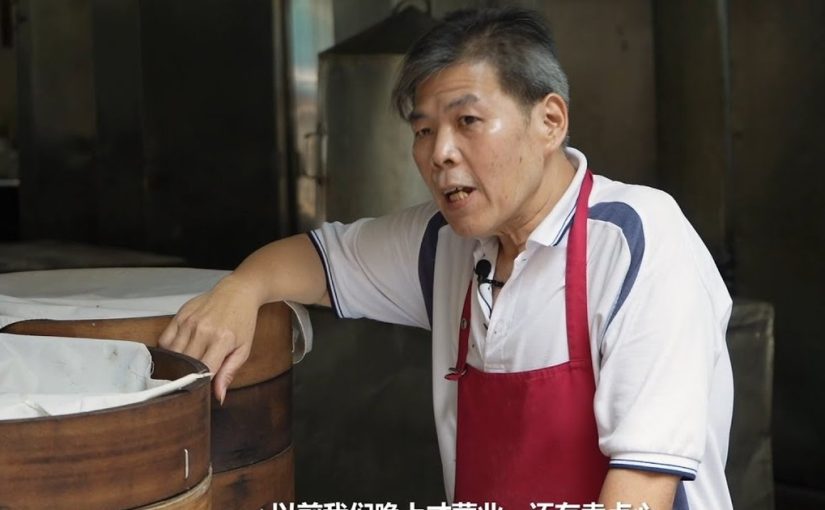
The second-generation owner, Chan Kam Weng, is born in 1965, the same year the bao stall was founded. A native KL-ite of Petaling Street, he took over his father’s unnamed bao stall upon finishing middle school. As a tribute to the struggling and enduring story of his father’s migration from China to Malaysia, Chan Kam Weng named the bao stall Tuck Kee after his father, who learnt bao-making skills and set up the stall to upkeep a family with nine children.

In the past, Petaling Street was a bustling area, several families lived together in the upper storey of the shophouses. In the evening, they would come downstairs for tea and supper. Tuck Kee has its own water and electricity supply, hence no need to draw from neighbouring shophouses. Opening from 7P.M. until the wee hours, Tuck Kee sells various types of bao and dimsum, as well as making tea. During those busy times, six to seven siblings help out at the stall. Later on, the numbers diminished, Chan Kam Weng alone persisted in the business for more than 40 years. As more and more old neighbours moved out of Petaling Street, Uncle Chan had to reduce his product line and adjust business hours. Nowadays the bao stall is open from 11A.M. to 3P.M., the only items on the menu include char siu bao (barbecued pork bun), sang yuk bao (steamed meat bun), lotus bao, red bean bun, and glutinous rice chicken.

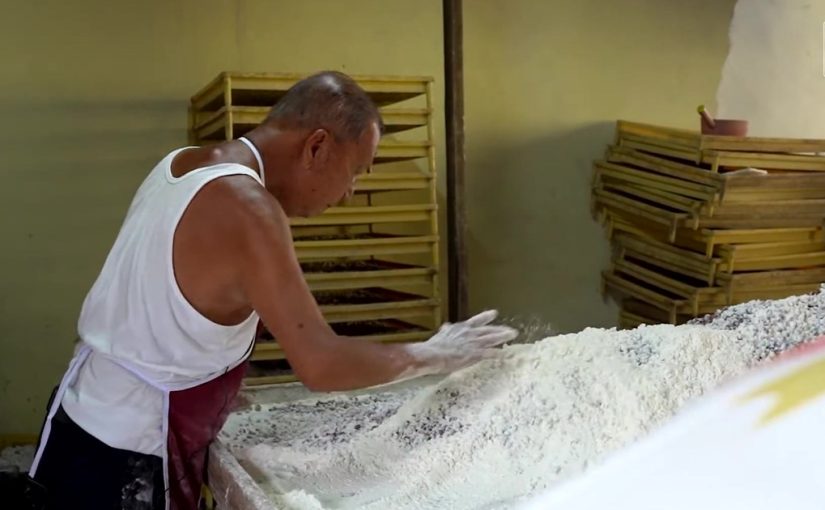
Starting a business is hard, sustaining a business is even harder. Although times changed to pursue low cost and high efficiency, Uncle Chan maintains the consistent practice for decades by not employing foreign labourers or any machinery, and relies entirely on his hands to control the taste and quality. The daily production maximum cap is 500 pieces, leavened by a decades-old natural starter, resulting in a slightly yellowish appearance with a soft but chewy texture. The bao fillings are not made from pre-packed mince pork, but from a whole slab of fresh pork selected with care by Uncle Chan himself. One part is used to marinate the barbecued pork, while the other is finely chopped into mince for steamed meat bun. He dares to guarantee that his bao can be safely consumed by customers adhering to certain dietary restrictions.

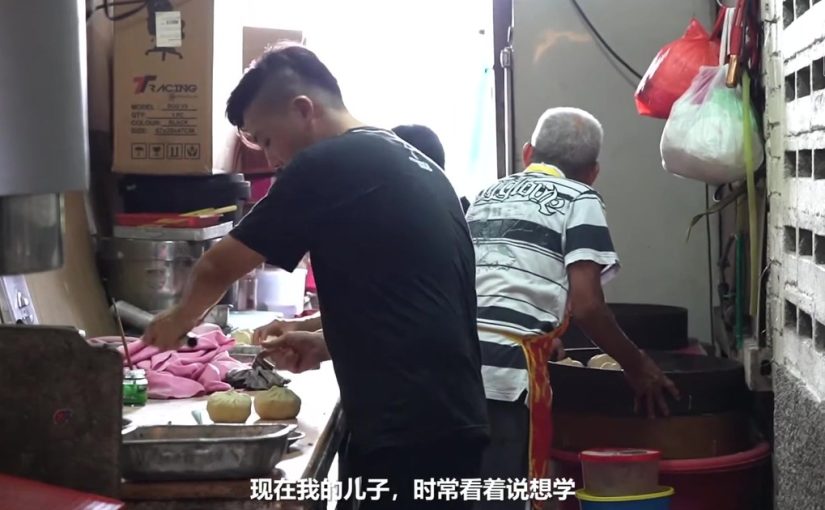
Before dawn, Uncle Chan, his nephew Leong Kah Wai, and two helpers arrive at the stall to start kneading dough and letting it rise, cutting meat, and prepare fillings. Around 9A.M., they skillfully make bao stuffed with different fillings, which were fermented until they were about the size of a fist and are ready to be steamed. At noon, as vast amounts of vapour drift from the steamer, customers come one after another to buy freshly steamed bao. Most of them have been regular customers for ages, there are also new customers attracted by the aroma. Uncle Chan takes his insistence on the authentic taste seriously, as long as it is accepted by 80% of customers, he will stick to his usual seasonings and will not easily make adjustments.

Chan Kam Weng has always stayed in an alley of the busy city, declining offers by investors to set up mass production facilities, choosing to continue the legacy of local community culture and authentic taste. Throughout the years, even though not extremely rich, he is quite self-sufficient. As he is getting on in years, Uncle Chan gradually hand over the reins to his nephew, who followed in his footsteps for more than 20 years. The future of the bao stall is up to Leong Kah Wai, whether to remain in the alley or shift into a shop.

有你 UNI Production
Producer : Daniel Lim
Cinematographer : Amelia Lim / Michael Lerk
Drone : Daniel Lim
Video Editor : Michael Lerk
Copywriter : Pua Hui Wen

COPYRIGHTS 2023 ECHINOIDEA SDN BHD

☕ Buy Us Coffee

Chin Chong Soy Sauce

Kampung Lee Kong Chian in Gombak, Kuala Lumpur, is located beside Jalan Gombak heading east to Bentong, Pahang. Forking paths like palm lines led into the village, the yellow boundary walls of Chin Chong Soy Sauce enclosed hundreds of ceramic jars sunbathing in neat lines. The netting above the jars prevented entry of unwanted particles, yet unable to block the delicious aroma of soy sauce from spreading in the air.

Under the hot sun, Uncle Ng Chui Chong removes the lid of the soy sauce jar to yield a rich brown liquid with a slightly viscous texture. The first step of producing naturally brewed soy sauce is to soak and cook soy beans, then coat with flour to form a starter culture. Forming the starter culture and developing the bacterial culture is crucial in brewing soy sauce, as the amino acids produced during the weeklong fermentation process is essential to determine the quality grade of the soy sauce. Then combine the starter culture and brine in a ceramic jar, expose to direct sunlight and continue to ferment for three months.

Soy sauce craftsman plays the role of a vessel’s captain in determining to which direction the soy sauce’s flavour and quality should be heading, precisely controlling each step of the fermentation process to ensure the final outcome meets satisfactory standards. In Kuala Lumpur, there are only a handful of experienced craftsmen currently still active in the industry, Uncle Ng being one of them. During his youth, he worked at a large-scale soy sauce manufacturer for 12 years, began toiling before dawn, carrying burdens over 100 kilograms on the shoulders, accumulating precious experience and mastering the art of brewing soy sauce.

Having left his former employer, Uncle Ng chose Kampung Lee Kong Chian, a Chinese settlement of about 300 households, to start his own business. The village occupying 30 acres used to be a plot of coconut trees opposite Lee Rubber Manufacturing in Kuala Lumpur, in the 1960s it was offered to employees for building their own quarters, later on tenancy was extended to non-employees. The settlement was built without a plan, hence the unstructured character of the village layout and narrow paths, however the residents are very community oriented. Uncle Ng was elected as the community board chairperson for almost 30 years due to his diligence.

Chin Chong Soy Sauce was founded in 1973, producing naturally brewed soy sauce, cooking caramel, vinegar, and various sauces. The brand name was inspired by Uncle Ng’s name, suggested by a friend and heartily approved by Uncle Ng himself, as he jokingly said it is suitable for any line of business. In the initial days, Uncle Ng multitasked by brewing soy sauce in the morning and went selling soy sauce door-to-door with his mother-in-law. It was challenging to convince customers to try their homemade soy sauce, with doubts about product authenticity.

Eventually, Uncle Ng’s hard work paid off, Chin Chong Soy Sauce built a positive reputation and shifted to wholesaling, many restaurants became loyal customers. Apart from Uncle Ng’s excellent brewing skills, premium ingredients such as non-genetically modified soy beans are used. At the end of soy sauce fermentation, a sample of the resulting product is extracted and tasted by Uncle Ng who has a sensitive palate. After being approved by Uncle Ng, the soy sauce is required to undergo filtering, ultra-heat treatment, and bottling before leaving the facility.

86-year-old Uncle Ng Chui Chong now slowly steps into semi-retirement, reducing his work hours and handing over the reins to his children. In the yard full of old-time ceramic jars, by simply observing and sampling the flavourful soy sauce, the taste which lingers on Uncle Ng’s palate is a complex blend of life’s experiences.

有你 UNI Production
Producer : Daniel Lim
Cinematographer : Amelia Lim / Evon Pang / Michael Lerk
Drone : Daniel Lim
Video Editor : Amelia Lim
Copywriter : Pua Hui Wen

COPYRIGHTS 2022 ECHINOIDEA SDN BHD

☕ Buy Us Coffee

Tricycle Bao Stall in Kajang

In the evening, a tricycle appears beside the main road of Sungai Chua heading towards Kajang town, and disappears as the skies darken, passer-bys may not notice it without paying close attention.  A grey canvas is propped up to protect the stallowner and the stack of bamboo steamers from unpleasant weather. Upon lifting the lid, the mouthwatering aroma of various handmade bao wafts through the vapour. 

Each morning, the preparation of ingredients, mixing fillings, dough fermenting, bao wrapping and steaming are all done by Uncle Wong Seng Kit’s own hands, with the assistance of his wife. Despite the toilsome procedures, they persisted in making and selling fresh bao every day, without leaving anything overnight. As Uncle Wong is now in his seventies, to avoid negative impact on their health, the scale of daily bao production is adjusted according to their capabilities. The quantity of handmade bao is very limited, it is up to luck whether or not one get to taste it. 

Nicknamed “the Bao uncle”, Wong Seng Kit is the second generation operator of the tricycle bao stall. His father used to cook in a Hainanese coffee shop, afterwards in 1962 he started his own business as a mobile hawker selling bao. In daytime, the entire family cooperated in making bao, then in the evening they would push two tricycle stalls onto the hill of Sungai Chua and beside the main road respectively. Later at night, they would operate in Kajang town outside the two big cinemas. Due to changes impacted by township urbanization, it became impossible for tricycles to pass through elevated highways, therefore they settled to operate at a fixed location near home.

During his youth, Uncle Wong worked in Sabah. After his marriage, he set up his own machinery factory which unfortunately went bankrupt in the global financial crisis of the 1980s. Upon returning home, he got back into the production of handmade bao, whereby he decided to follow in his father’s footsteps, with his wife willingly supporting him. Uncle Wong not only inherited his father’s skills, but also the recipes and tricycle stalls (now the third one in use), now an icon on the streets of Kajang.

For decades, Uncle Wong and family are accustomed to the lifestyle of making bao in the daytime and selling in the evening. The stall is usually open around 6PM, and the handmade bao are sold out between 45 minutes to two and a half hours. In the past two years, due to Covid-19 related restrictions, opening hours are rescheduled to 4.30PM. Technology advancement contribute to changes in business model, where customers may opt to drive through or place phone orders to their convenience.

Uncle Wong, pushing his tricycle bao stall, leads a simple and stable life. Instead of chasing after wealth, he wishes for family happiness and health. The skin of his hands are rough due to constant exposure to high heat, to which he has build up a certain level of tolerance. His passion and adherence to food quality did not evaporate over time. Take a bite of steaming hot handmade bao, sample the fresh taste of simplicity, fill the heart with endless warmth.

有你 UNI Production
Producer : Daniel Lim
Cinematographer : Amelia Lim / Evon Pang / Michael Lerk
Drone : Daniel Lim
Video Editor : Michael Lerk
Copywriter : Pua Hui Wen

COPYRIGHTS 2022 ECHINOIDEA SDN BHD

☕ Buy Us Coffee