Steamed Rice Cake in Cheras

Bái Táng Gāo (Steamed rice cake), is named for its glittering white appearance, with a moist and smooth surface, and honeycomb-like air tunnels. Its historical roots can be traced from the Ming dynasty in Lunjiao sub district of Shunde city in Guangdong province, also known as Lunjiao cake, a traditional folk snack made from common ingredients. Firstly, rice is pressed into milk, added in flour and sugar, then steamed to be consumed. Steamed rice cake is popular for its velvety texture and sweet fragrance. Due to mass migration to Southeast Asia, steamed rice cake became widespread, and is sold in both morning markets and night markets across Malaysia.

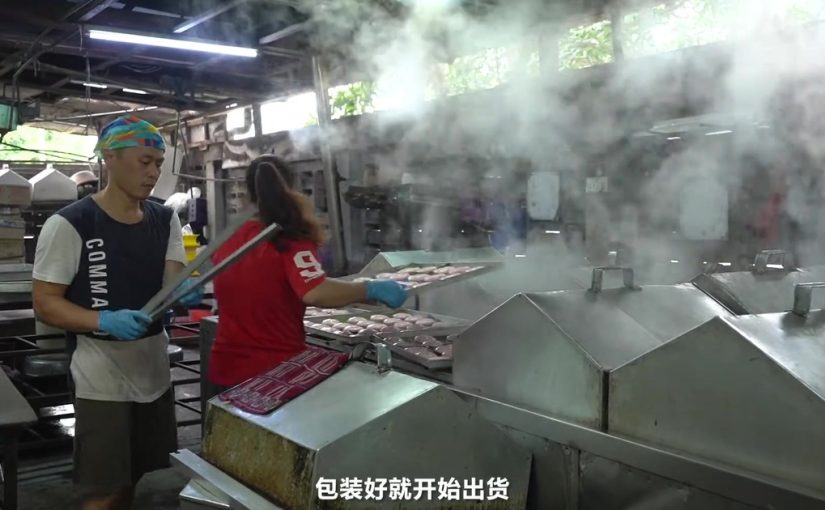
In a home baking workshop at Cheras, 71-year-old Uncle Tan Ah Yew, 43-year-old Tan Lee Yong (Lennon) and family work together busily to produce various cakes for wholesale, including sponge cake, steamed buns, steamed cupcakes, the most renowned being white and brown steamed rice cakes. At 1.30A.M., Uncle Tan delivers cakes produced during the day to the Pudu wholesale market for customers to collect. He then returns home at 5A.M. to prepare ingredients together with his wife, his son takes over the fermentation process while they catch some sleep. As the fermentation completes around noon, father and son dash back and forth the custom-made long steam table, producing trays of cakes despite the lingering heat and vapour. The freshly made cakes require cooling down before slicing and packaging, only then the workday routine ends at 4P.M.

Initially a construction contractor, Uncle Tan’s company went out of business in the mid-80s due to the economic crisis. Despairing, he went to pray at a temple in Ulu Yam, and chanced to encounter an old master whose family business is producing steamed rice cakes, hence he requested to learn the trade. By luck, the old master granted an exception to teach Uncle Tan unreservedly. Steamed rice cakes seem ordinary, yet the procedures involved are complicated, a slight mistake may cause souring, hardening, or turning into a sticky mess. From a layman to mastering the skills of making steamed rice cakes, Uncle Tan devoted an entire year in learning and researching daily, to produce a soft and fluffy end product untainted by sourness. Being the fourth generation successor in the trade, he recovered from financial loss to establish a home baking workshop and paid off debts. Uncle Tan is grateful towards the old master for the favour conferred, always paying him a visit during festivals and giving him tokens of appreciation, until the old master passed away. 

Even though under enormous pressure, Uncle Tan flourished in his second career, his journey over the past few decades has been challenging. Despite slow business during the early stages of his start up, he traveled around to sell his products and expand market reach. Uncle Tan’s cakes are vegetarian-friendly, made without eggs or lard, the soft texture neither hardens nor leaks moisture even after keeping overnight. Therefore he gained reputation and connections, building a stable customer base and order quantity. Most of his customers are school canteen operators, restaurants, and hawkers. During the first day and the 15th day of the lunar month, as well as traditional festivals such as the Hungry Ghosts festival, cakes demand soar due to offering usage. The consumer group of Tan Ah Yew steamed rice cakes range far and wide, from Batu 11 Cheras, Mahkota Cheras, Sungai Long, Kajang, Sungai Chua, Jinjang, to Klang Valley. 

Uncle Tan’s workshop is firmly established, his sons will help out during their free time. His youngest son Lennon used to be a photographer, giving up his ambition due to family sustenance, taking over his father’s business full-time. Although the income from producing cakes would not make him a millionaire, it is enough to make ends meet. Lennon was worried that traditional delicacies may vanish in time, but became assured in carrying on his father’s legacy after meeting other young people in the industry. He aspires to try online marketing and delivery service, so that authentic flavours may still be enjoyed instead of dying out. 

Steamed rice cakes produced with love, wrapped in transparent plastic sheets and old newspapers, deliver traditional flavours. They also contain the Tan family’s hard work and persistent spirit. Even though he has a successor, Uncle Tan has no plans to retire soon, and is still actively involved in cake production. He is still anxious about his inexperienced son whom he deemed unable to work independently, however he praised Lennon’s patience and cherished hopes for business improvement. 

Text: Daniel Lim & Pua Hui Wen

有你 UNI Production
Producer : Mok Yii Chek
Coordinator : Daniel Lim
Cinematographer : Amelia Lim / Evon Pang
Video Editor : Evon Pang
Production Assistant : Michael Lerk
Music : The Romantic

COPYRIGHTS 2020 ECHINOIDEA SDN BHD

☕ Buy Us Coffee

Ginger in Banting

Banting, being the largest collective ginger plantation in Kuala Langat district, has porous black peat soil which is suitable for planting fruits and vegetables. Most villages in the district rely on agriculture as their main economic activity, about 1400 acres of land has been cultivated into ginger plantations by around 50 farmers. Among them, Jenjarom village listed ginger as one of the four local treasures. Due to soil degradation and pollution, there is less favourable farmland in Jenjarom; only a few farmers persist in planting ginger due to poor yields. 

There are two categories of ginger: young ginger, which is harvested around 5½ months; and mature ginger, which is harvested around 8-10 months. As ginger cultivation involves high risks, especially the weather, mature ginger is priced higher, though young ginger is more in demand. The prices per kilogram for mature ginger is between RM15-RM20, while RM4-RM5 for young ginger. Unlike other areas famous for mature ginger (Bentong, Raub), Banting focuses on young ginger cultivation, with high yields and market penetration up to 70% in Malaysia, as well as exports. Apart from young ginger, Banting also produces galangal and turmeric, each with their own flavour and usage. Young ginger is used in cooking chicken and fish, or shred into crispy strips. Galangal has far wider usage, to cook beef, pork, mutton, duck, making satay sauce, and even extracted to make perfume. Besides enhancing flavour, turmeric also imparts colour, mostly used in cooking rice and curry.

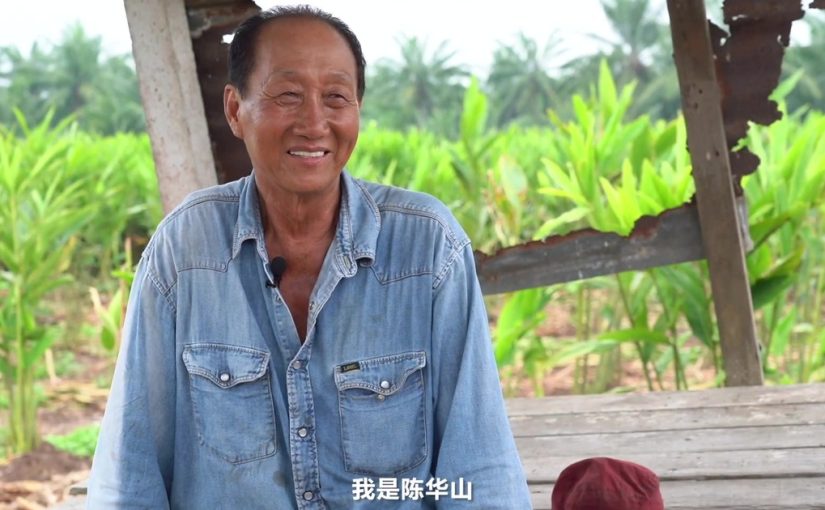
77-year-old Tan Ngoo is a senior ginger farmer in Banting, who enjoys starting his daily work at the farm before dawn, taking an hour’s break for lunch, then continuing to work until sunset. Uncle Tan has been helping his father farming vegetables since he was 12 years old, upon adulthood he ventured in cultivating ginger, which has a higher yield compared to other vegetables. One tonne of ginger seed pieces may yield 7-8 tonnes, in a bad crop 3-4 tonnes, which was enough to make ends meet. With decades of experience, Uncle Tan is very knowledgeable in ginger cultivation. He gradually expanded his land from 2 acres to dozens of acres, hiring workers to help in farming, and producing plenty of ginger seed pieces. There are four types of ginger originating from Indonesia, Sabah, Laos, and Vietnam. Sabahan ginger is most popular in Banting, as it is more flavourful and disease-resistant.

Weather plays an important role in ginger cultivation, too little or too much rainfall impacts ginger yields, whereas drought causes maldevelopment or withering. Crop rotation is also critical to preserve the productive capacity of the soil. After harvesting ginger, crops such as corn, bananas, and sweet potatoes are then planted in succession before another batch of ginger. The only exception is galangal which can be continually planted for 3-4 years before crop rotation. Aerial view of the Banting farms shows rectangular plots with a variety of crops. 

As the plots of Banting belong to different landowners or farmers, with limited types of crops which can be planted, the Selangor Coastal Vegetable Farmers’ Association is formed to protect their rights and interests. Whenever farmland becomes flooded, or farmers face land allocation problems, the association helps in dealing with government authorities to work out solutions. Over 200 members of the association cooperate and assist each other, exchanging information and insights in experimental agriculture projects. During harvest, they also unite to negotiate a fair price with distributors.

On the stretches of agricultural land in Banting, Uncle Tan and his four siblings, as well as his son, toil hard in their plots. Together with over 200 members of the Selangor Coastal Vegetable Farmers’ Association, who are like brothers without blood relationship, they make profit through ginger cultivation.

Text: Daniel Lim & Pua Hui Wen

有你 UNI Production
Producer : Mok Yii Chek
Coordinator : Daniel Lim
Cinematographer : Amelia Lim / Evon Pang
Drone : Daniel Lim
Video Editor : Evon Pang
Production Assistant : Michael Lerk
Music : Wedding Film from AShamaluevMusic – YouTube

COPYRIGHTS 2020 ECHINOIDEA SDN BHD

☕ Buy Us Coffee

Cockles in Pasir Penambang

Cockles are indispensable in mouthwatering dishes like sour and spicy assam laksa, rich and redolent curry mee, as well as aromatic and delicious char kuey teow. Its tender flesh has the glowing scarlet of blood, tasty to eat whether simply being boiled or stir-fried in spicy sauce. However, cockle farming is an industry with high risk levels and dependent on ecological environment. Pasir Penambang, a century-old Chinese fishing village located at the western part of Selangor, was famous for cockle farming in the 1990’s, also renowned for its abundance of fresh seafood and marine products.

Pasir Penambang has natural advantages in soil characteristics, with muddy seabanks along the coast, brackish water which is a mixture of freshwater and seawater, as well as plentiful planktonic organisms for cockles to feed on, therefore an ideal breeding ground for juvenile cockles. In addition, diligent care by breeders helped ensure high survival rates as well as plumpness, the breeding scale and output is preceded only by “the capital of cockles” Kuala Sepetang in Perak. In contrast to Kuala Sepetang which mainly exports outstation and overseas, the cockles of Pasir Penambang only cater for local wet markets. 

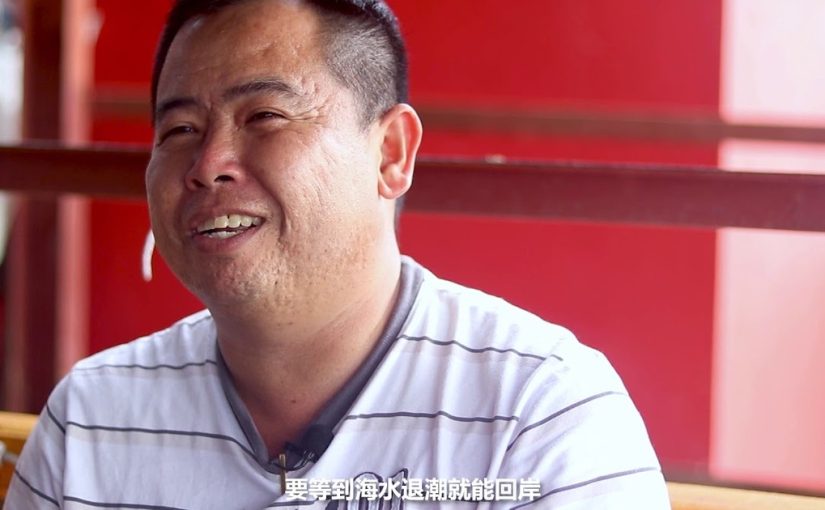
Having started out as a fisherman since 9 years old, then turned to cockle farming in 1989, Mr Kok Chong Beng (transliteration) is an authority figure in blood cockle farming techniques around Pasir Penambang and even within West Malaysia. Ten years after his retirement, Mr Kok still talks excitedly about blood cockles while sharing his experience in managing breeding sites throughout the years. From juvenile to adult, it takes 14 to 18 months for cockles to mature, in the meantime periodical checks are performed on their growth status, as well as dispersing clustered cockles. 

The insightful Mr Kok acknowledged that in order to be profitable, the survival rates of cockles should be at a minimum of 30%. A fruitful harvest combining quantity and quality ensures impressive profitability. The pinnacle of Pasir Penambang cockle yield was 1995 with an annual supply of 40,000 tonnes, yet steeply declined to around 3,000 tonnes in 2015. Back in the glorious 90’s there were dozens of family-run cockle farms in Pasir Penambang, now only a handful remain.

In recent years, marine pollution such as plastic waste and chemical contamination caused severe harm to the survival of cockles, huge amounts of mud and debris from sea-based construction are washed into breeding sites causing cockles to die from suffocation. Climate changes also raise risks faced in cockle farming, for instance the tsunami which occurred towards the end of 2004 not only brought upon stormy waves but also seabed displacement and erosion, inducing mortality rates of cockles. Moreover, natural cockle spawn are getting increasingly difficult to come across, breeders are forced to import cockle spawn from neighbouring countries, resulting in mortality events due to inability to acclimatize hence unfortunate loss of capital.

As  rising breeding costs induced soaring market price of blood cockles, profiteering occurred through illegal fishing and smuggling, dealing yet another heavy blow to cockle breeders. Suffering from dwindling supplies and severe losses, several cockle breeders across Malaysia chose to switch career paths or close down. Mr Low Kock Seong who continued to strive despite facing various challenges, had to do everything on his own in order to reduce operation costs. Being 42 years old, he is already the youngest cockle breeder in Pasir Penambang.

Once illustrious, cockle farming in Pasir Penambang met with inescapable complications, how would cockle breeders cope with unpredictable possibilities and threats? Dubious whether they could or not prevail, as cockles become increasingly rare, the future of the cockle farming industry is like a candle flickering in the wind, glimmering with uncertainty.

Text: Daniel Lim & Pua Hui Wen

有你 UNI Production
Producer : Mok Yii Chek
Coordinator : Daniel Lim
Cinematographer : Amelia Lim / Evon Pang
Drone : Daniel Lim
Video Editor : Michael Lerk
Production Assistant : Michael Lerk
Music : For A Moment from YouTube

COPYRIGHTS 2020 ECHINOIDEA SDN BHD

☕ Buy Us Coffee